Pepperoncini vs banana pepper: the jar is what confuses everyone
Sep 19, 2026 · 5 min read
They are two different peppers with almost the same heat. What separates them is shape, wall thickness and how they are sold — and the spicy one you remember is probably a third pepper entirely.
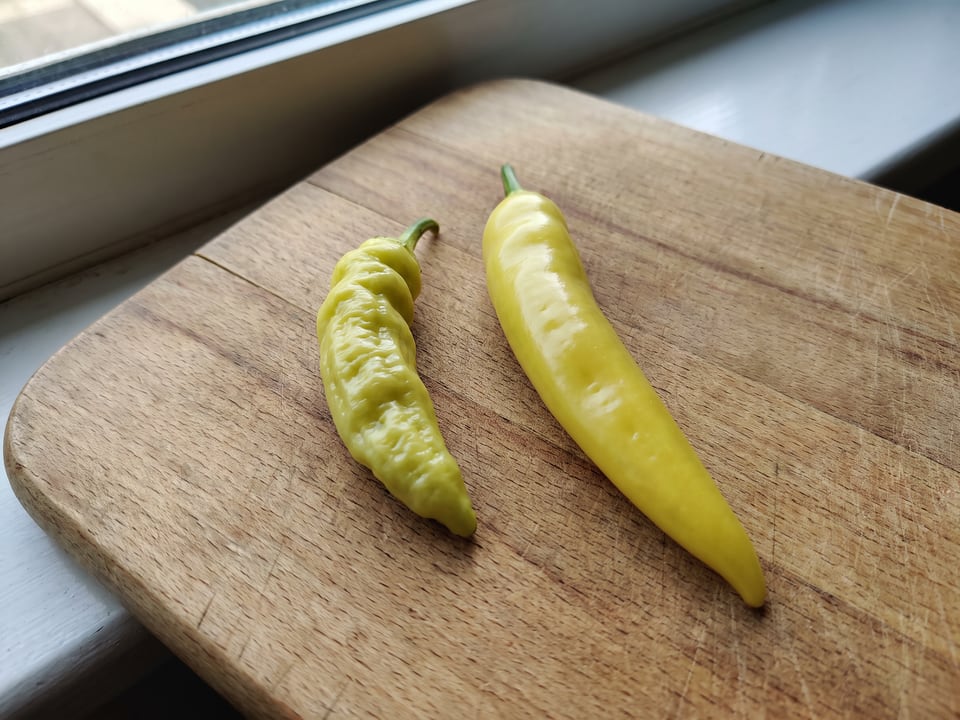
Pepperoncini and banana peppers are two different peppers, and the heat is not what tells them apart. Their Scoville ranges overlap almost completely. What separates them is the shape of the pod, the thickness of the wall and the fact that one is nearly always sold brined and the other is nearly always sold fresh.
Most people meet pepperoncini out of a jar, on a Greek salad or tucked into an Italian sandwich, and meet banana peppers as raw yellow rings on a pizza. Two different products of two different processes, which makes the peppers themselves seem further apart than they are.
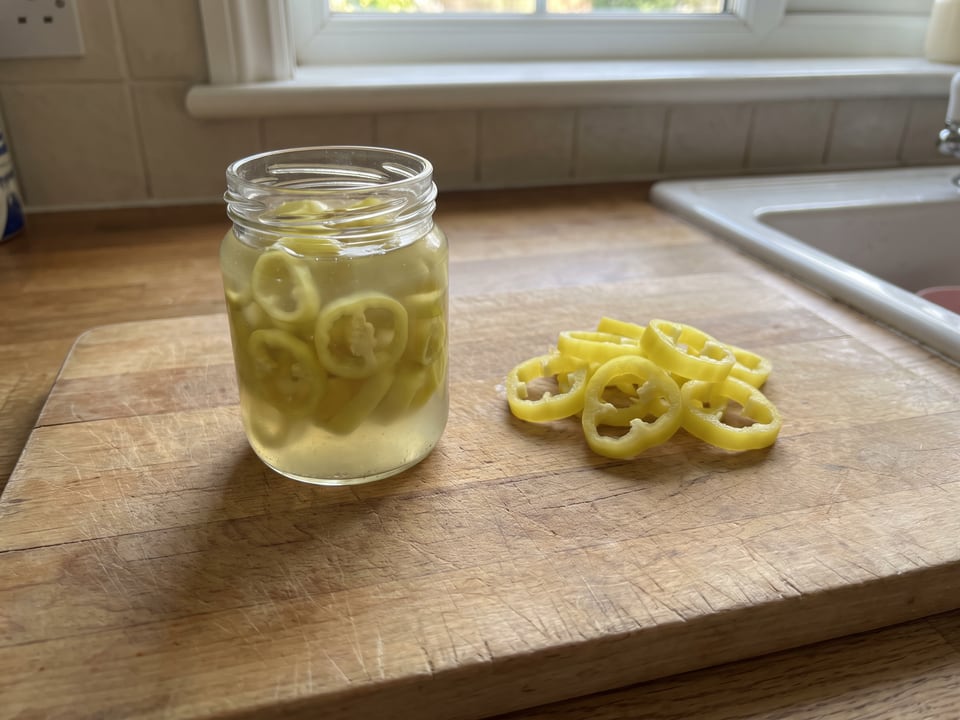
How hot each one is
The common claim is that banana peppers are the milder of the two. That is true only at the bottom of the range, and barely.
| Scoville range | heat class | |
|---|---|---|
| Sweet Banana | 0–500 SHU | no heat |
| Pepperoncini | 100–500 SHU | mild |
Both top out in the same place. Neither pepper is hot in any sense a chilli eater would recognise.
The spicy one you are thinking of is a different pepper
If you have had a yellow, banana-shaped pepper that was genuinely hot, it was almost certainly neither of these. It was Hungarian Yellow Wax, which runs 5 000–15 000 SHU and which is sold under the alias Hot Banana.
It looks the part. The Vegetable Cultivar Descriptions compendium records it at around 203 by 51 mm, tapering to a point, with the same waxy yellow skin ripening to crimson. Side by side with a sweet banana pepper in a market box, the difference is not obvious, and the labels are not always careful. A banana pepper that surprises you with heat is usually one of these, mislabelled.
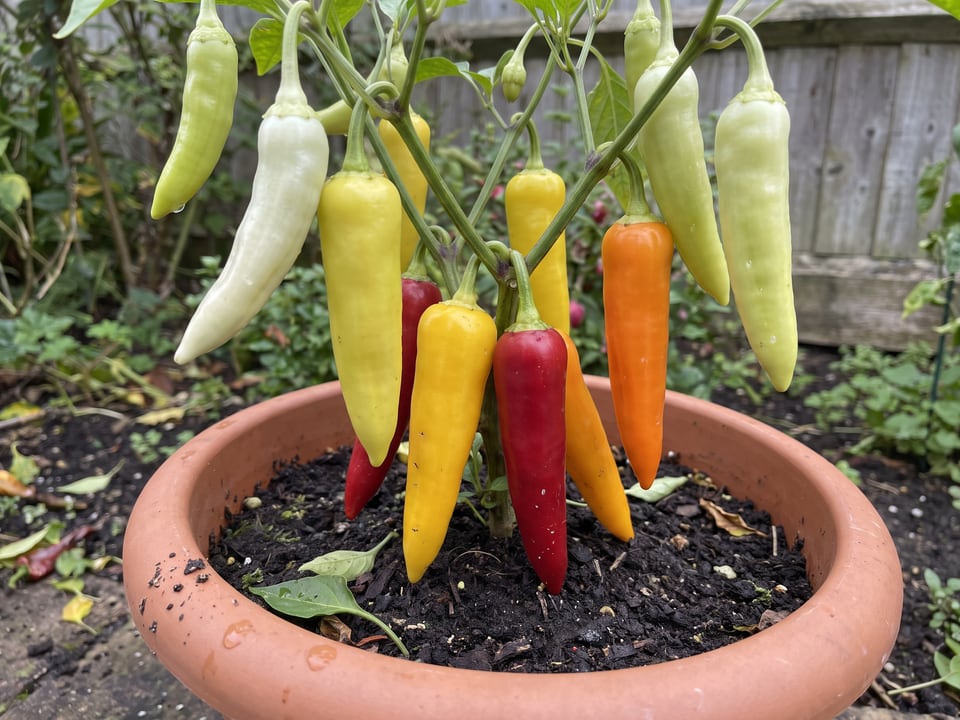
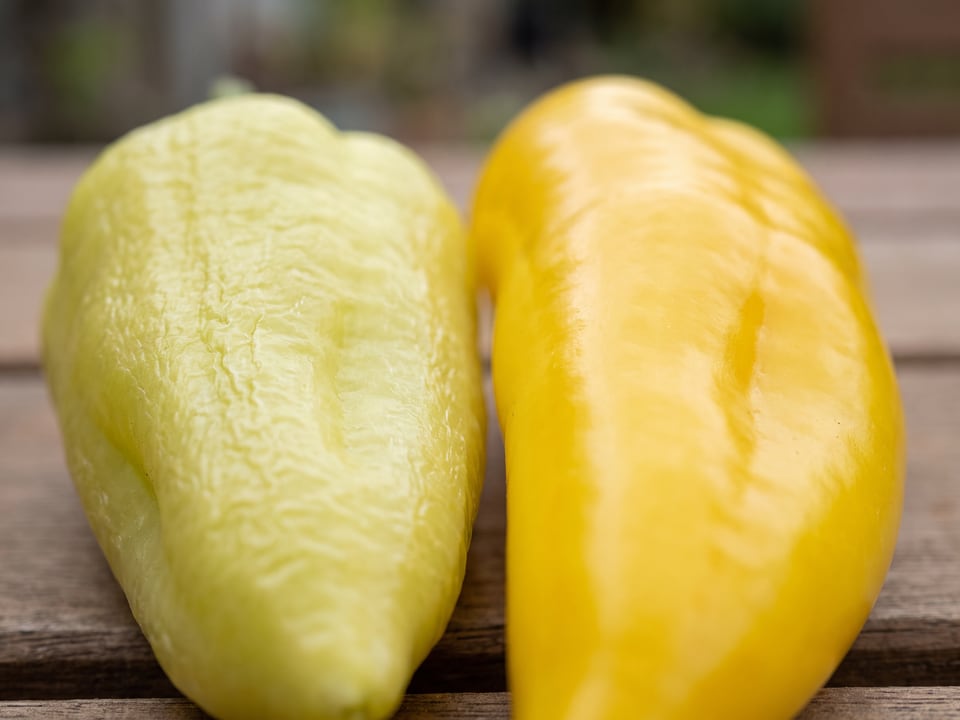
Telling them apart by sight
| Sweet Banana | Pepperoncini | |
|---|---|---|
| pod length | 4 to 6 in (10 to 15 cm), curved | 3 to 5 in (8 to 13 cm) |
| skin | smooth and waxy | wrinkled |
| weight | 40–60 g | 10–20 g |
| picked at | yellow, or left to redden | pale yellow-green, well before it reddens |
| walls | thick | thin |
Size and surface settle it in a second: pepperoncini are small and visibly wrinkled, a banana pepper is bigger and smooth enough to shine. The wall thickness is what decides the cooking. You can feel it through the jar lid.
Which one for what
- Sandwiches, subs, Greek salad: pepperoncini. Thin walls take up brine fast and stay floppy rather than crunching against the bread.
- Pizza, raw rings in a salad, anything that needs to stay crisp: banana pepper. The thick wall holds its snap.
- Stuffing: banana pepper. A pepperoncini is 10 to 20 g of thin wall, with nothing to hold a filling.
- Quick pickling at home: either, but pepperoncini are ready sooner and banana peppers stay crunchier for longer. Pick by the texture you want in a month’s time.
- Frying: neither is ideal — Cubanelle is the frying pepper of this family, with the same mild 100–500 SHU and far more flesh.
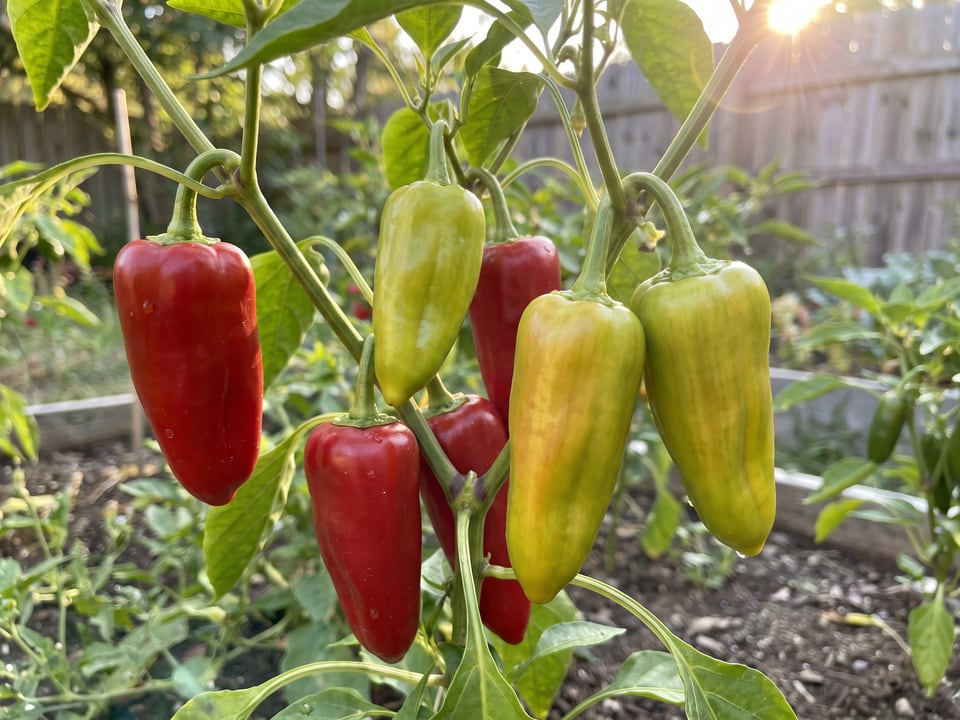
Substituting one for the other works in a sandwich and fails in a stuffed dish. Going the other way, if a recipe wants pepperoncini and you have banana peppers, pickle them first; raw banana peppers bring none of the acidity the recipe is leaning on.
Growing either one
If you are choosing between them for a garden rather than a shopping list, they are close to interchangeable in effort. Both are heirloom Capsicum annuum, both want full sun, both take a 46 cm spacing, and both do well in a large pot.
| Sweet Banana | Pepperoncini | |
|---|---|---|
| days to maturity | 72 (from transplant) | 78 (from transplant) |
| sow indoors | 7–9 weeks before last frost | 7–9 weeks before last frost |
| plant height | 46–61 cm | 61–91 cm |
Both sowing windows count back from your own last frost date, not from a month on the packet: look yours up by ZIP code.
One note: pepperoncini plants get noticeably taller, so give them the sturdier support even though the fruit is smaller.
The short version
The two peppers share a heat range, so judge them by the pod. Small, wrinkled and thin-walled is pepperoncini, which suits brine and sandwiches. Long, waxy and thick-walled is a banana pepper, which suits raw crunch and stuffing. A yellow pod that was genuinely spicy was Hungarian Yellow Wax.