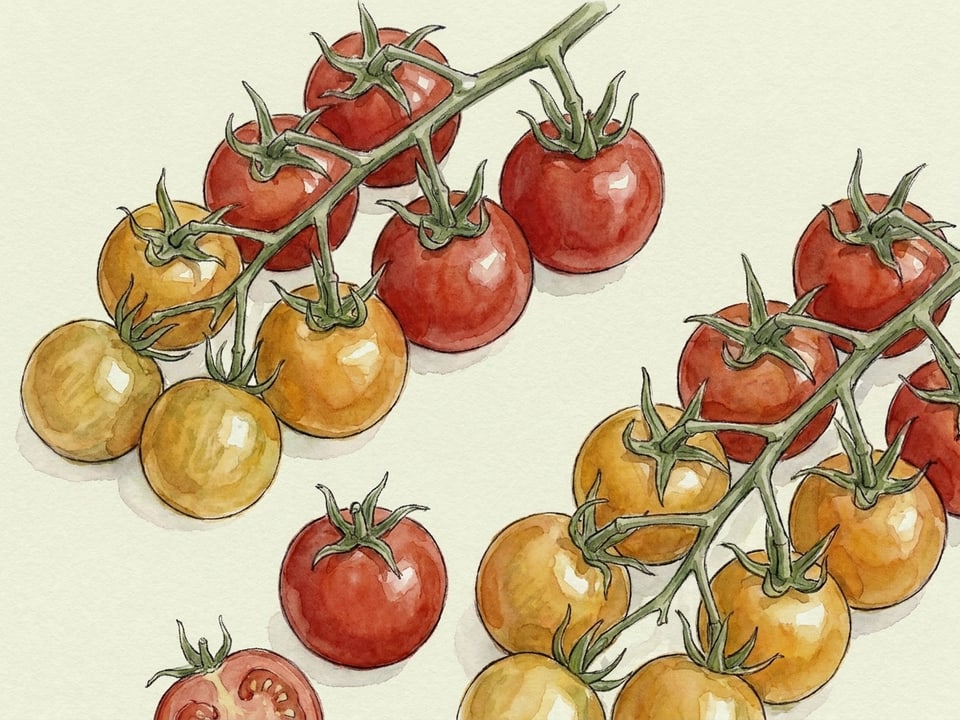
Cherry tomato varieties
Cherry tomatoes are the round small-fruited class, under about 25 g, eaten whole. The nineteen varieties here run from White Currant at one to three grams, barely larger than a pea, to Indigo Rose at 55 g, and ripen between 55 and 75 days from transplant. What makes this list unusual is the plants rather than the fruit: nine of the nineteen are dwarf or micro dwarf, which is a far higher proportion than any other fruit type on this site. Cherry is the only category where a windowsill, a balcony rail or a 20 cm pot gives you a genuine choice rather than a single compromise variety. If you are growing without a garden, start here.
- Varieties
- 21
- Days to harvest (from transplant)
- 55–91
- Fruit weight
- 0–2 oz (1–55 g)
- Growth habit
-
11 Indeterminate
5 Micro dwarf
4 Dwarf
1 Determinate
All 21 cherry tomato varieties
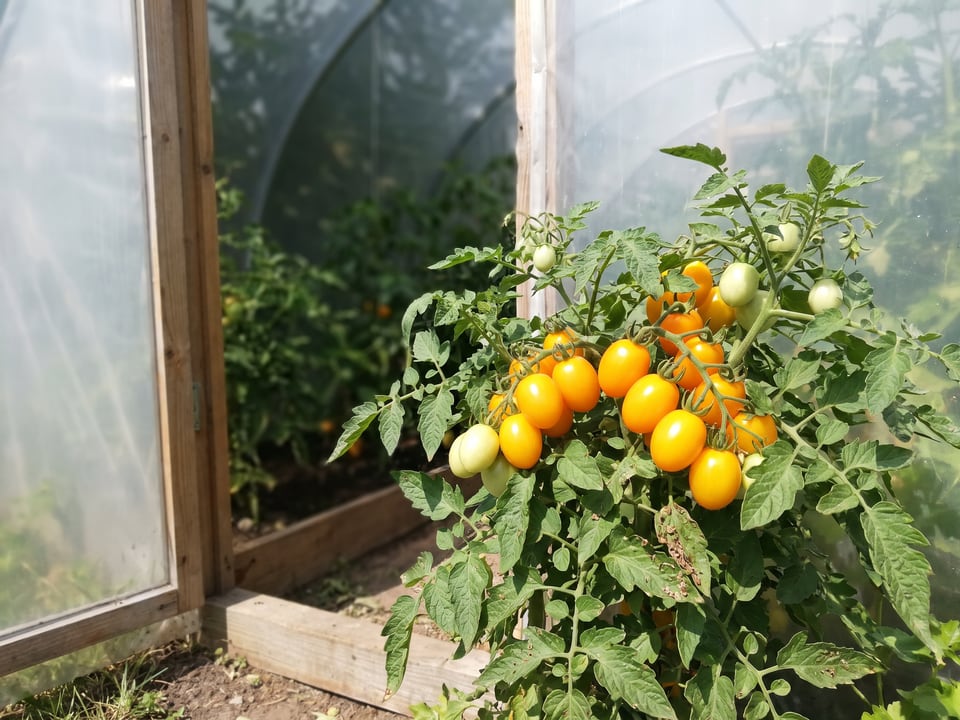
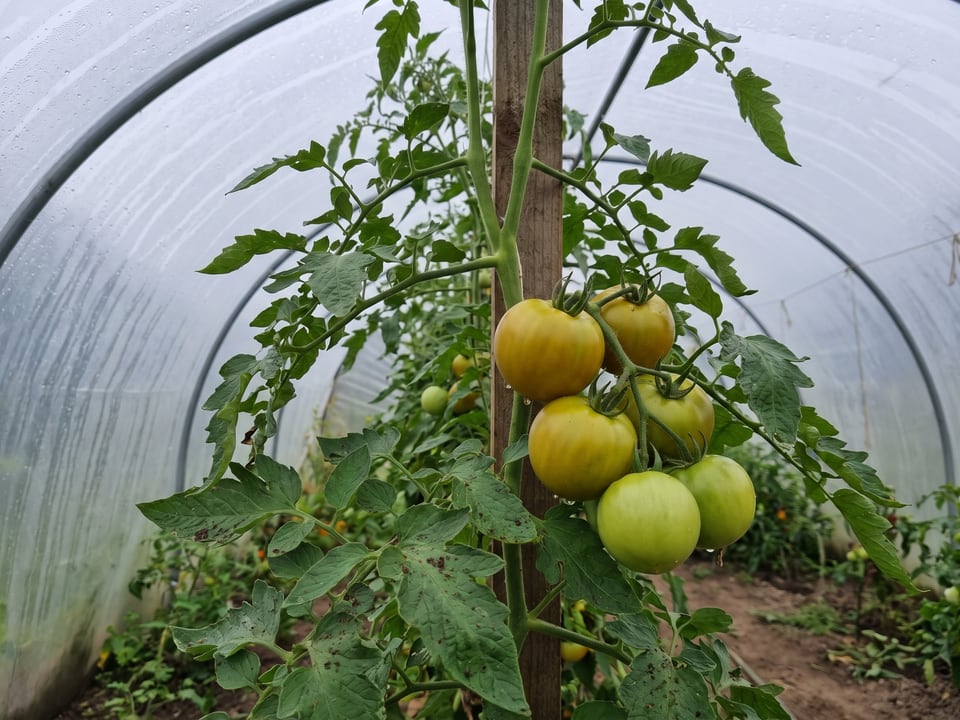
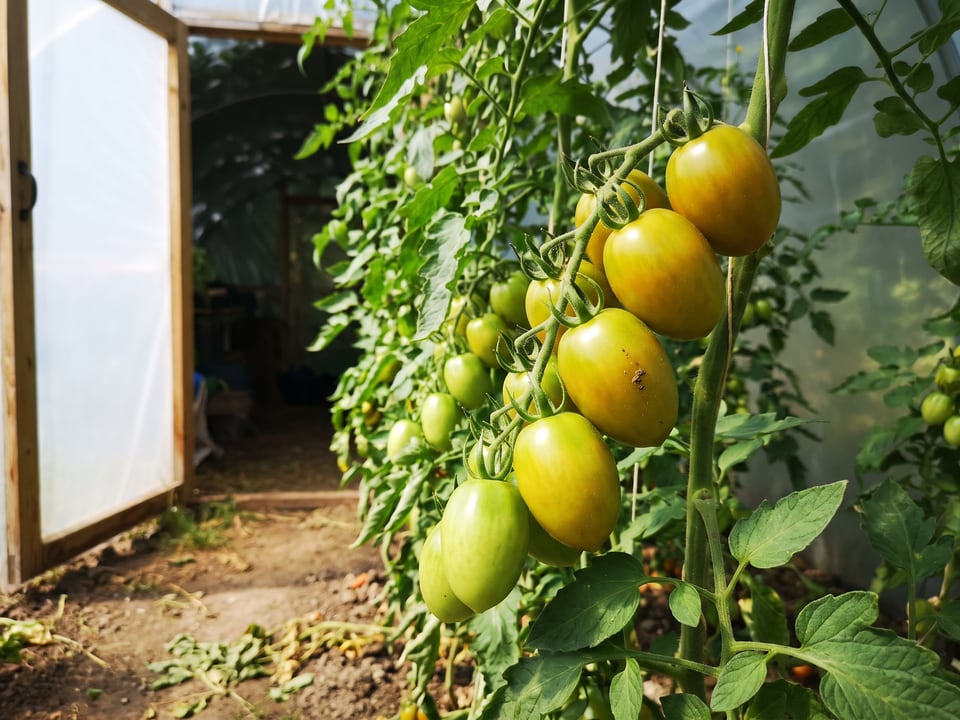
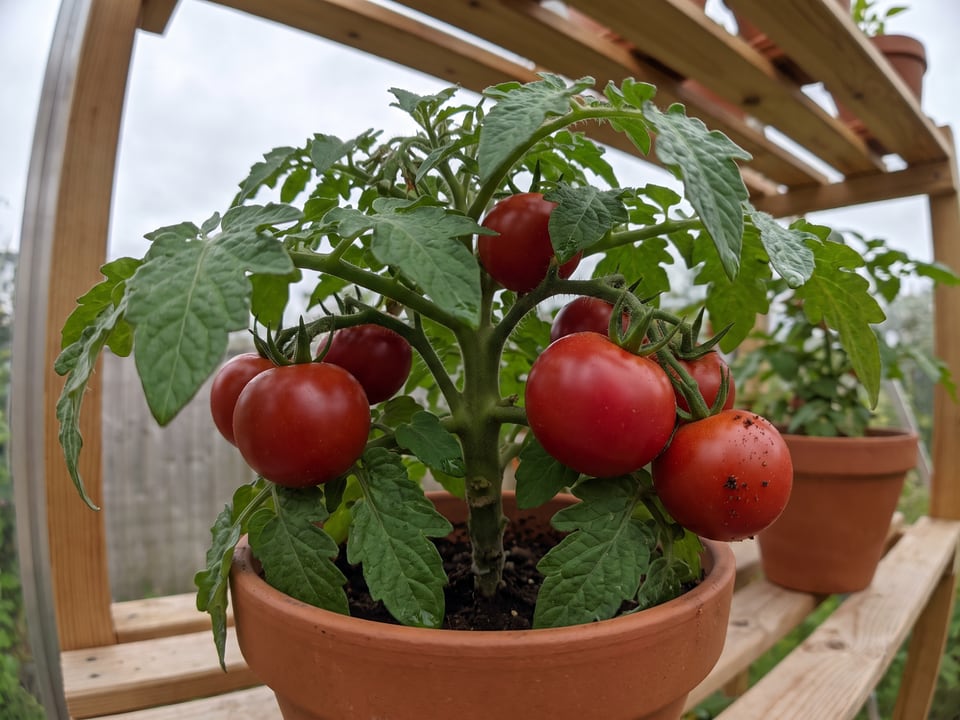
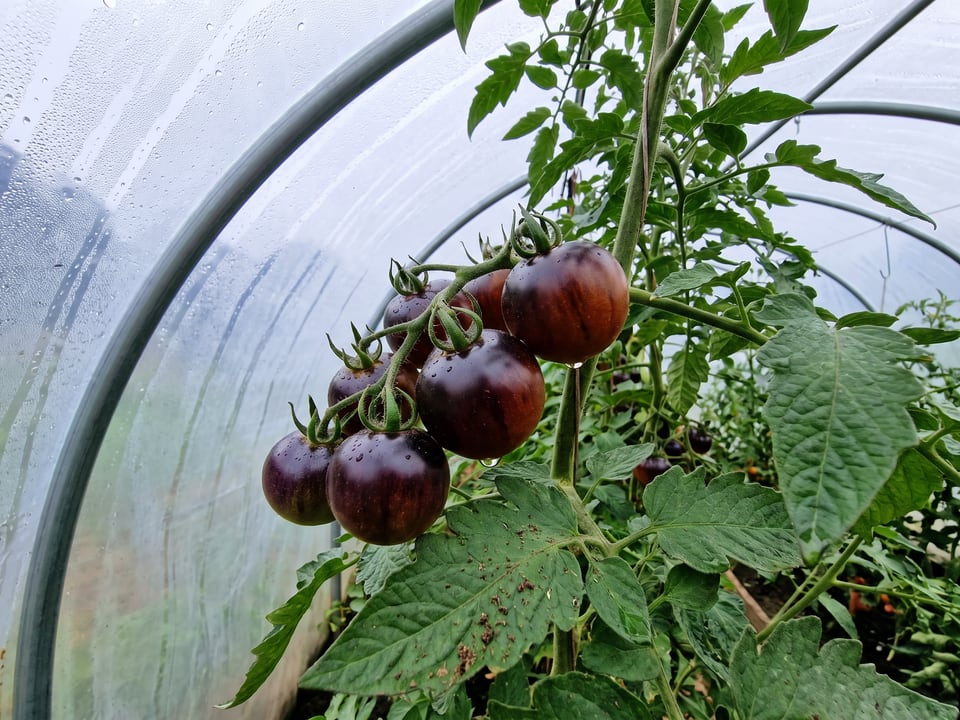
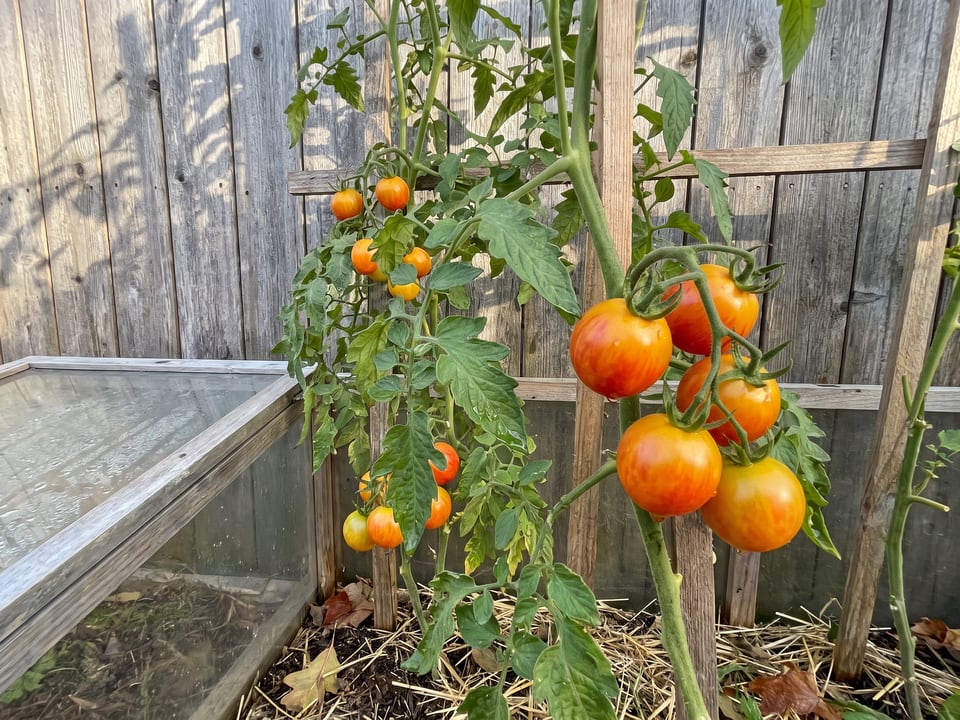
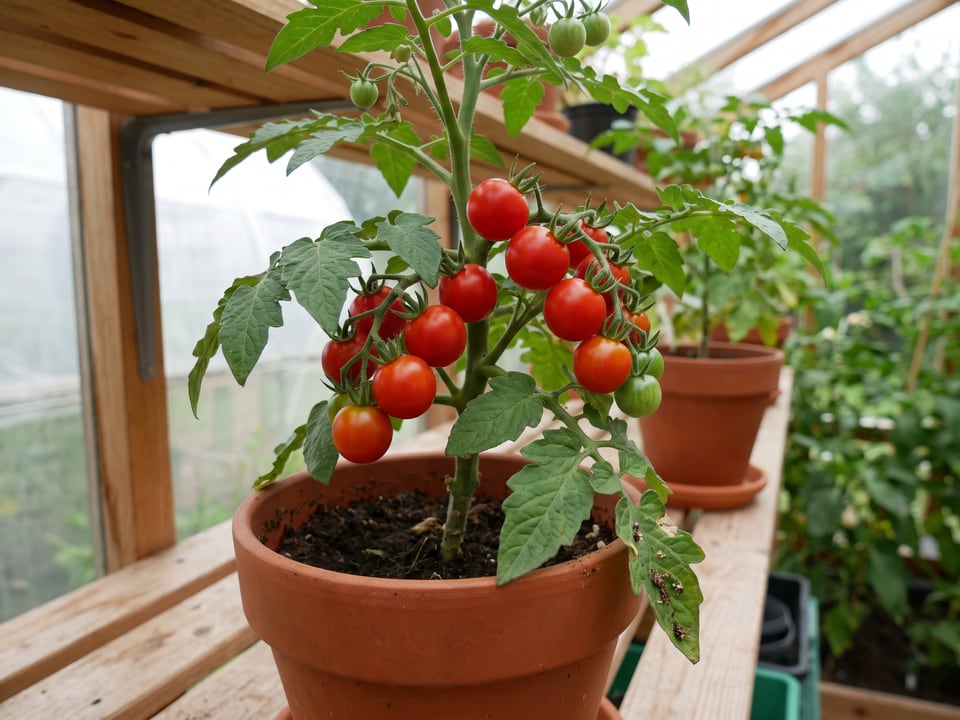
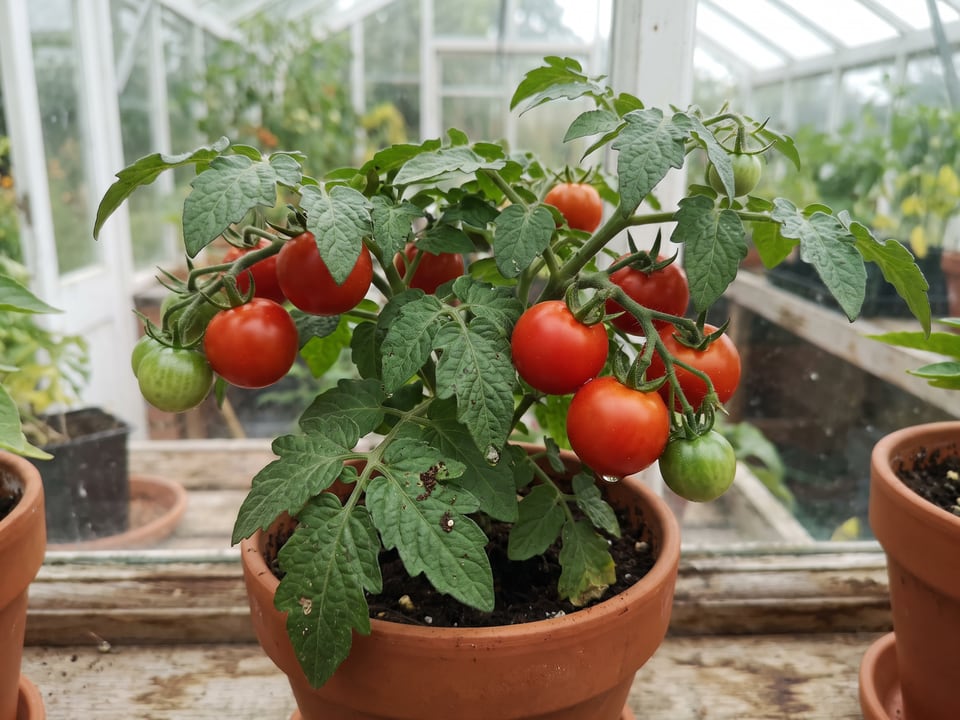
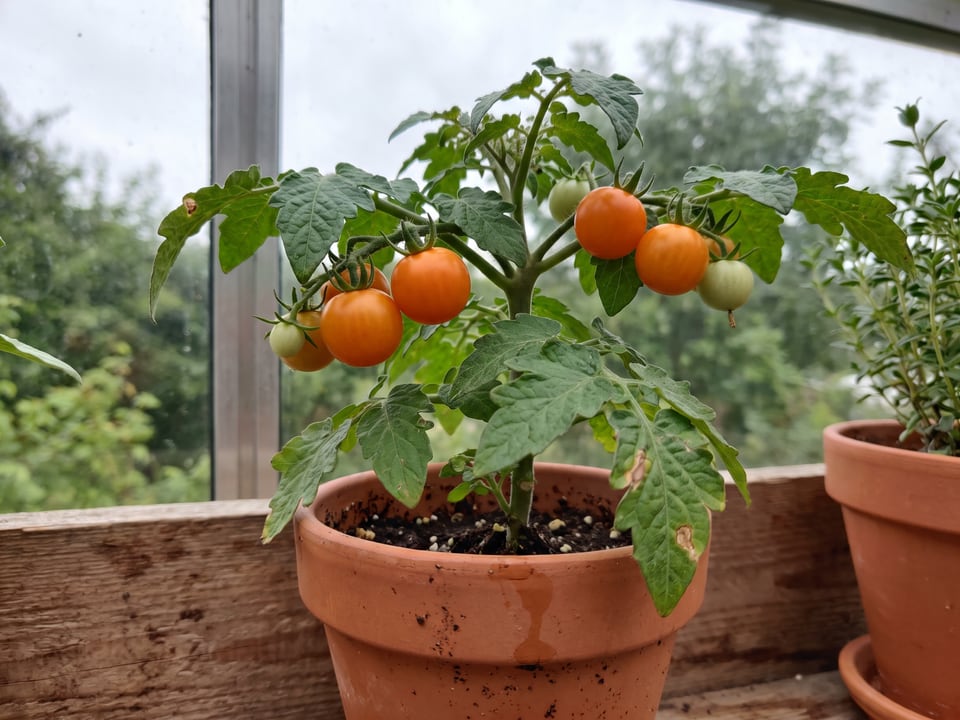
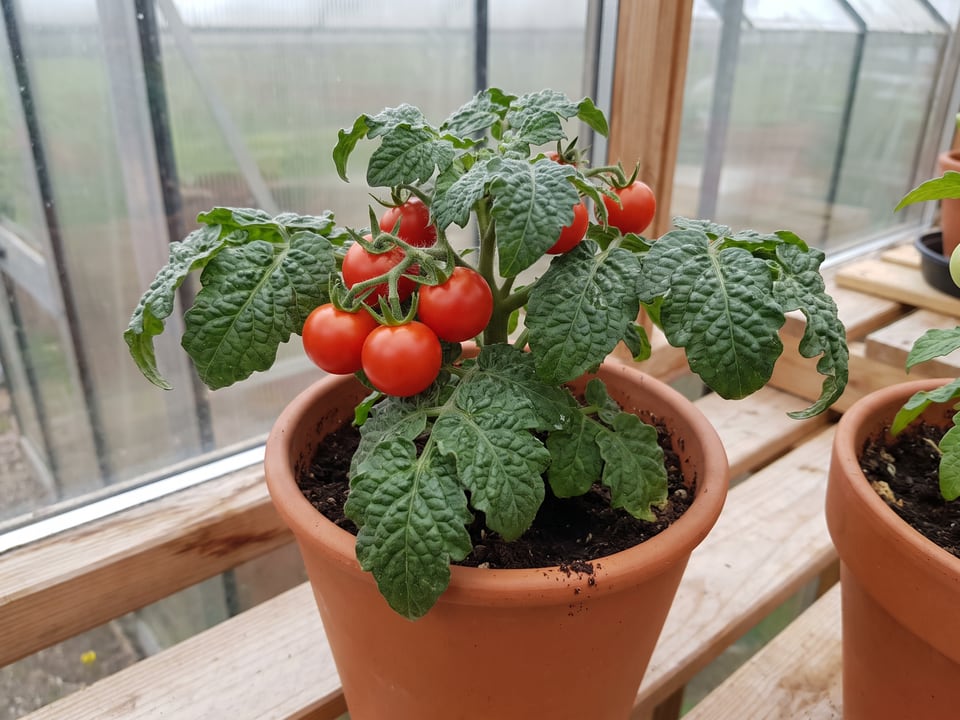
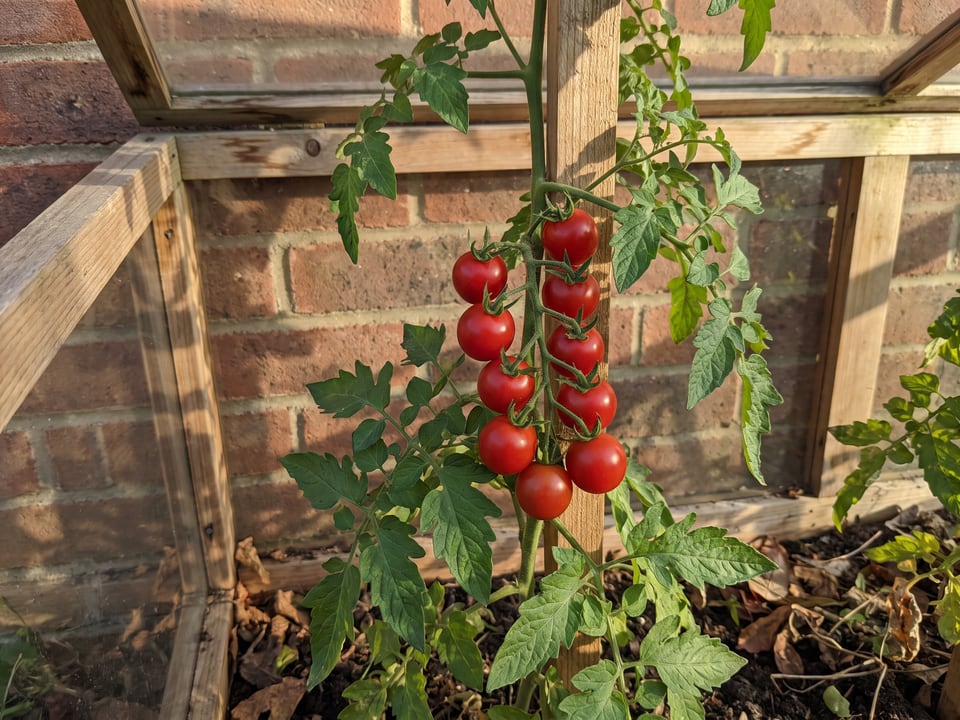
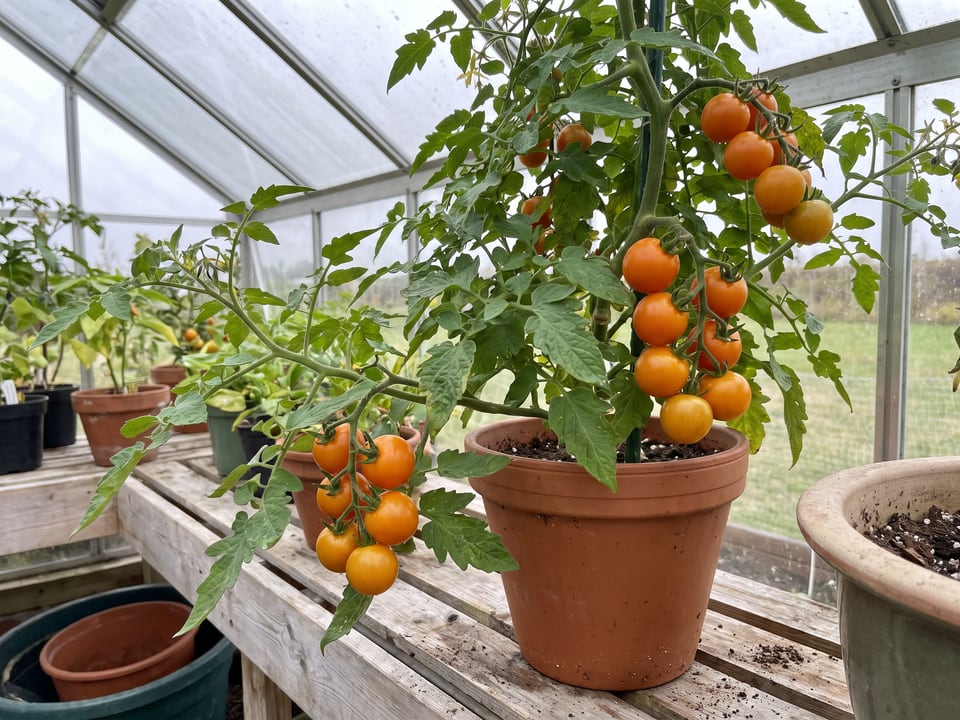
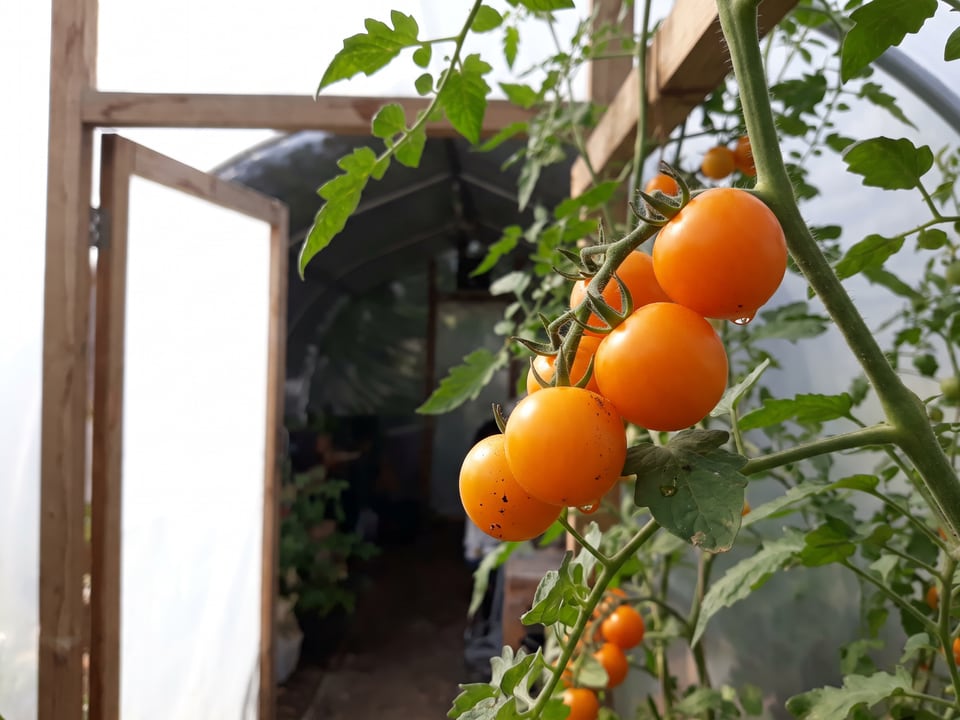
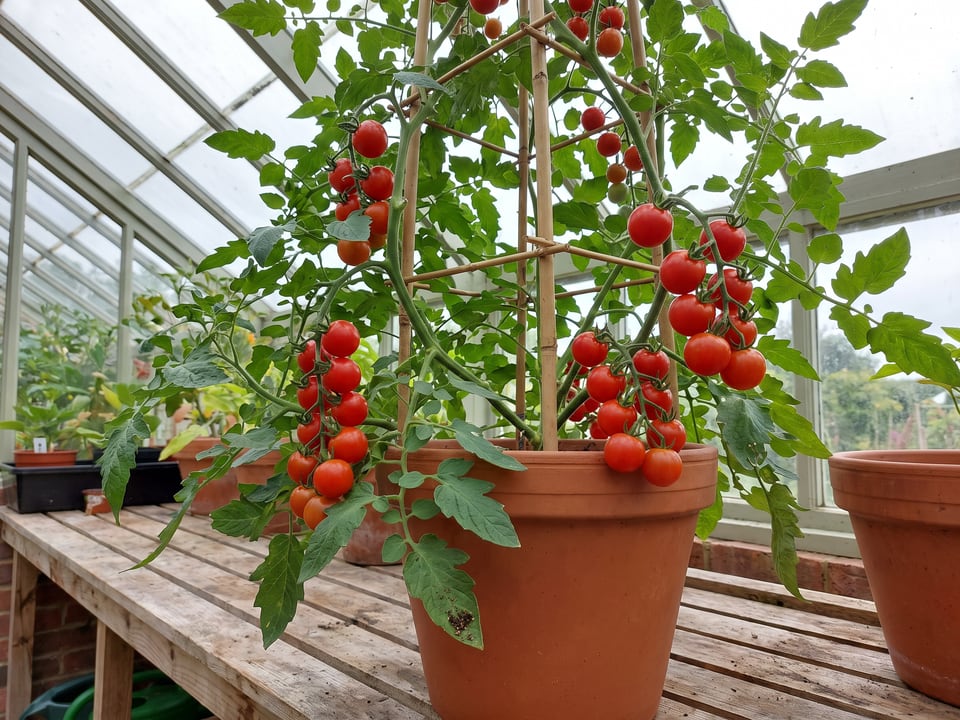
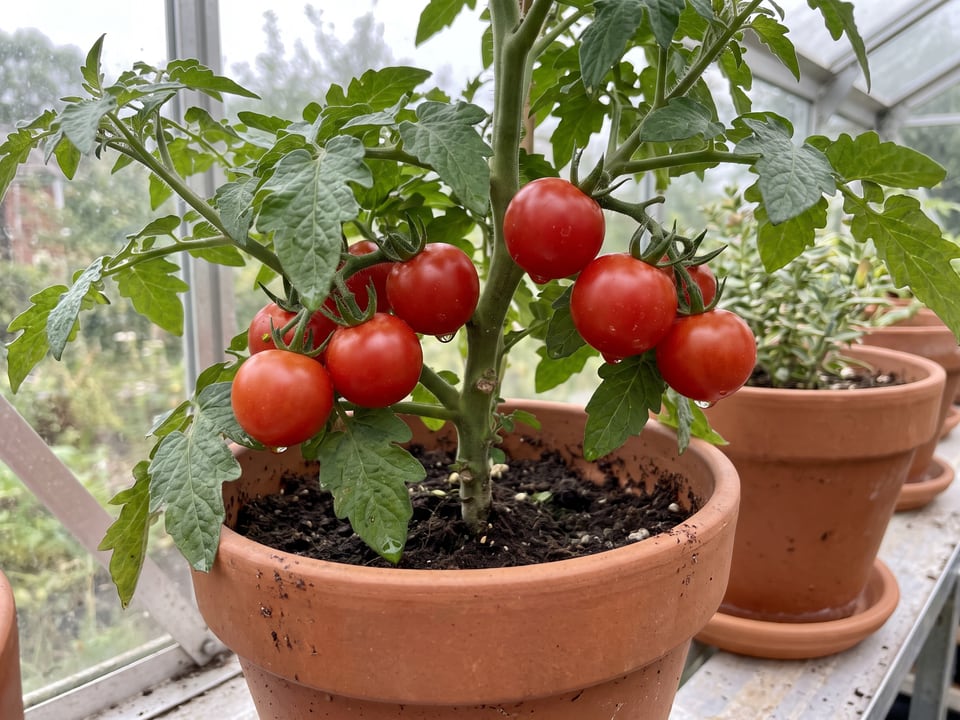
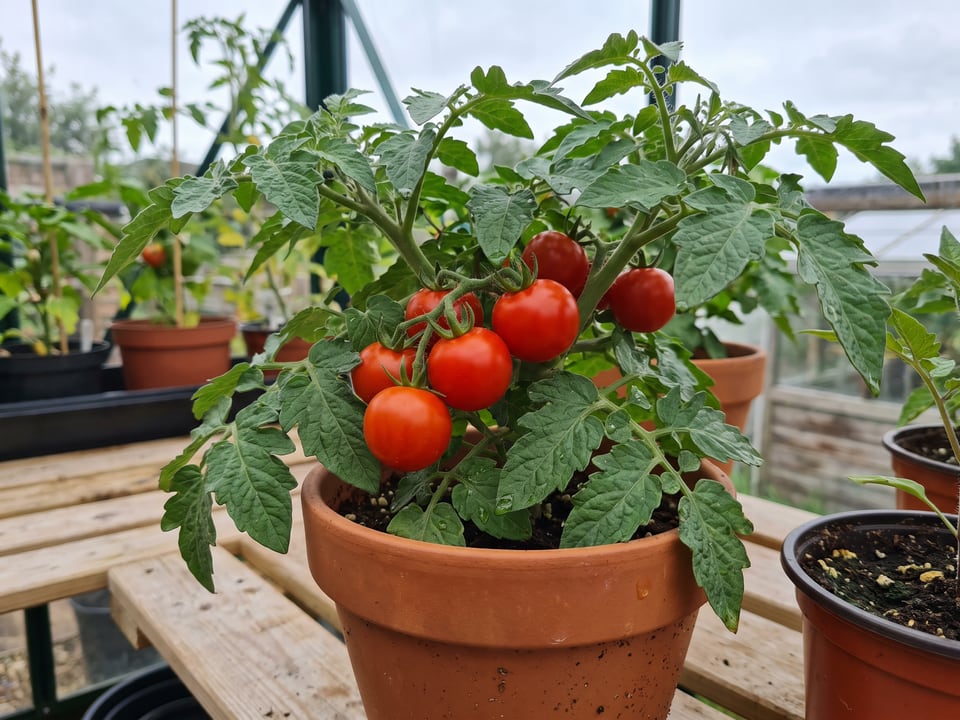
How to choose
-
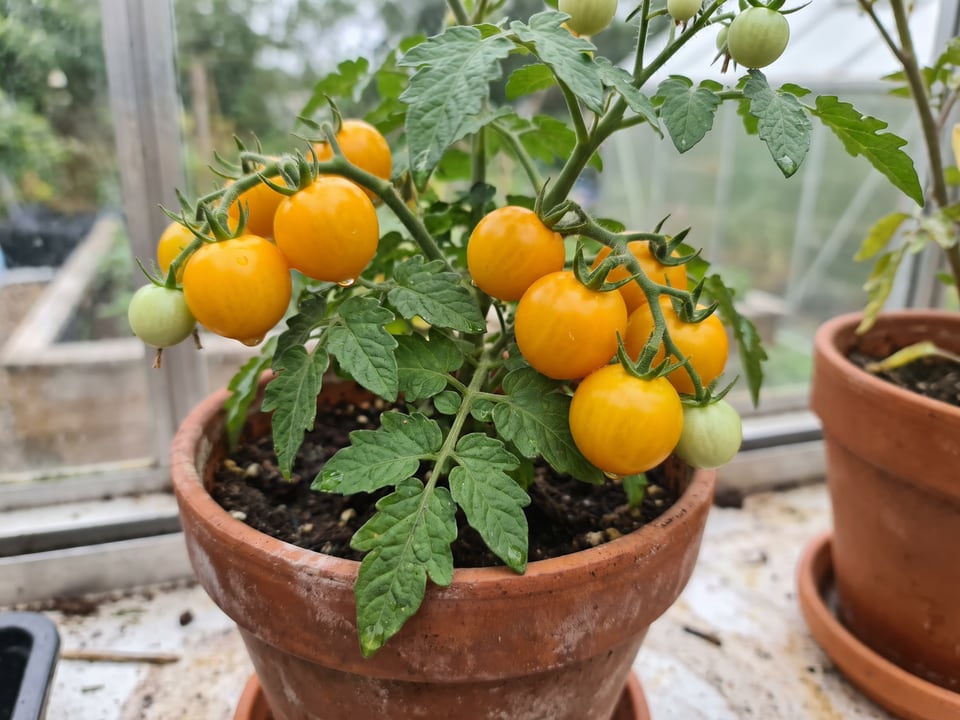
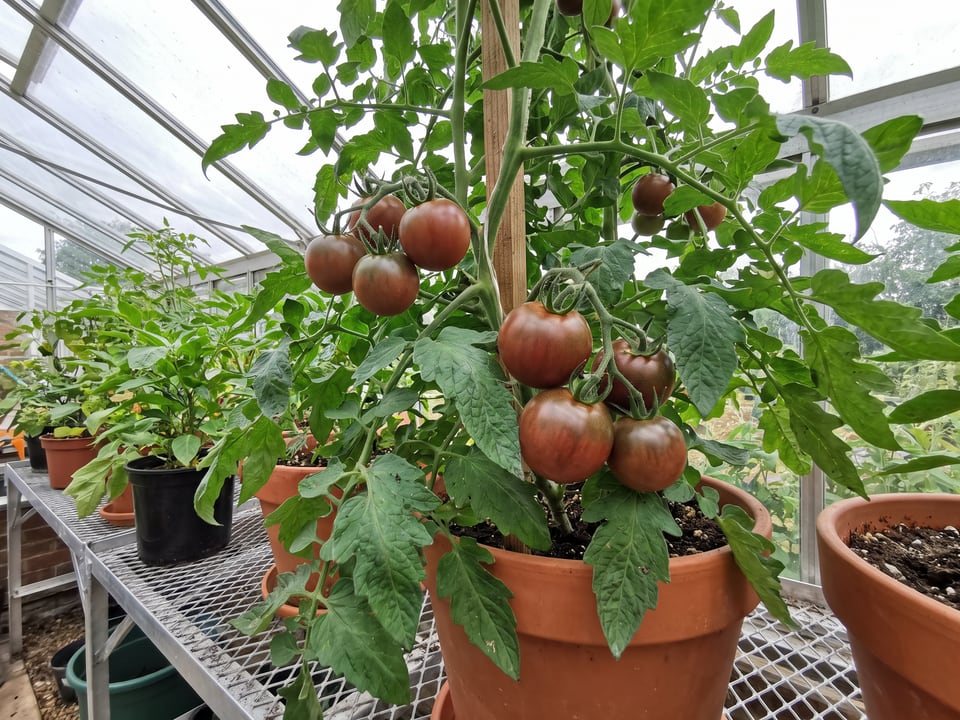
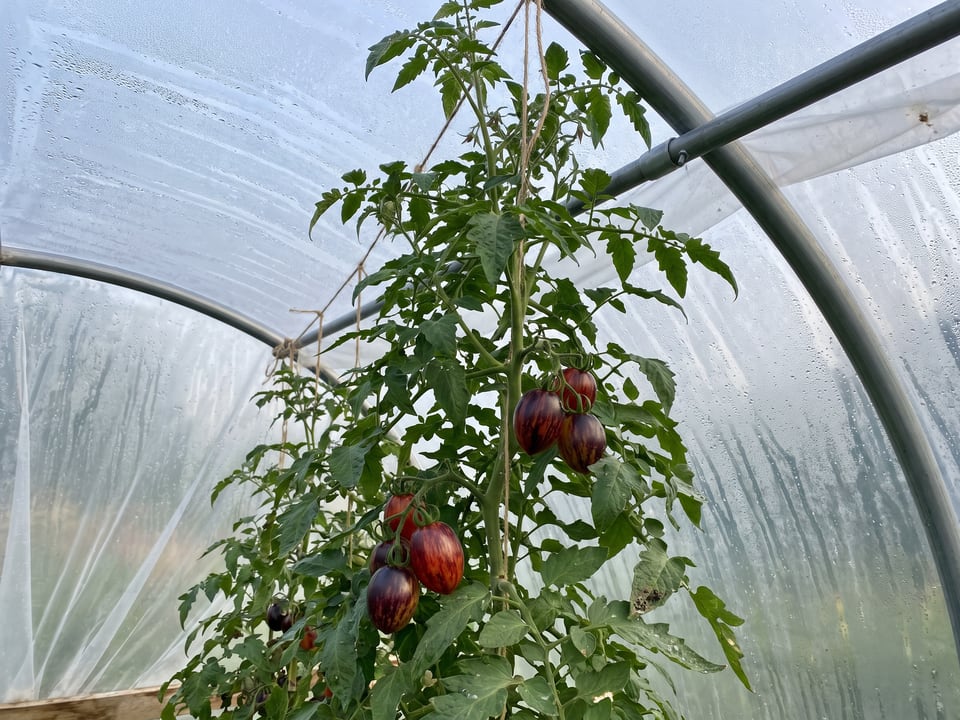
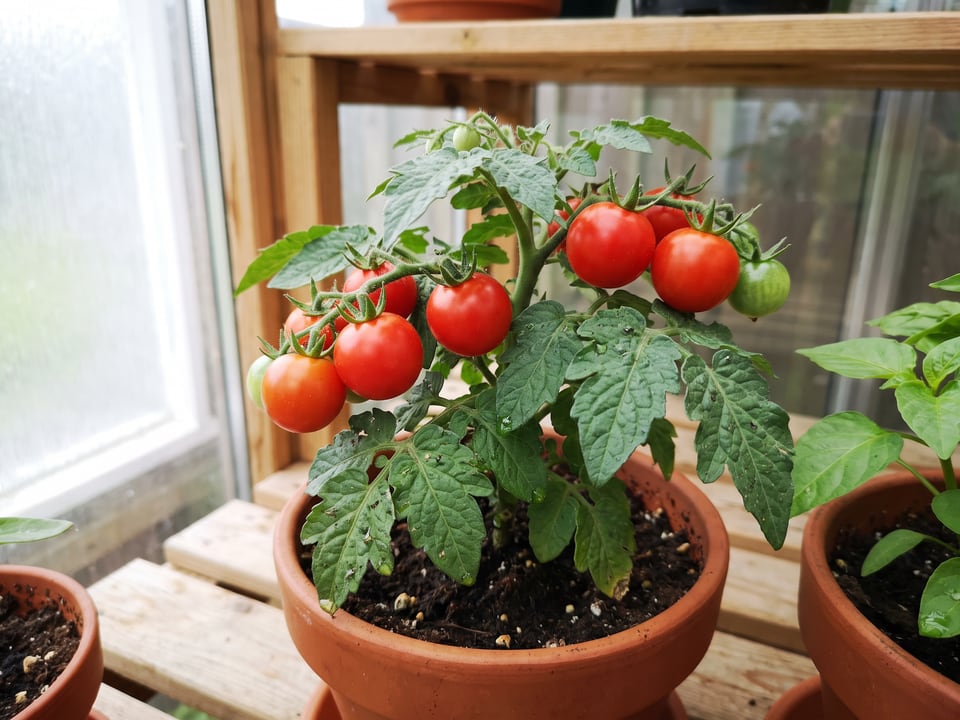
Decide the plant before the fruit. Nine varieties here are dwarf or micro dwarf, topping out somewhere between a coffee mug and a knee, and ten are indeterminate and will climb past two metres. Both produce cherry tomatoes; they are completely different growing commitments. Micro Tom and Orange Hat at five to ten grams of fruit are houseplants that happen to be edible; Sungold and Black Cherry are full-season staked crops.
-
The early end of this page is the early end of the entire catalogue. Red Robin and Aztek at 55 days and Sungold at 57 are the fastest varieties on the site. If your season is short, cherry types are the answer, and it is not close: nothing in the beefsteak or paste categories comes within fifteen days of them.
-
Cracking is the failure mode to plan for. Thin-skinned small fruit splits after rain more readily than any other size class, and a cracked cherry tomato is lost rather than merely blemished, because there is nothing left to cut around. Steady watering does more here than variety choice, though the grape types on the neighbouring page are genuinely tougher if this is a recurring problem in your garden.
-
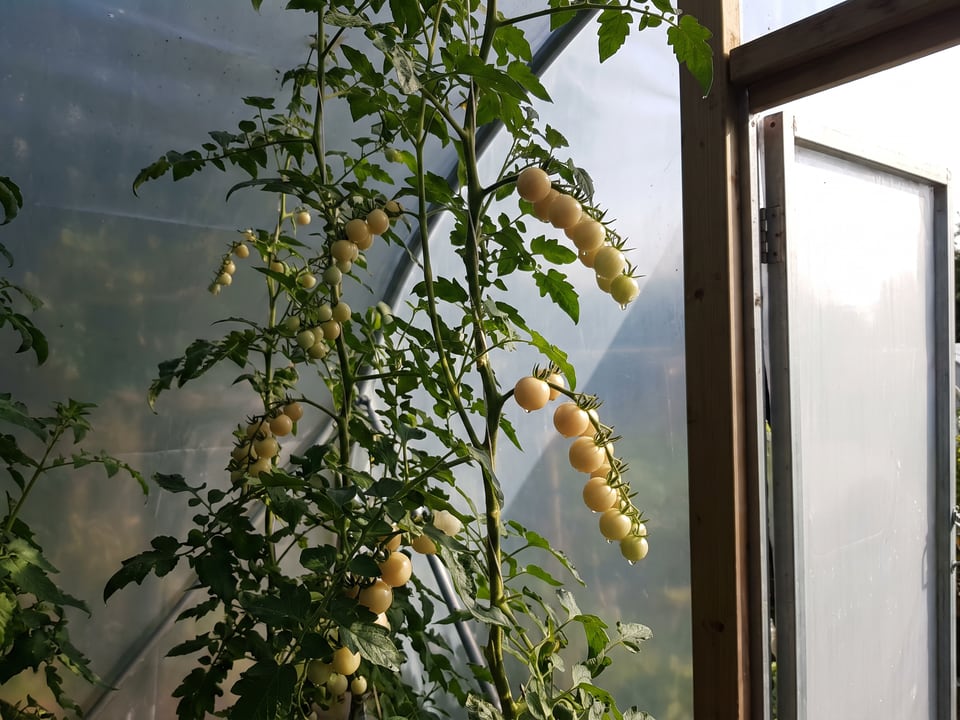
Expect volume and plan for it. A single indeterminate cherry plant produces in quantities that surprise first-time growers and keeps going until frost. Two plants is a generous supply for a household; five is a preserving project you did not intend to start.
Compare side by side
| Color | Uses | |||||
|---|---|---|---|---|---|---|
| Aztek | 55 (estimated) | 0–1 oz (10–18 g) (estimated) | Micro dwarf | 4 (estimated) / 2 (estimated) / 2 (estimated) | Snacking | |
| Black Cherry | 75 (estimated) | ~1 oz (15–25 g) (estimated) | Indeterminate | 4 (estimated) / 3 (estimated) / 5 (estimated) | Snacking, Fresh & salads | |
| Black Strawberry | 75 (estimated) | ~1 oz (20–30 g) (estimated) | Indeterminate | 4 (estimated) / 3 (estimated) / 4 (estimated) | Snacking, Fresh & salads | |
| Gold Nugget | 58 | ~1 oz (15–30 g) | Determinate | 4 (estimated) / 3 (estimated) / 3 (estimated) | Fresh & salads, Snacking | |
| Green Doctors | 75 (estimated) | ~1 oz (15–25 g) (estimated) | Indeterminate | 5 (estimated) / 3 (estimated) / 4 (estimated) | Fresh & salads, Snacking | |
| Green Grape | 70 (estimated) | ~1 oz (15–25 g) (estimated) | Indeterminate | 4 (estimated) / 3 (estimated) / 4 (estimated) | Fresh & salads, Snacking | |
| Husky Cherry Red | 60 | ~1 oz (15–30 g) | Dwarf | 4 (estimated) / 3 (estimated) / 3 (estimated) | Fresh & salads, Snacking | |
| Indigo Rose | 91 | 1–2 oz (35–55 g) (estimated) | Indeterminate | 3 (estimated) / 3 (estimated) / 3 (estimated) | Fresh & salads, Snacking | |
| Isis Candy | 65 | ~1 oz (15–30 g) | Indeterminate | 4 (estimated) / 3 (estimated) / 3 (estimated) | Fresh & salads, Snacking | |
| Little Bing | 60 | 0–1 oz (10–18 g) (estimated) | Dwarf | 4 (estimated) / 3 (estimated) / 3 (estimated) | Snacking | |
| Micro Tom | 75 (estimated) | <1 oz (5–10 g) (estimated) | Micro dwarf | 3 (estimated) / 3 (estimated) / 2 (estimated) | Snacking | |
| Orange Hat | 60 (estimated) | <1 oz (5–10 g) (estimated) | Micro dwarf | 4 (estimated) / 2 (estimated) / 3 (estimated) | Snacking | |
| Red Robin | 55 (estimated) | 0–1 oz (10–18 g) (estimated) | Micro dwarf | 3 (estimated) / 3 (estimated) / 2 (estimated) | Snacking | |
| Spoon | 75 (estimated) | <1 oz (1–2 g) (estimated) | Indeterminate | 4 (estimated) / 3 (estimated) / 4 (estimated) | Snacking, Fresh & salads | |
| Sun Sugar | 62 | 0–1 oz (12–18 g) (estimated) | Indeterminate | 5 (estimated) / 2 (estimated) / 4 (estimated) | Snacking, Fresh & salads | |
| Sungold | 57 | ~1 oz (15–20 g) | Indeterminate | 5 (estimated) / 2 (estimated) / 4 (estimated) | Snacking, Fresh & salads | |
| Sweet 100 | 68 (estimated) | 0–1 oz (12–20 g) (estimated) | Indeterminate | 5 (estimated) / 3 (estimated) / 3 (estimated) | Snacking, Fresh & salads | |
| Tiny Tim | 60 (estimated) | 0–1 oz (12–20 g) (estimated) | Dwarf | 3 (estimated) / 3 (estimated) / 3 (estimated) | Fresh & salads, Snacking | |
| Tumbling Tom | 70 (estimated) | ~1 oz (15–25 g) (estimated) | Dwarf | 4 (estimated) / 3 (estimated) / 3 (estimated) | Fresh & salads, Snacking | |
| Vilma | 65 (estimated) | 0–1 oz (10–18 g) (estimated) | Micro dwarf | 4 (estimated) / 3 (estimated) / 3 (estimated) | Snacking | |
| White Currant | 75 (estimated) | <1 oz (1–3 g) (estimated) | Indeterminate | 5 (estimated) / 2 (estimated) / 3 (estimated) | Fresh & salads, Snacking |
Values marked like this (estimated) are model estimates, not confirmed from a source.
Frequently asked questions
What counts as a cherry tomato?
A round fruit under roughly 25 g, eaten whole rather than sliced. The line against cocktail types above and currant types below is conventional rather than botanical, which is why we record fruit weight per variety instead of relying on the label.
Which cherry tomatoes grow in pots?
Nine of the nineteen here are dwarf or micro dwarf: Micro Tom, Orange Hat, Red Robin, Little Bing, Vilma and Aztek at the smallest end, then Tiny Tim, Tumbling Tom and Sweet Scarlet Dwarf. That is more container-capable varieties than any other fruit type on this site holds.
What is the earliest cherry tomato?
Red Robin and Aztek at 55 days from transplant, with Sungold at 57. These are also the earliest varieties in the entire catalogue regardless of type.
Why do my cherry tomatoes split?
Sudden water uptake after a dry spell. The flesh expands faster than the thin skin can stretch and the fruit cracks, usually around the shoulders. Consistent moisture and mulch help more than anything else; grape-type varieties, which have thicker skins, are the structural alternative.
What is the difference between cherry and grape tomatoes?
Shape and texture. Cherry is round and juicier; grape is oblong with denser flesh and thicker skin, which is why grape types keep longer and split less. The grape page carries the same data columns if you want to compare directly.
How small do cherry tomatoes get?
White Currant here is one to three grams, which is currant rather than cherry size and about as small as a cultivated tomato goes. Spoon is similar. Both are grown for novelty and for volume rather than for practicality in the kitchen.