Oxheart tomato varieties
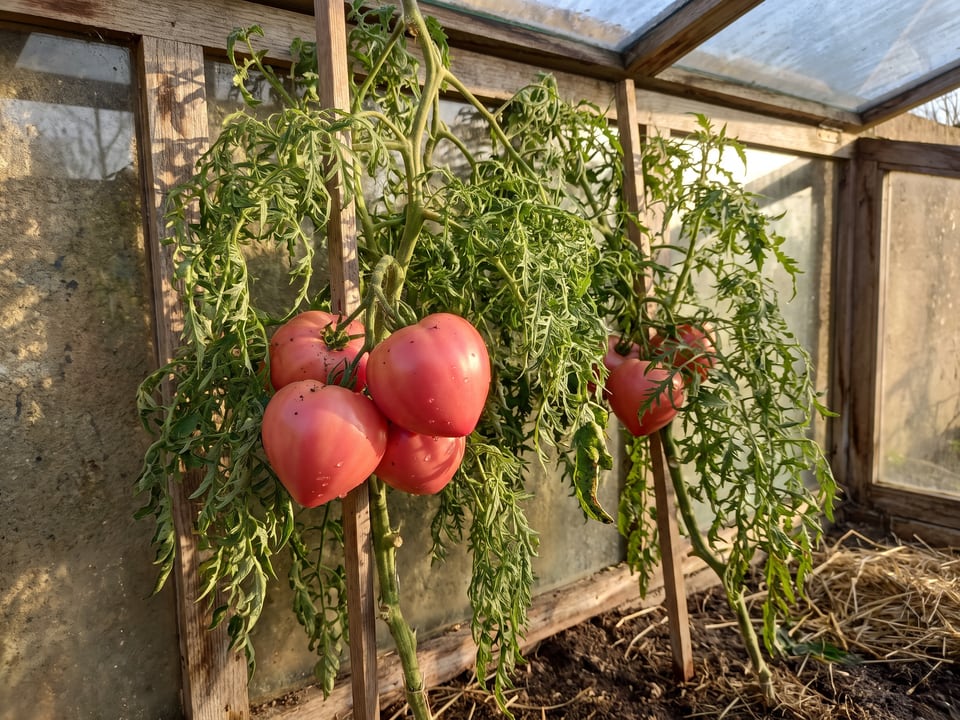
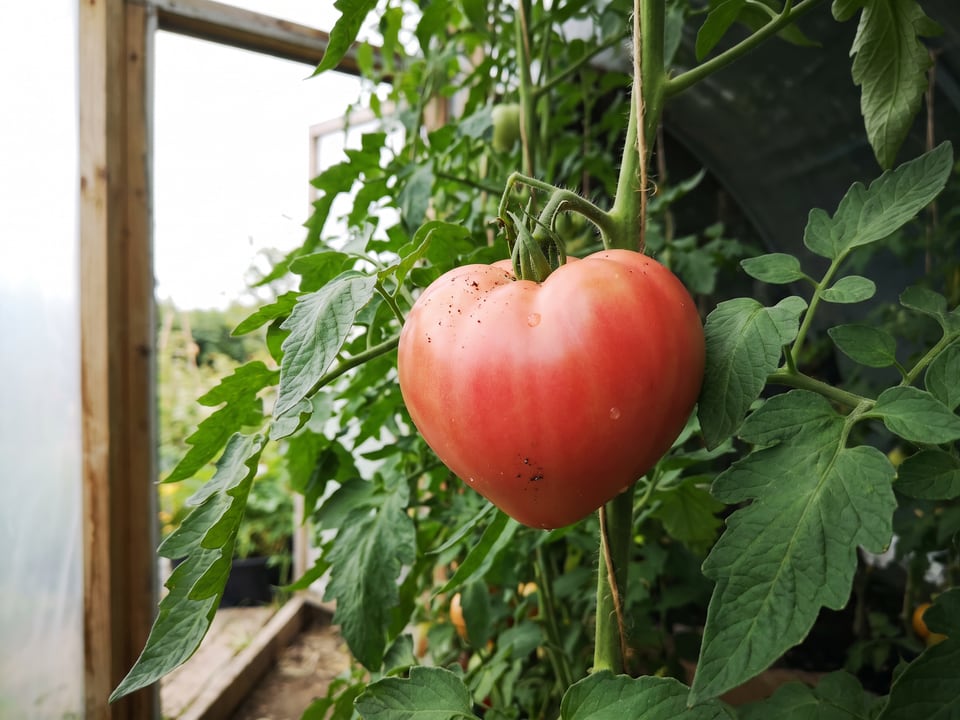
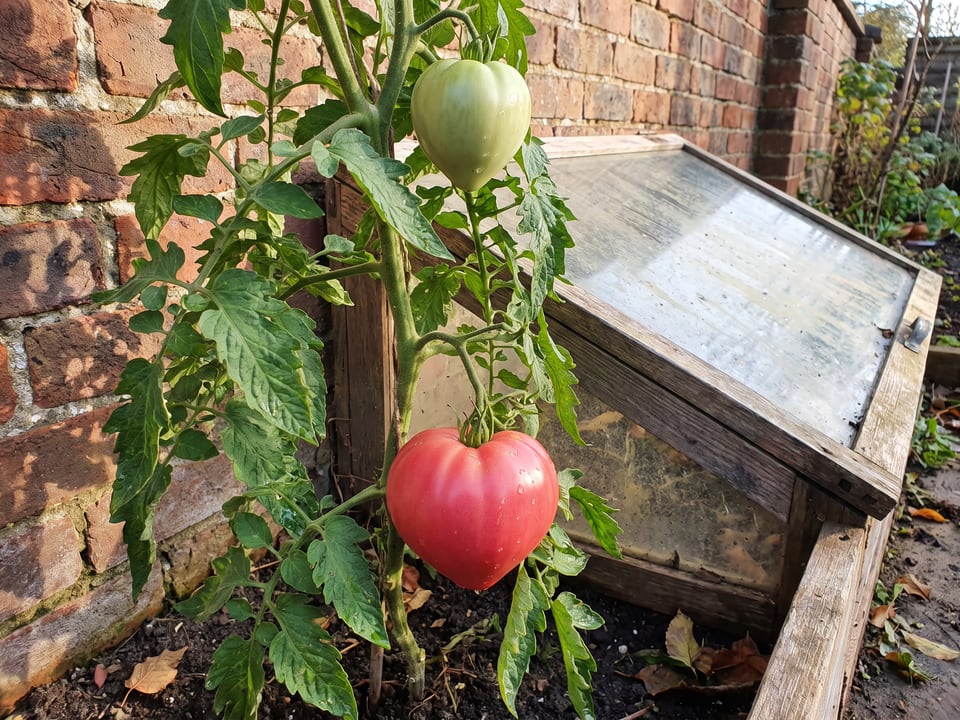
Oxheart tomatoes are large, tapering and pointed at the base, shaped like the organ they are named for rather than like a globe. The six varieties here weigh 8 to 32 oz (230 to 900 g) and ripen between 70 and 88 days from transplant, all six indeterminate. What sets them apart from ordinary beefsteaks is the flesh: oxhearts are dense and low in gel, with few seed cavities, which makes them a slicing tomato that behaves partly like a paste tomato in the kitchen. It also makes them heavy for their size, and that weight on a pointed fruit is the whole story of growing them well.
- Varieties
- 7
- Days to harvest (from transplant)
- 70–88
- Fruit weight
- 5–32 oz (140–900 g)
- Growth habit
-
7 Indeterminate
All 7 oxheart tomato varieties
How to choose
-
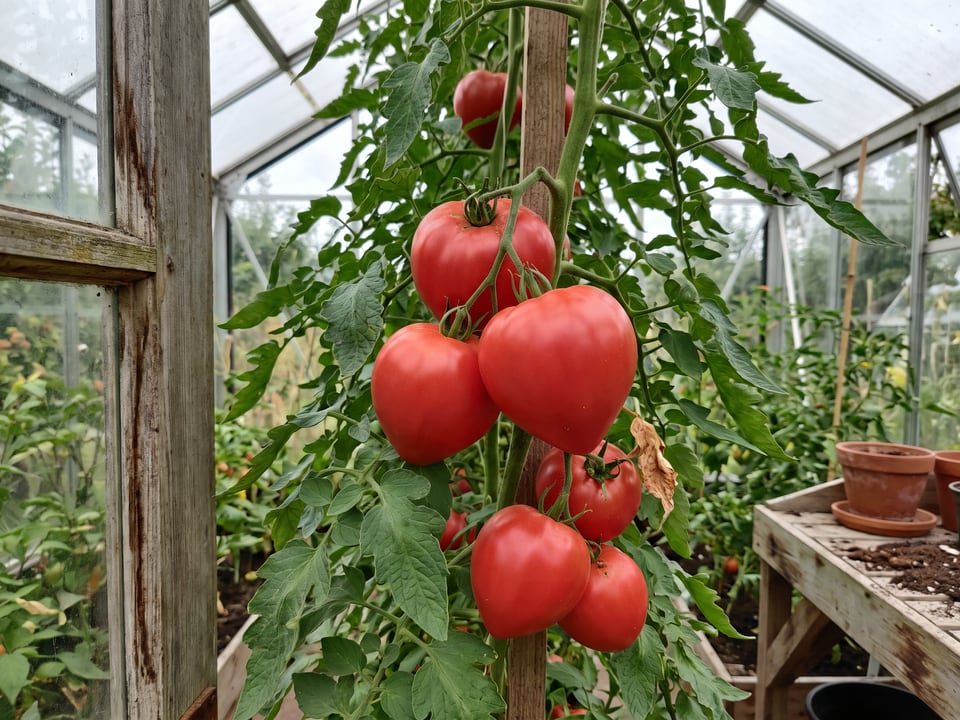
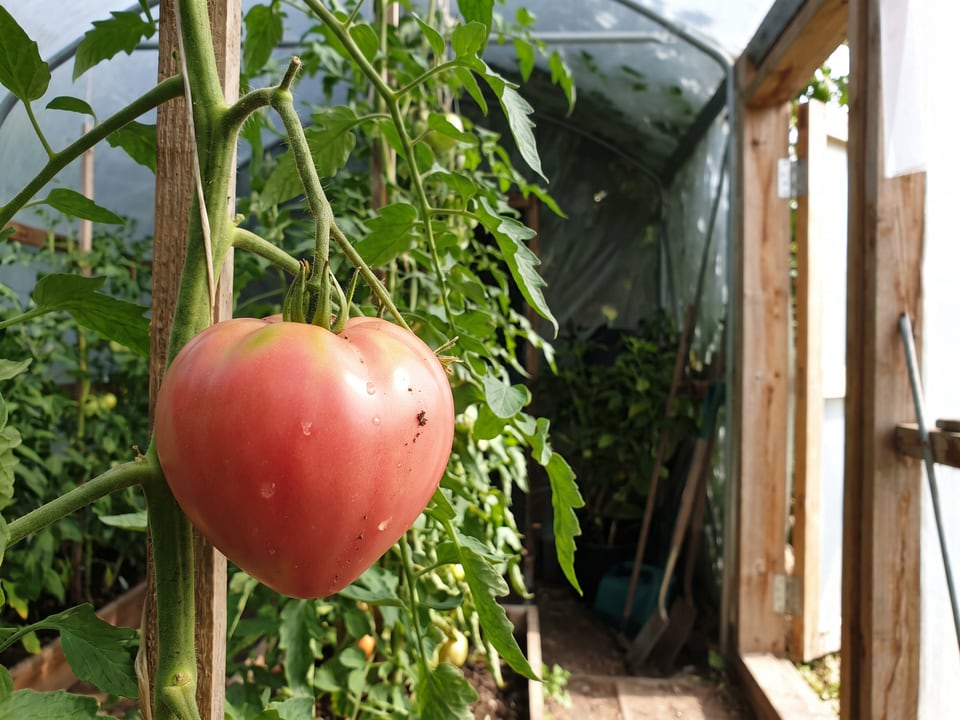
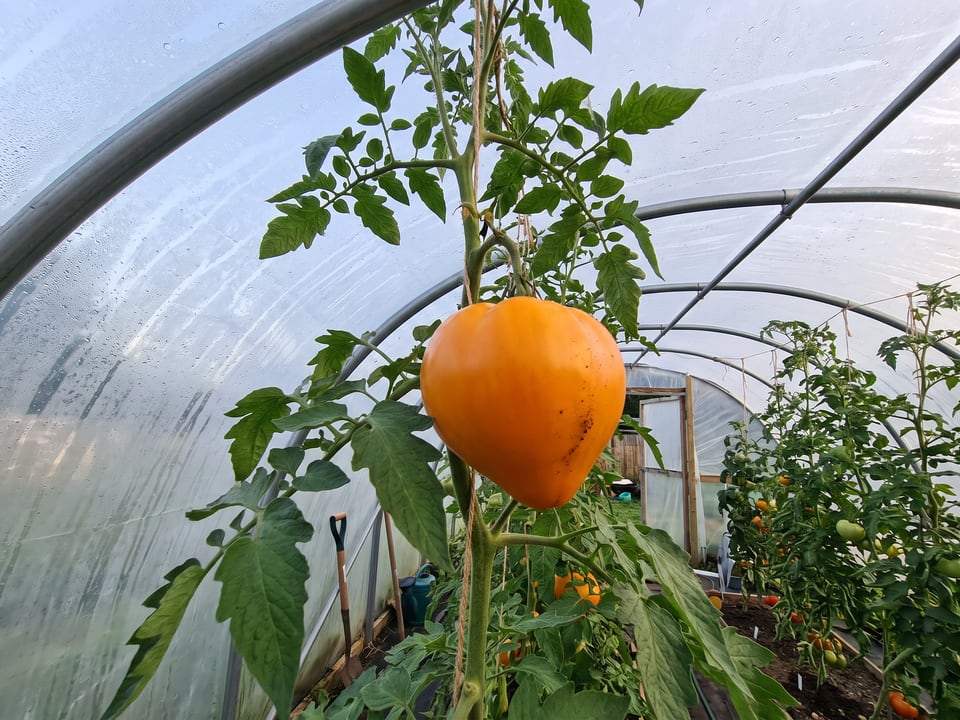
Support is the constraint, not the season. An oxheart at 450 to 900 g hanging from a truss puts more load on a single stem than any other shape, because the mass sits below the attachment point rather than around it. Giant Oxheart and Hungarian Heart at the top of this range need individual fruit support in a wet year, not just a stake for the plant.
-
Season length splits the group in two. Anna Russian at 70 days is the outlier and the practical choice for a shorter summer; the rest sit at 80 to 88 days, with Giant Oxheart the latest. Large fruit takes longer to fill after set, so a late oxheart in a short season is the most reliable way to end up with a plant full of green weight in October.
-
Use them where the low seed content pays off. Dense flesh with few cavities means an oxheart slices without flooding the board and cooks down faster than a comparable beefsteak. Several traditional sauce recipes in Italy and Hungary assume this shape rather than a plum tomato, and it is a genuine culinary difference rather than a marketing one.
-
Expect fewer fruit per plant than the beefsteak page suggests. Large, heavy, single-set fruit means the plant carries fewer of them, and misshapen or aborted first fruits are common. That is normal for the shape and not a sign of a problem with the plant.
Compare side by side
| Color | Uses | |||||
|---|---|---|---|---|---|---|
| Anna Russian | 70 (estimated) | 10–16 oz (280–450 g) (estimated) | Indeterminate | 4 (estimated) / 2 (estimated) / 4 (estimated) | Fresh & salads, Slicing, Sauce & paste | |
| Cuor di Bue | 80 (estimated) | 8–14 oz (230–400 g) (estimated) | Indeterminate | 3 (estimated) / 3 (estimated) / 4 (estimated) | Fresh & salads, Slicing, Sauce & paste | |
| German Red Strawberry | 85 (estimated) | 10–16 oz (280–450 g) (estimated) | Indeterminate | 4 (estimated) / 2 (estimated) / 4 (estimated) | Fresh & salads, Slicing, Sauce & paste | |
| Giant Oxheart | 88 (estimated) | 16–32 oz (450–900 g) (estimated) | Indeterminate | 4 (estimated) / 2 (estimated) / 3 (estimated) | Slicing, Sauce & paste | |
| Hungarian Heart | 85 (estimated) | 14–24 oz (400–680 g) (estimated) | Indeterminate | 4 (estimated) / 2 (estimated) / 4 (estimated) | Slicing, Sauce & paste, Canning | |
| Orange Strawberry | 85 (estimated) | 10–16 oz (280–450 g) (estimated) | Indeterminate | 4 (estimated) / 2 (estimated) / 4 (estimated) | Fresh & salads, Slicing, Sauce & paste | |
| Oxheart | 70 | 5–8 oz (140–220 g) | Indeterminate | 3 (estimated) / 3 (estimated) / 3 (estimated) | Fresh & salads, Slicing, Sauce & paste |
Values marked like this (estimated) are model estimates, not confirmed from a source.
Frequently asked questions
What is an oxheart tomato?
A large tomato that tapers to a point at the blossom end, shaped like a heart rather than a sphere. The flesh is dense with few seed cavities, which distinguishes it from an ordinary beefsteak of similar weight.
Are oxhearts the same as beefsteaks?
No, though they overlap in size and some catalogues file them together. Beefsteak describes weight and a many-chambered structure; oxheart describes a specific tapering shape with dense, low-gel flesh. The two pages here list different varieties for that reason.
Why do my oxheart tomatoes crack at the shoulders?
The same reason any large tomato does: water uptake outpacing skin growth after rain. Oxhearts are more exposed because the fruit is heavy and the skin relatively thin for the mass it holds. Steady watering matters more here than in almost any other shape.
Are oxhearts good for sauce?
Yes, and this is underappreciated. The low seed and gel content means less liquid to cook off than a globe tomato of the same weight. Several regional European sauce traditions use oxheart types rather than plum types.
How long do oxheart tomatoes take?
Between 70 and 88 days from transplant across the six varieties here, with Anna Russian the earliest at 70 and Giant Oxheart the latest at 88. All figures are counted from transplant rather than from sowing.