Pear tomato varieties
Pear tomatoes are named for their shape, not their colour, which is worth saying because four of the six varieties here have a colour in their name and it makes the category sound like something it is not. What they share is a narrow neck and a rounded base, a shape that holds together on a skewer and in a salad, and an unusually tight season: all six ripen between 75 and 80 days from transplant, the narrowest range of any fruit type on this site. Weight is where they diverge, from Yellow Pear and Red Pear at around 20 g to Japanese Black Trifele at 110 to 170 g, which is a pear-shaped slicer rather than a snacking tomato. All six are indeterminate.
- Varieties
- 6
- Days to harvest (from transplant)
- 75–80
- Fruit weight
- 1–6 oz (15–170 g)
- Growth habit
-
6 Indeterminate
All 6 pear tomato varieties
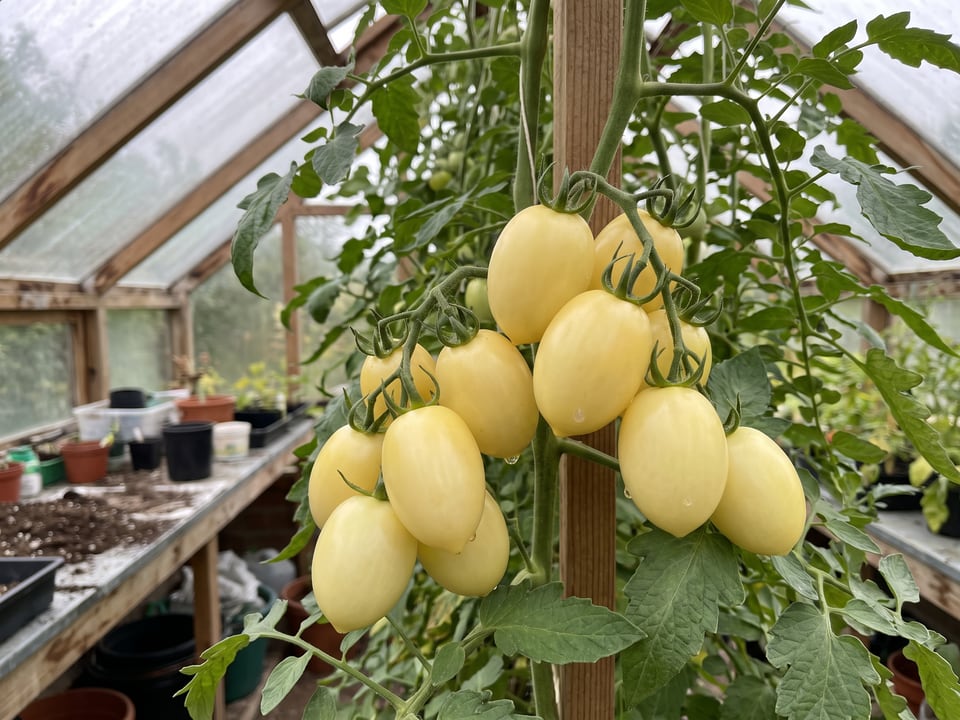
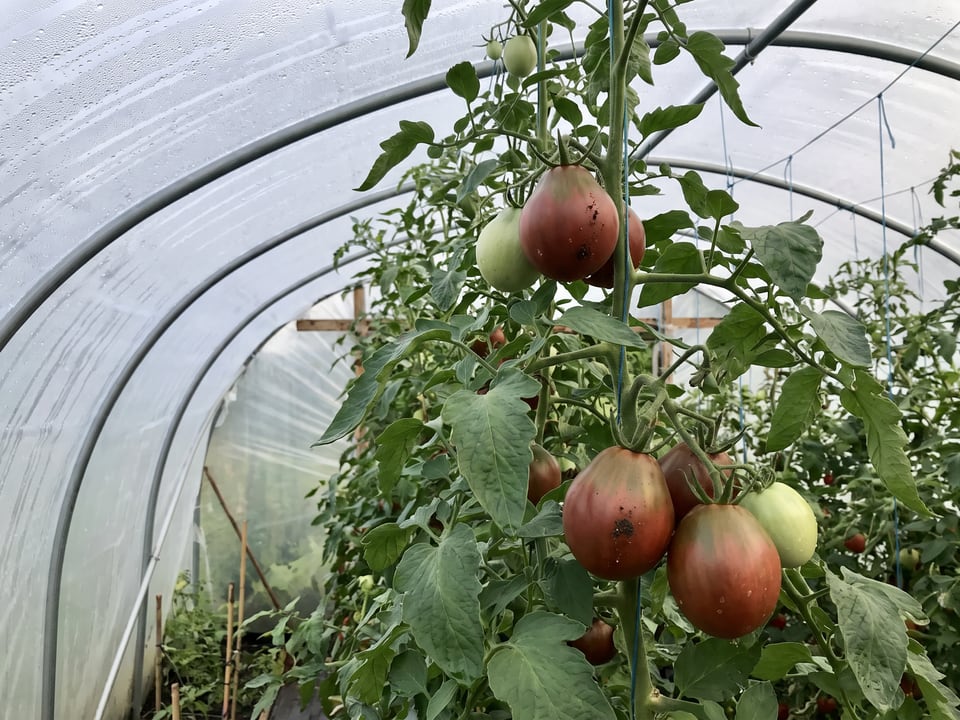
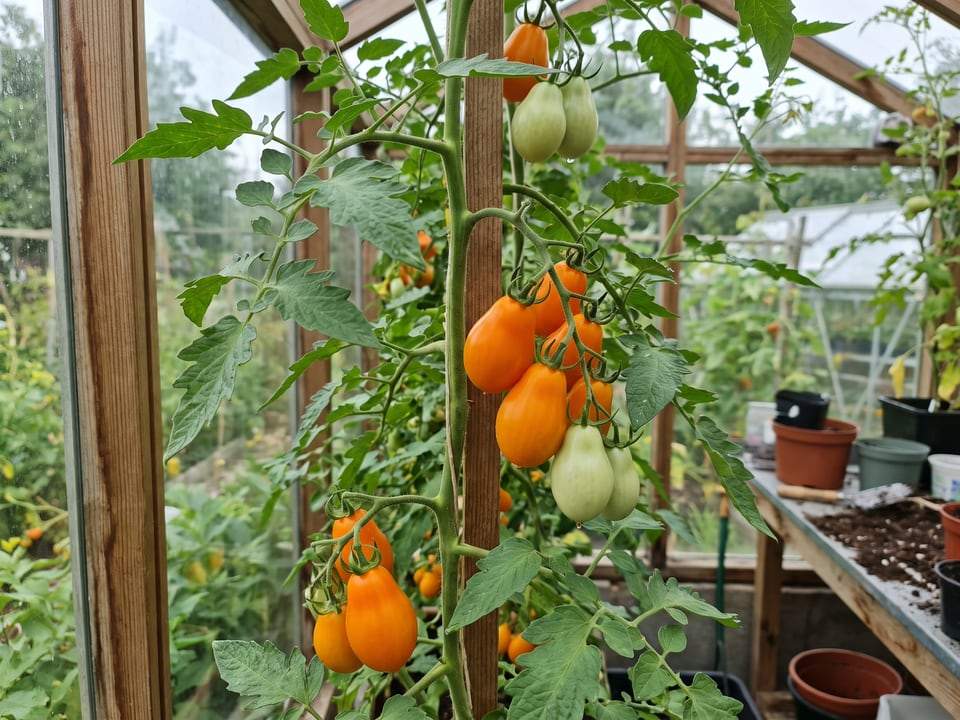
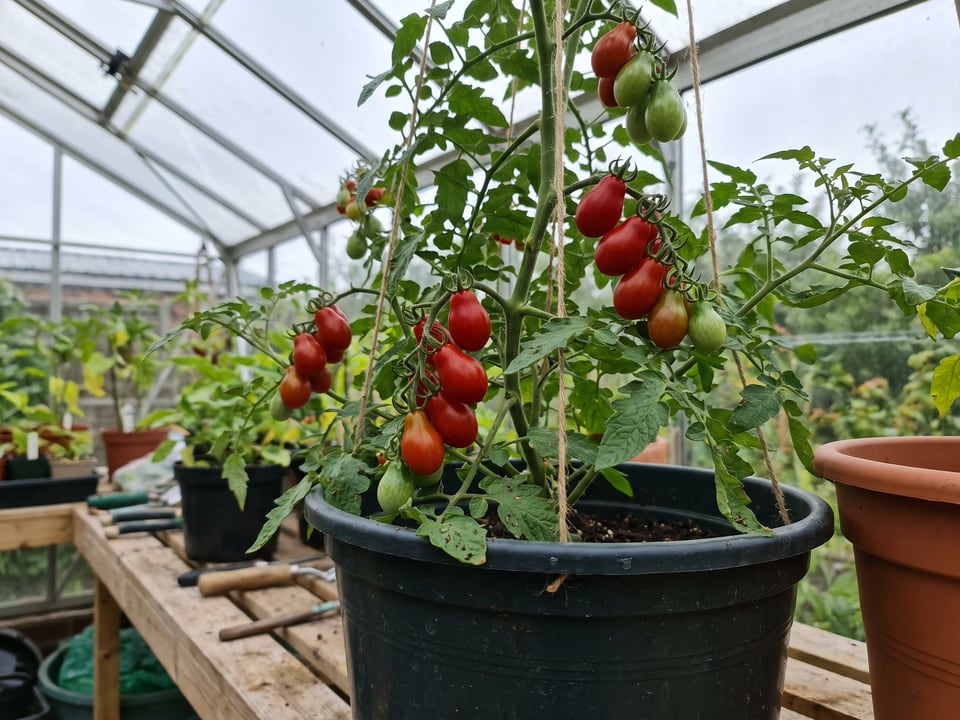
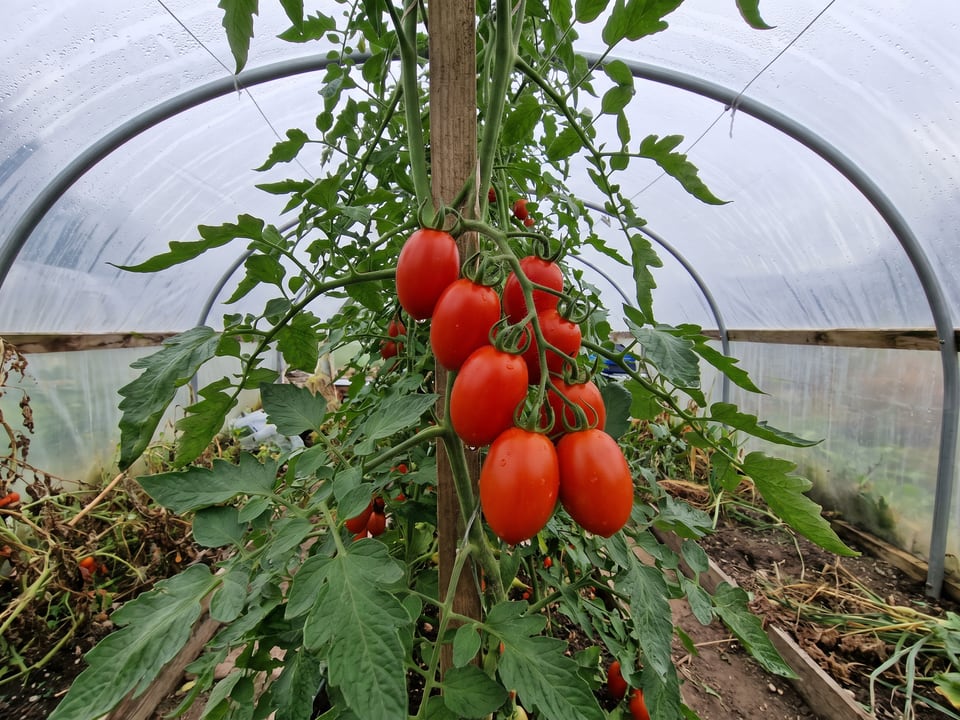
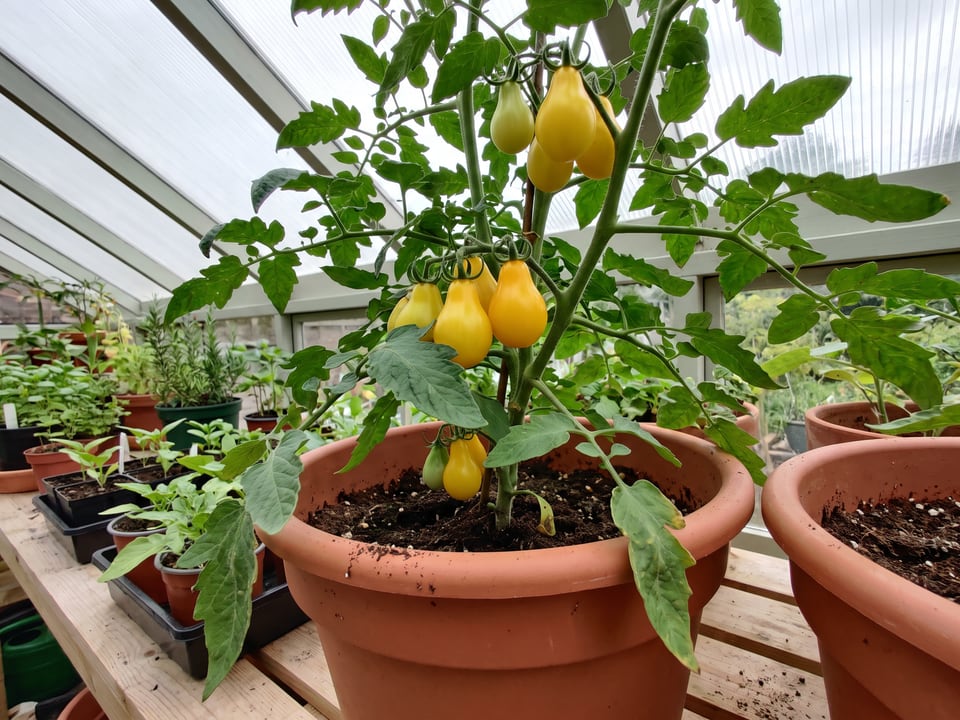
How to choose
-
The five-day season range means the calendar will not choose for you. Every variety here lands between 75 and 80 days, so unlike most pages on this site, days to maturity is not a useful filter. Decide on size and colour instead, and treat the timing as fixed.
-
There are really two groups wearing one label. Yellow Pear, Red Pear, Orange Pear and Teardrop are small snacking fruit at roughly an ounce. Ivory Egg at 30 to 50 g and Japanese Black Trifele at 110 to 170 g are progressively larger, and the Trifele in particular is a kitchen tomato you would slice rather than eat whole.
-
Pear shapes are prolific and that is a planning consideration. The small-fruited varieties here set in large trusses and keep going until frost, which is welcome in a salad garden and overwhelming if you planted three of them. One plant of Yellow Pear supplies most households.
-
Blossom end rot shows up more readily on elongated fruit than on round, because the shape puts more distance between the calcium supply and the tip. It is a watering and consistency problem rather than a variety problem, but it is worth knowing before you blame the seed.
Compare side by side
| Color | Uses | |||||
|---|---|---|---|---|---|---|
| Ivory Egg | 75 (estimated) | 1–2 oz (30–50 g) (estimated) | Indeterminate | 4 (estimated) / 2 (estimated) / 3 (estimated) | Fresh & salads, Snacking, Roasting | |
| Japanese Black Trifele | 80 (estimated) | 4–6 oz (110–170 g) (estimated) | Indeterminate | 3 (estimated) / 3 (estimated) / 5 (estimated) | Fresh & salads, Slicing, Roasting | |
| Orange Pear | 78 (estimated) | ~1 oz (15–25 g) (estimated) | Indeterminate | 4 (estimated) / 2 (estimated) / 2 (estimated) | Fresh & salads, Snacking | |
| Red Pear | 78 (estimated) | ~1 oz (15–25 g) (estimated) | Indeterminate | 3 (estimated) / 3 (estimated) / 2 (estimated) | Fresh & salads, Snacking | |
| Teardrop | 75 (estimated) | ~1 oz (15–25 g) (estimated) | Indeterminate | 4 (estimated) / 3 (estimated) / 3 (estimated) | Fresh & salads, Snacking | |
| Yellow Pear | 78 (estimated) | ~1 oz (15–25 g) (estimated) | Indeterminate | 3 (estimated) / 2 (estimated) / 2 (estimated) | Snacking, Fresh & salads |
Values marked like this (estimated) are model estimates, not confirmed from a source.
Frequently asked questions
What is a pear tomato?
A shape classification: a small to medium tomato with a narrowed neck and a rounded lower body, resembling a pear in outline. It says nothing about colour, flavour or use, and pear-shaped varieties in this catalogue come in yellow, red, orange, white and near-black.
Are pear tomatoes the same as cherry tomatoes?
No, though the smallest pear varieties overlap with cherries in size. Cherry is a round shape; pear is elongated with a neck. In practice pear types hold their form better once cut, which is the usual reason to choose one.
Is Yellow Pear an heirloom?
Yes, and it is one of the older cultivars still in wide circulation. Like every open-pollinated variety on this site, seed saved from it grows back true, which is part of why it has stayed available for so long.
Why do my pear tomatoes have dark sunken bottoms?
That is blossom end rot, and elongated fruit is more prone to it than round fruit. The cause is calcium not reaching the growing tip, which is usually a consequence of irregular watering rather than of calcium being absent from the soil. Consistent moisture solves it more reliably than any additive.
Do pear tomatoes need staking?
Yes, all six here. Every pear variety in this catalogue is indeterminate and will grow through the whole season, carrying heavy trusses of small fruit that need the support more than the plant does.