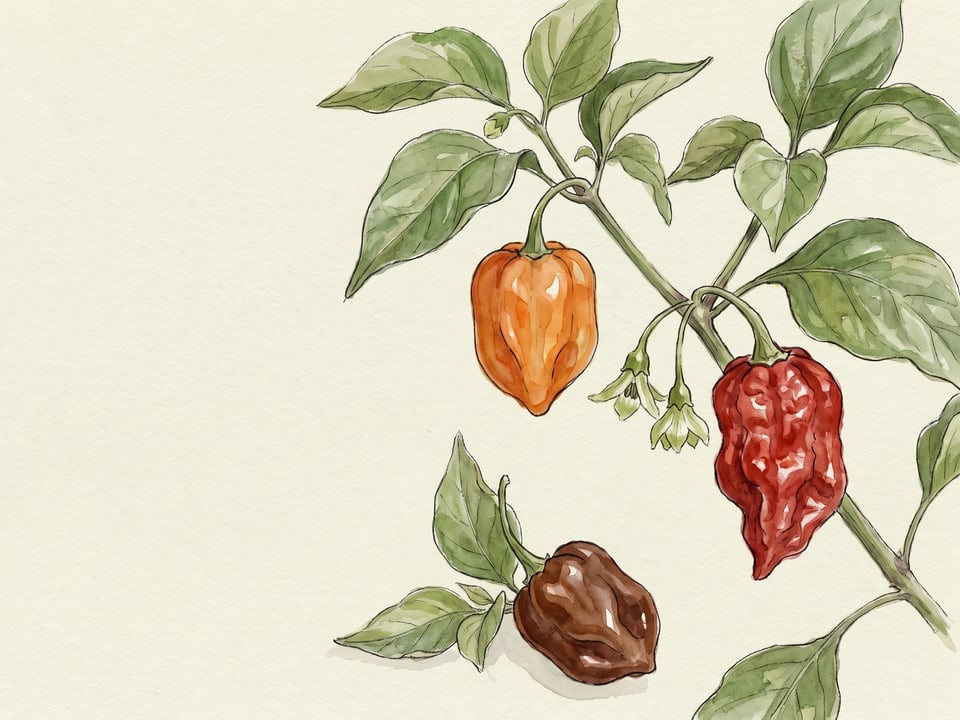
Capsicum chinense pepper varieties
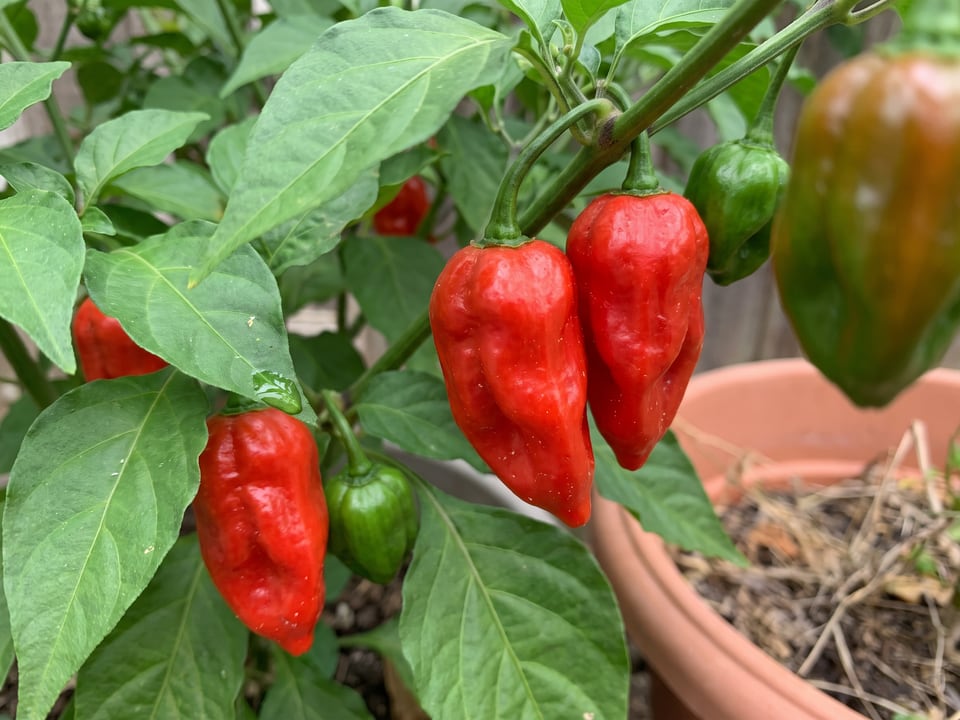
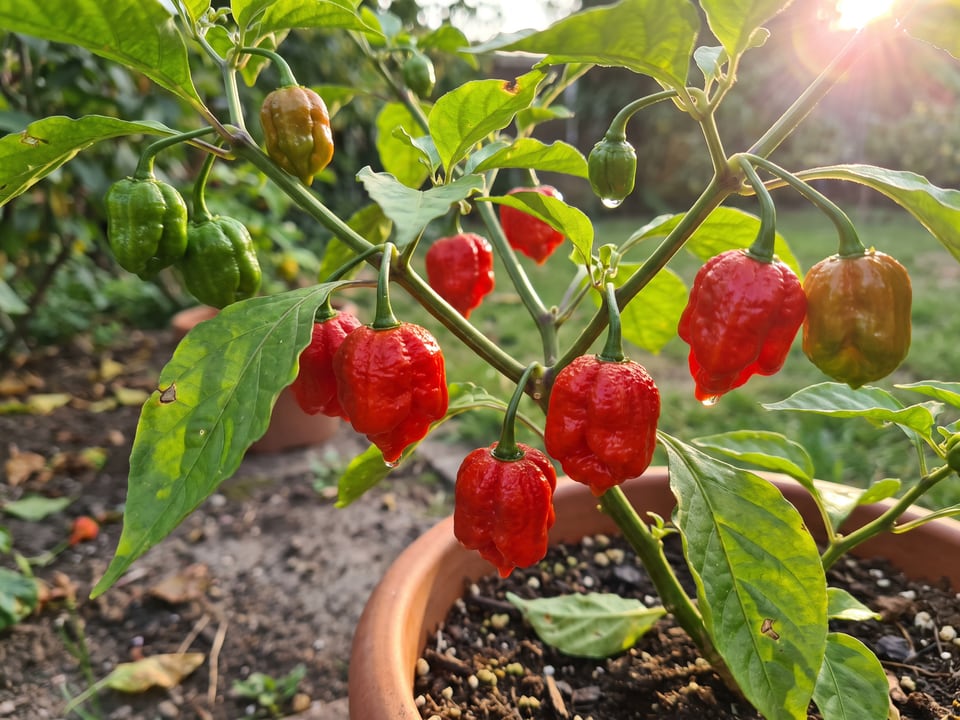
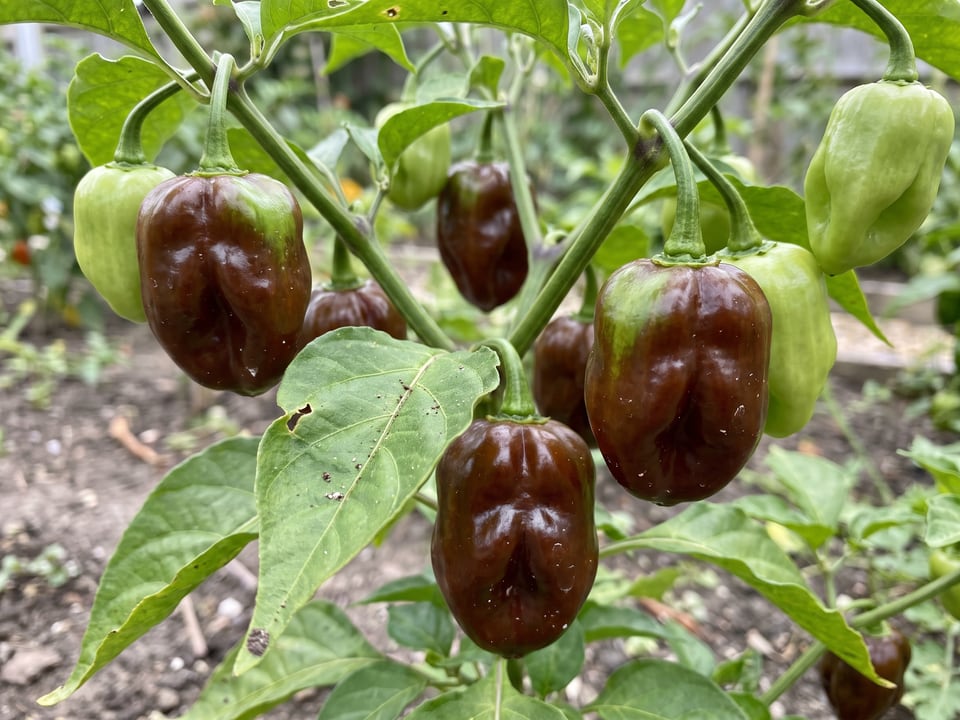
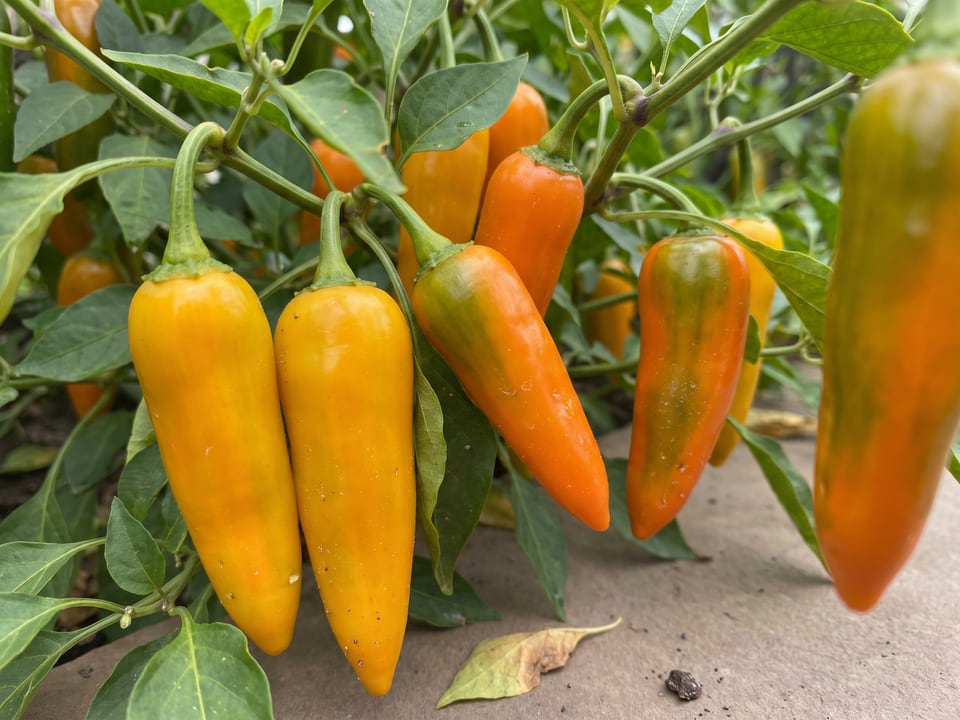
Capsicum chinense is the habanero side of the pepper family and the species behind almost every record holder on the Scoville scale, including the ghost pepper and the Carolina Reaper. It is also the species most often misread. Three of the ten chinense peppers in this catalog sit below the very hot band: Habanada was bred specifically to keep the habanero without the burn, and Biquinho and Aji Dulce both sit in the mild band. What the species reliably predicts is not heat but time. Every chinense record here needs at least 88 days from transplant, while Capsicum annuum records start at 60.
- Varieties
- 10
- Days to harvest (from transplant)
- 88–120
- Fruit weight
- 0–1 oz (2–20 g)
- Heat
-
7 Very hot
2 Mild
1 No heat
All 10 Capsicum chinense pepper varieties
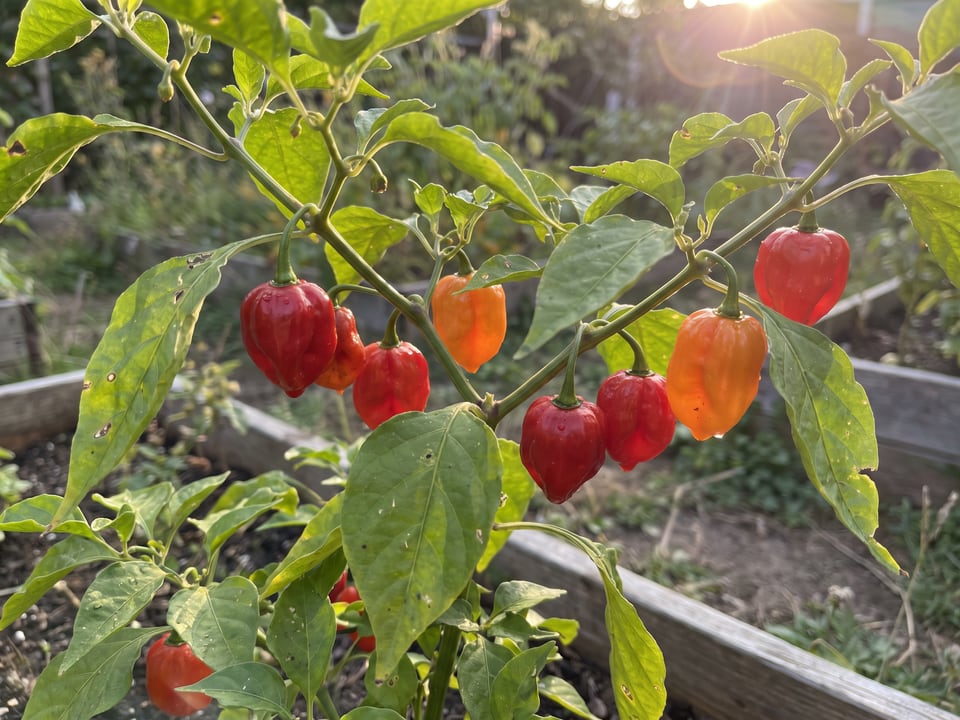
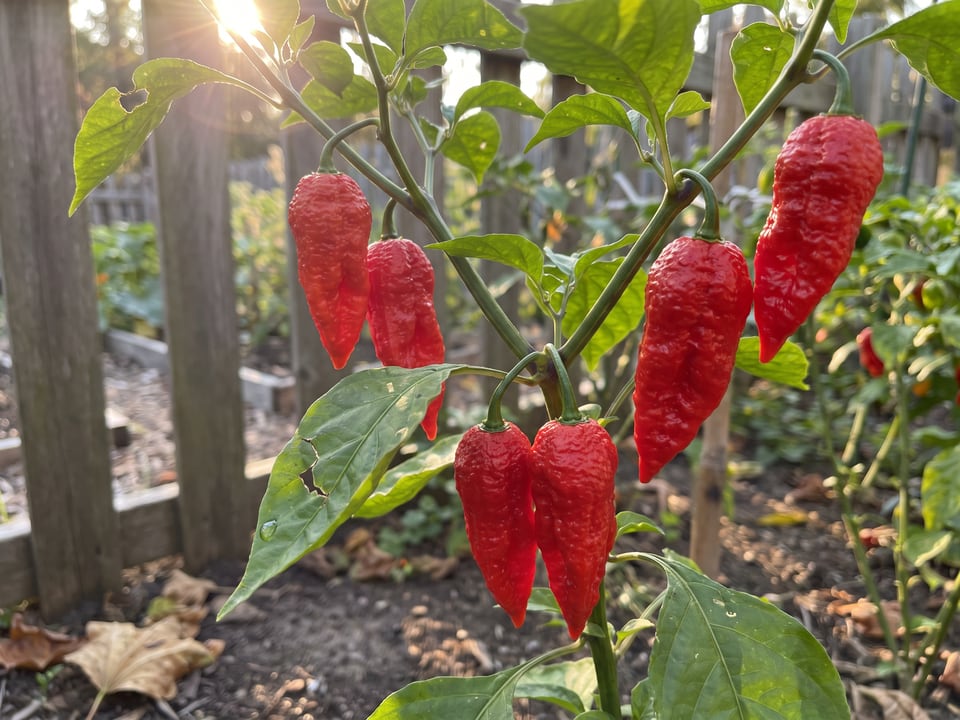
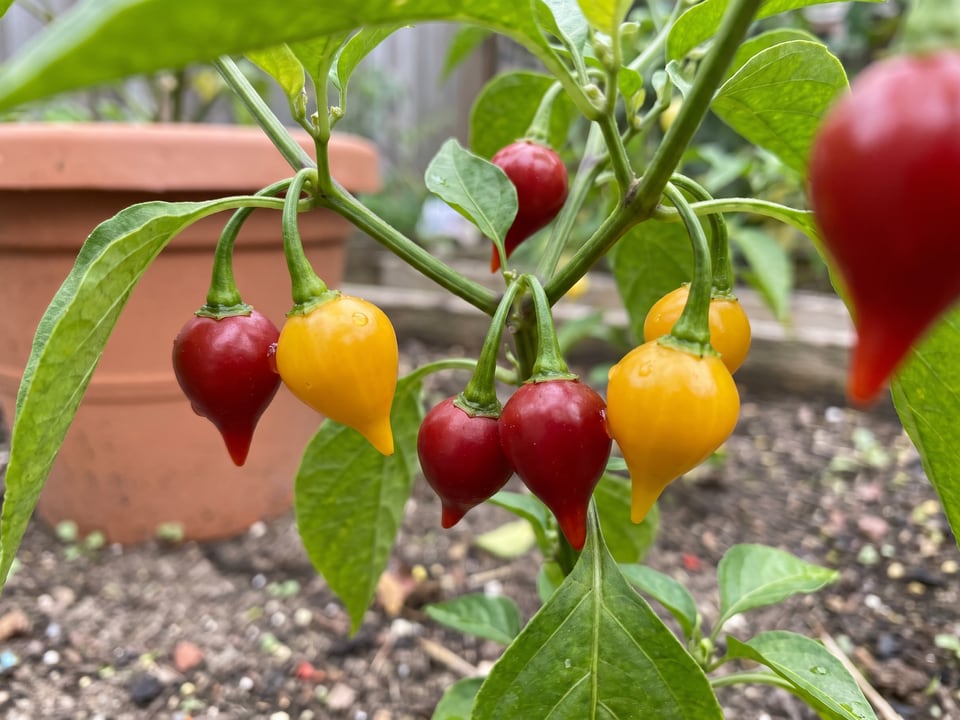
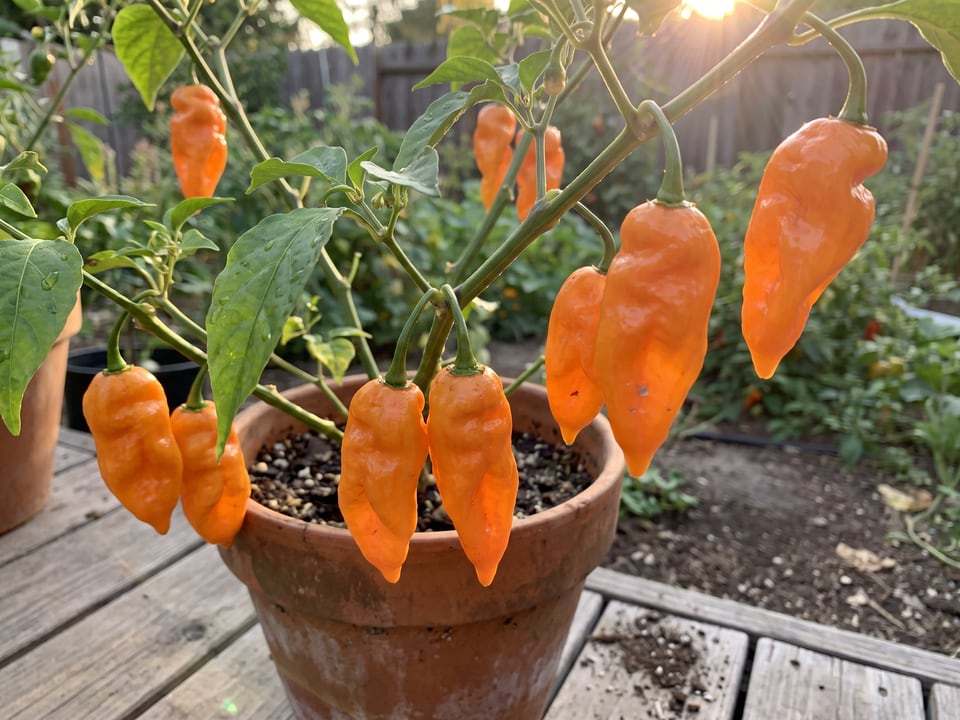
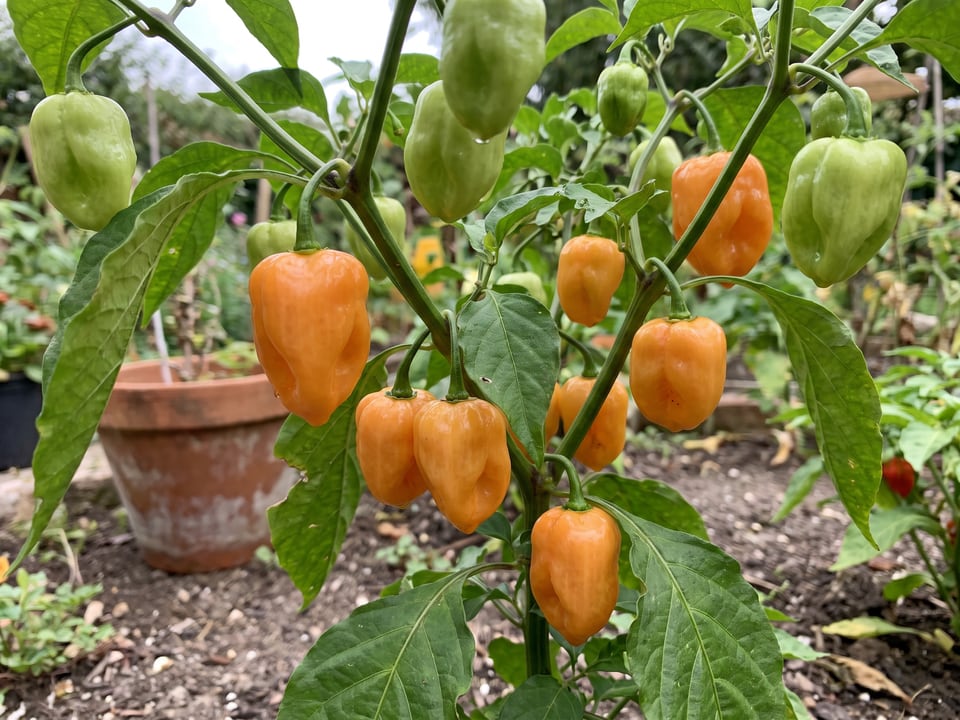
How to choose
-
Count the calendar backwards before anything else. These are the slowest peppers in the catalog, 88 to 120 days from transplant, and a short season is the usual reason a chinense pepper never ripens.
-
Do not read the species as a warning. Seven of the ten peppers here sit in the very hot band, but the rest are mild or heatless, and the Scoville range printed on each variety page is what separates them.
-
Check the listed Scoville range rather than the band alone when you are near the top of the scale. The band stops at 100,000 units and upwards, while the varieties on this page reach into the millions.
-
Plant size is not the constraint here. Average heights on this page run from about 54 cm to about 84 cm, so the limiting factor is almost always the length of your season.
Compare side by side
| Color | Uses | |||||
|---|---|---|---|---|---|---|
| Aji Dulce | 88 (estimated) | <1 oz (5–12 g) (estimated) | Mild | 3 (estimated) / 3 (estimated) / 2 (estimated) | Sauce & paste, Fresh & salads, Snacking | |
| Bhut Jolokia | 120 | <1 oz (6–12 g) (estimated) | Very hot | 2 (estimated) / 2 (estimated) / 5 (estimated) | Sauce & paste, Drying | |
| Biquinho | 92 | <1 oz (2–5 g) (estimated) | Mild | 3 (estimated) / 3 (estimated) / 2 (estimated) | Canning, Snacking, Fresh & salads | |
| Caribbean Red | 110 (estimated) | 0–1 oz (8–15 g) (estimated) | Very hot | 2 (estimated) / 3 (estimated) / 5 (estimated) | Sauce & paste, Drying | |
| Carolina Reaper | 120 (estimated) | 0–1 oz (10–20 g) (estimated) | Very hot | 2 (estimated) / 2 (estimated) / 5 (estimated) | Sauce & paste, Drying | |
| Chocolate Habanero | 95 (estimated) | 0–1 oz (10–18 g) (estimated) | Very hot | 2 (estimated) / 2 (estimated) / 5 (estimated) | Sauce & paste, Drying | |
| Datil | 100 | <1 oz (5–12 g) (estimated) | Very hot | 3 (estimated) / 3 (estimated) / 5 (estimated) | Sauce & paste, Drying, Canning | |
| Habanada | 95 (estimated) | 0–1 oz (8–15 g) (estimated) | No heat | 4 (estimated) / 2 (estimated) / 1 (estimated) | Fresh & salads, Snacking, Sauce & paste | |
| Orange Habanero | 105 (estimated) | 0–1 oz (8–15 g) (estimated) | Very hot | 2 (estimated) / 3 (estimated) / 5 (estimated) | Sauce & paste, Drying, Canning | |
| Scotch Bonnet | 95 (estimated) | 0–1 oz (8–15 g) (estimated) | Very hot | 2 (estimated) / 2 (estimated) / 5 (estimated) | Sauce & paste, Drying |
Values marked like this (estimated) are estimates.
Frequently asked questions
Are all Capsicum chinense peppers very hot?
No, although most are. Seven of the ten in this catalog sit in the very hot band, above 100,000 Scoville heat units. The rest are Habanada, which measures no heat at all, and Biquinho and Aji Dulce, which sit in the mild band.
Why do Capsicum chinense peppers take so long to ripen?
Whatever the reason, the pattern is consistent in the data: not one chinense record in this catalog matures in under 88 days from transplant, while the earliest annuum records are ready at 60. Gardeners in short-season regions usually start these earlier indoors than the rest of their peppers.
Is the ghost pepper a Capsicum chinense?
Yes. Bhut Jolokia, better known as the ghost pepper, is a chinense, and so is the Carolina Reaper. Both are on this page, and both sit at the slow end of the calendar at 120 days from transplant.