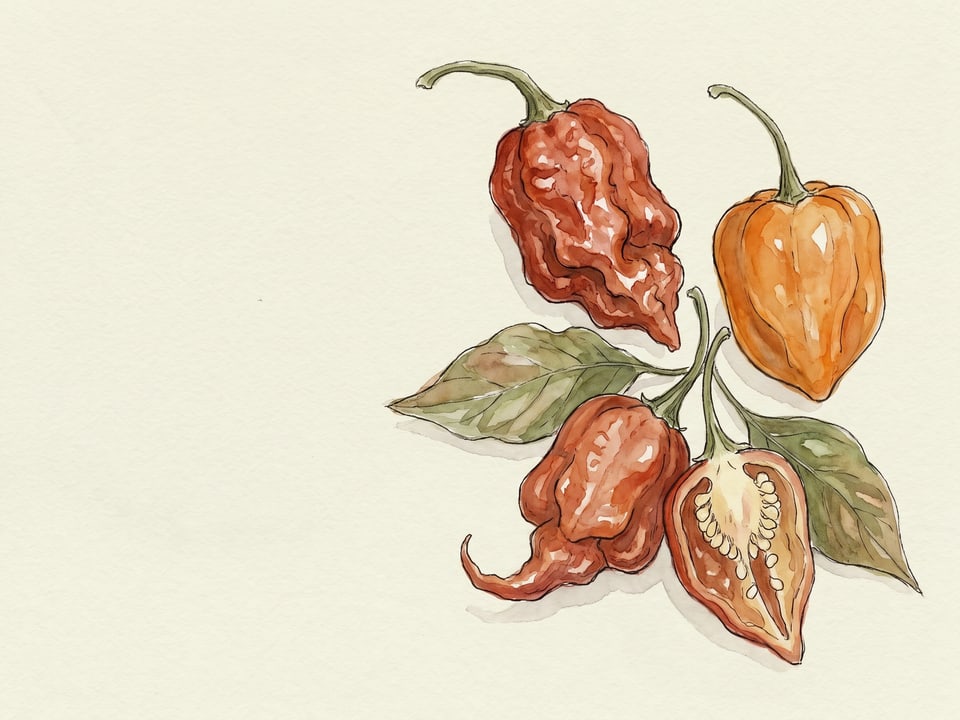
Very hot pepper varieties
Very hot is the top band in this catalog: 100,000 Scoville heat units and upward, starting at habanero and running to the superhots. It is also by far the widest band. The seven varieties here span from 100,000 units at the bottom to 2,200,000 at the top, a twenty-two-fold spread, which is greater than the distance between no heat and the whole of the hot band below. Treating them as one category is the mistake this page exists to prevent: an orange habanero seasons a pot of stew, while a Carolina Reaper is handled with gloves and used in fractions of a pod. Every variety in this band is also slow, taking 95 to 120 days from transplant on top of eight to twelve weeks indoors before that. Heat is recorded as a band rather than a single figure because suppliers disagree, often several-fold, on the same variety; where one publishes a range it appears on the variety page marked as an estimate. The ranking and the table below compare all of them.
- Varieties
- 7
- Days to harvest (from transplant)
- 95–120
- Fruit weight
- 0–1 oz (5–20 g)
- Heat
-
7 Very hot
Very hot peppers ranked by Scoville heat units
Ranked by the top of each variety's published Scoville range, highest first. Where two tops are equal, the higher bottom of the range ranks first, and identical ranges share a place. Ranges are as published by the seed suppliers cited on each variety page, and they vary by supplier and by pod.
| Rank | Variety | Scoville heat units |
|---|---|---|
| 1 | Carolina Reaper | 1,500,000–2,200,000 |
| 2 | Bhut Jolokia | 855,000–1,040,000 |
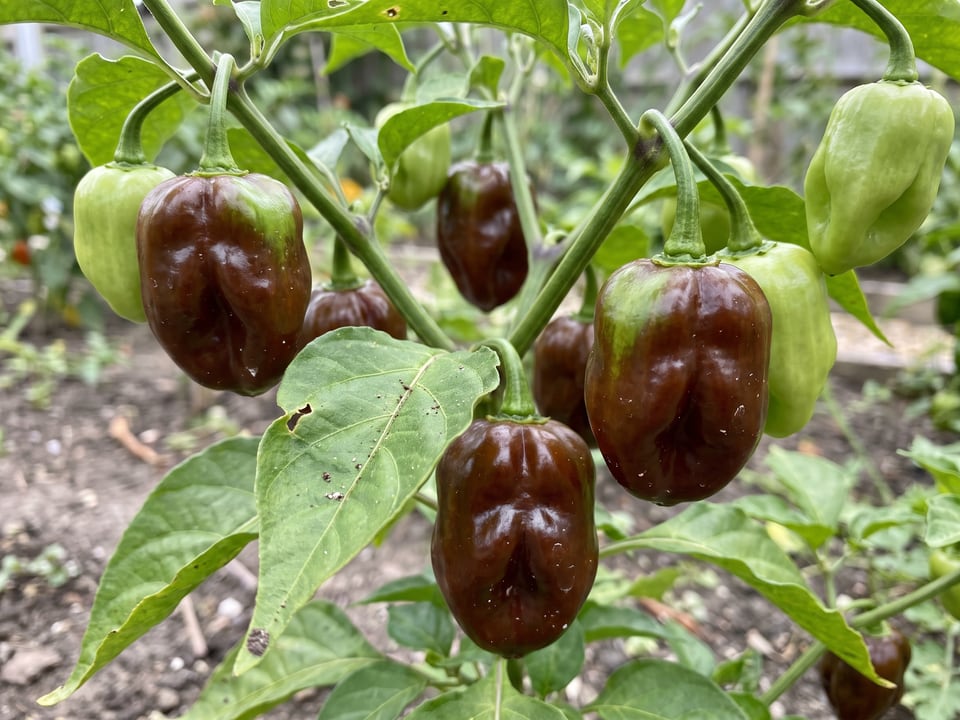
| 3 | Chocolate Habanero | 350,000–577,000 |
| 4 | Caribbean Red | 100,000–445,000 |
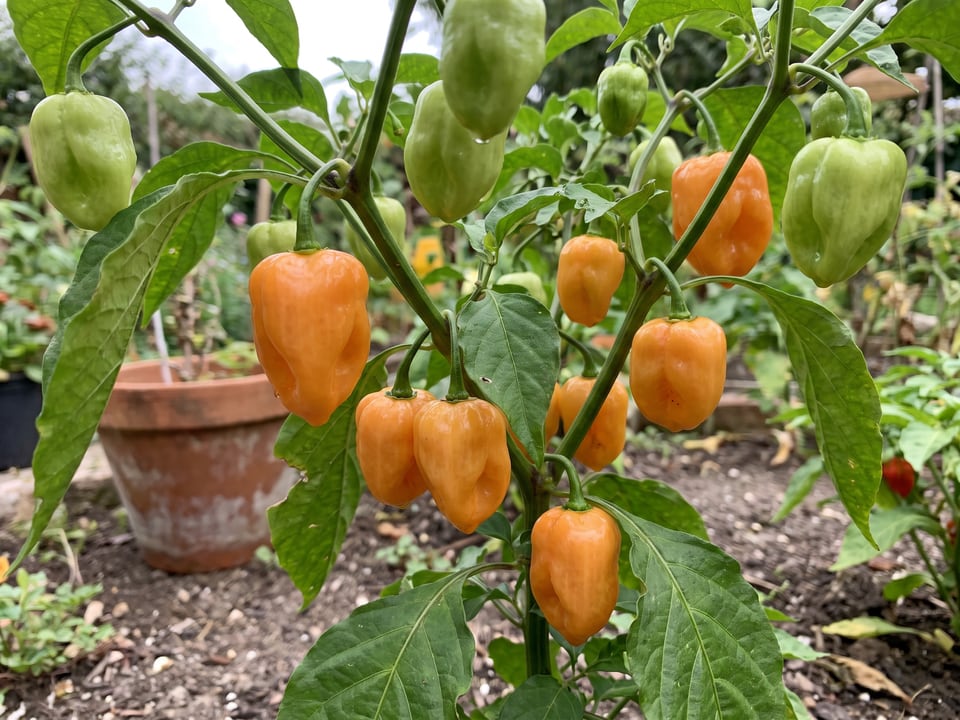
| 5 | Orange Habanero | 100,000–350,000 |
| 5 | Scotch Bonnet | 100,000–350,000 |
| 7 | Datil | 100,000–300,000 |
This ranks the varieties in this catalog, not every pepper ever measured. The current Guinness record holder is not sold as seed to gardeners and is not listed.
All 7 very hot pepper varieties
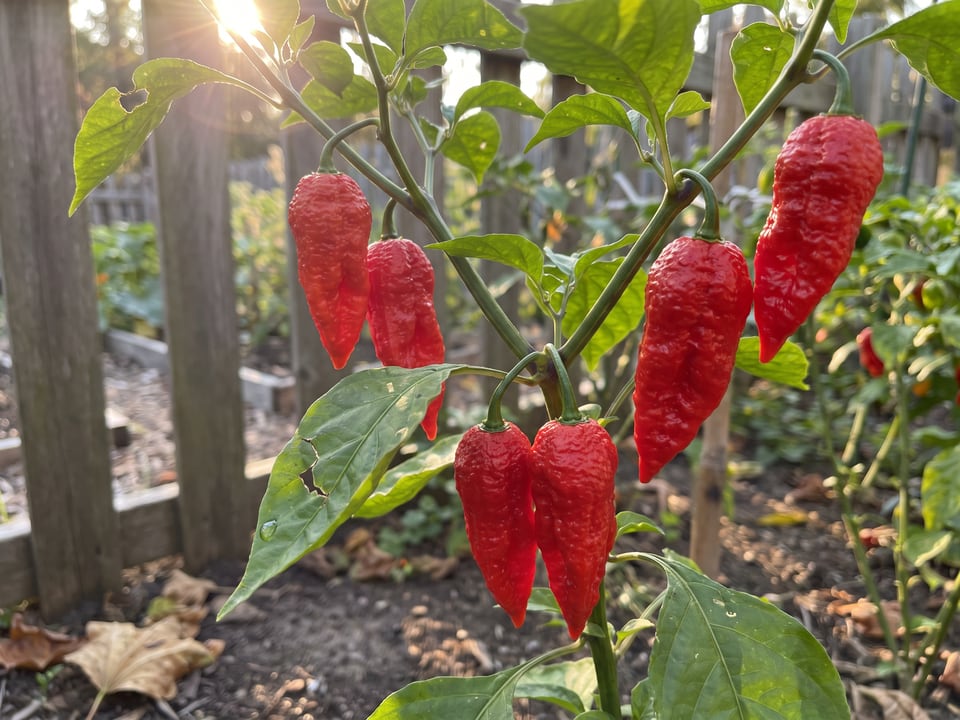
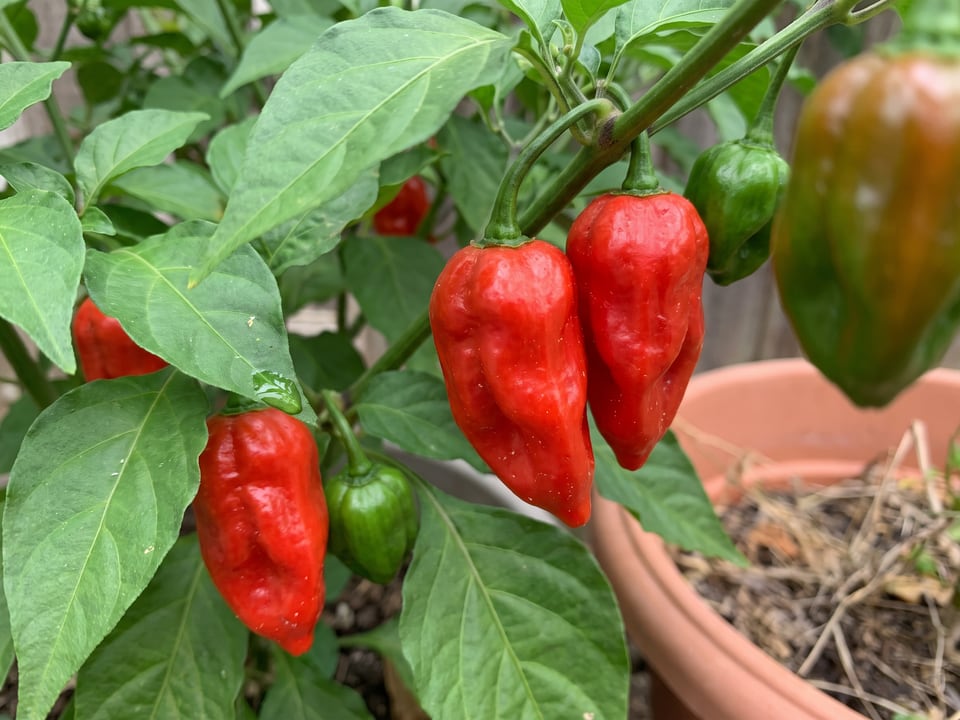
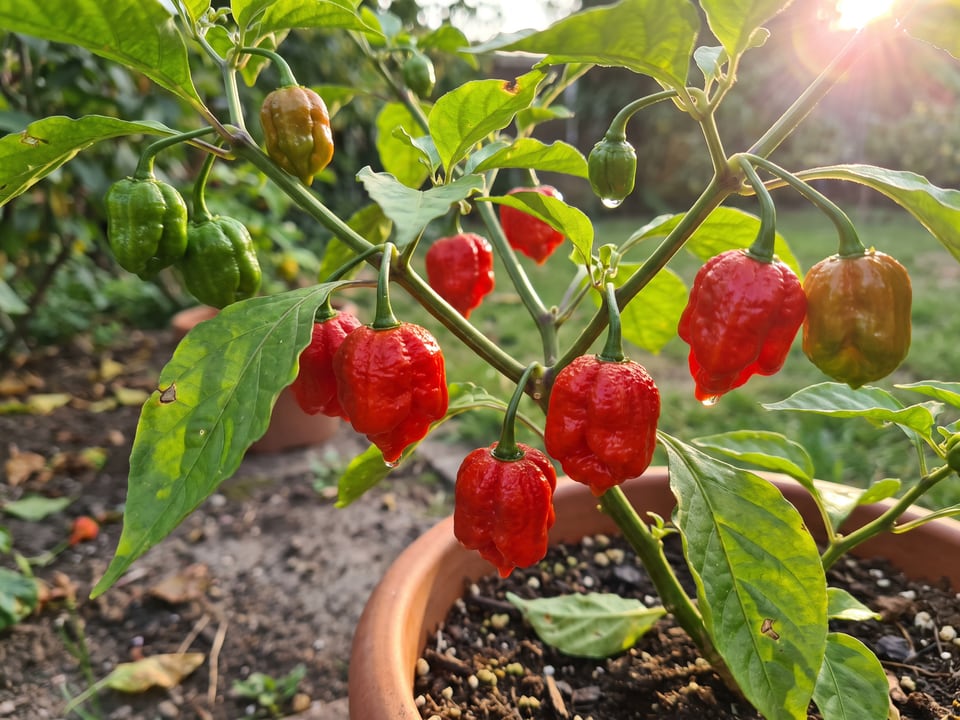
How to choose
-
Place yourself on the axis before picking a variety. The bottom of this band is habanero: Orange Habanero and Scotch Bonnet at 100,000 to 350,000 units, Datil to 300,000 and Caribbean Red to 445,000, hot enough to need respect but usable by the pod in a sauce or a stew. Chocolate Habanero sits higher at 350,000 to 577,000, and is chosen for its smoky, raisin-like flavour rather than for more heat. Bhut Jolokia, the ghost pepper, roughly doubles that again. Carolina Reaper, at 1,500,000 to 2,200,000, is a different proposition from everything below it.
-
Count the calendar twice. These are the slowest peppers in the catalog, 95 to 120 days from transplant, and seed of this kind germinates slowly and unevenly: several weeks at 80 to 90 F is normal rather than a failure. Sown late, a superhot spends September ripening pods that frost will take. If your season is short, start with the habanero end of the band, which finishes earliest.
-
Grow them in pots if you can move them. Six of the seven varieties here are listed as container-friendly, and heat develops with warmth and ripening time, so a plant that can be moved into sun or under cover delivers more than one stuck in a cold corner. It also keeps the pods away from anyone who might pick one absent-mindedly.
-
Plan what you will do with the crop before you sow. One healthy superhot plant will produce more heat than a household uses in a year. Drying, powder and fermented sauce are what most of this band is grown for, and the flavour differences between varieties — citrus, smoke, fruit — matter far more in those than the last few hundred thousand Scoville units do.
Compare side by side
| Color | Uses | |||||
|---|---|---|---|---|---|---|
| Bhut Jolokia | 120 | <1 oz (6–12 g) (estimated) | Very hot | 2 (estimated) / 2 (estimated) / 5 (estimated) | Sauce & paste, Drying | |
| Caribbean Red | 110 (estimated) | 0–1 oz (8–15 g) (estimated) | Very hot | 2 (estimated) / 3 (estimated) / 5 (estimated) | Sauce & paste, Drying | |
| Carolina Reaper | 120 (estimated) | 0–1 oz (10–20 g) (estimated) | Very hot | 2 (estimated) / 2 (estimated) / 5 (estimated) | Sauce & paste, Drying | |
| Chocolate Habanero | 95 (estimated) | 0–1 oz (10–18 g) (estimated) | Very hot | 2 (estimated) / 2 (estimated) / 5 (estimated) | Sauce & paste, Drying | |
| Datil | 100 | <1 oz (5–12 g) (estimated) | Very hot | 3 (estimated) / 3 (estimated) / 5 (estimated) | Sauce & paste, Drying, Canning | |
| Orange Habanero | 105 (estimated) | 0–1 oz (8–15 g) (estimated) | Very hot | 2 (estimated) / 3 (estimated) / 5 (estimated) | Sauce & paste, Drying, Canning | |
| Scotch Bonnet | 95 (estimated) | 0–1 oz (8–15 g) (estimated) | Very hot | 2 (estimated) / 2 (estimated) / 5 (estimated) | Sauce & paste, Drying |
Values marked like this (estimated) are estimates.
Frequently asked questions
What is the hottest pepper in this catalog?
Carolina Reaper, at a published 1,500,000 to 2,200,000 Scoville heat units depending on the supplier and the individual pod. Its seed is sold under the breeding code HP22B, and it held the Guinness record for the world's hottest pepper from 2013 until 2023. The variety that took the title afterwards is not in this catalog, which lists varieties whose seed is sold to gardeners.
How much hotter is very hot than hot?
At least ten times, and often far more. The hot band runs to about 100,000 Scoville heat units, where this one begins. A jalapeño, the usual mental reference, tops out around 8,000 units, so the mildest pepper on this page is more than twelve times a jalapeño and the hottest is over two hundred times it.
Are these peppers dangerous?
They are food, but they need handling. Capsaicin at these concentrations burns skin and eyes, so gloves are standard when cutting them and washing hands is not enough to remove it. Taste a fraction before committing a whole pod to a dish. Anyone with heart or digestive conditions should treat superhots with the caution they would any strong stimulant.
Why do published Scoville figures vary so much for the same variety?
Because capsaicin content is not a fixed property of a variety. It varies with ripeness, water, heat and the individual plant, and suppliers quote different measurements taken on different samples, some on dried fruit. Chocolate Habanero is listed here at 350,000 to 577,000 units precisely because two sellers of the same seed publish ranges that do not overlap in the middle.