Black tomato varieties
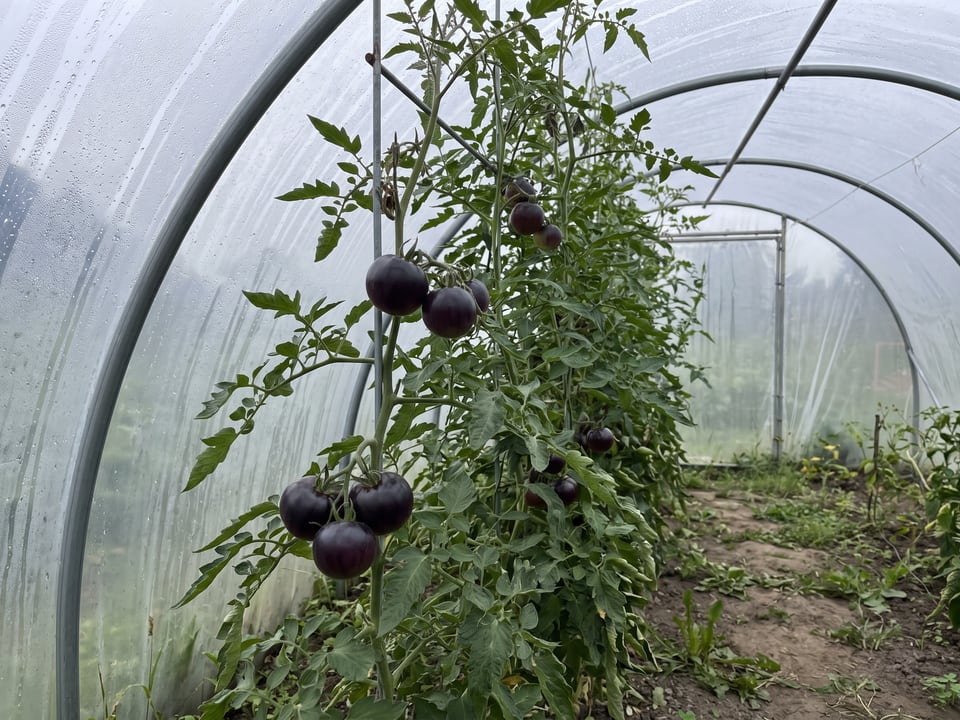
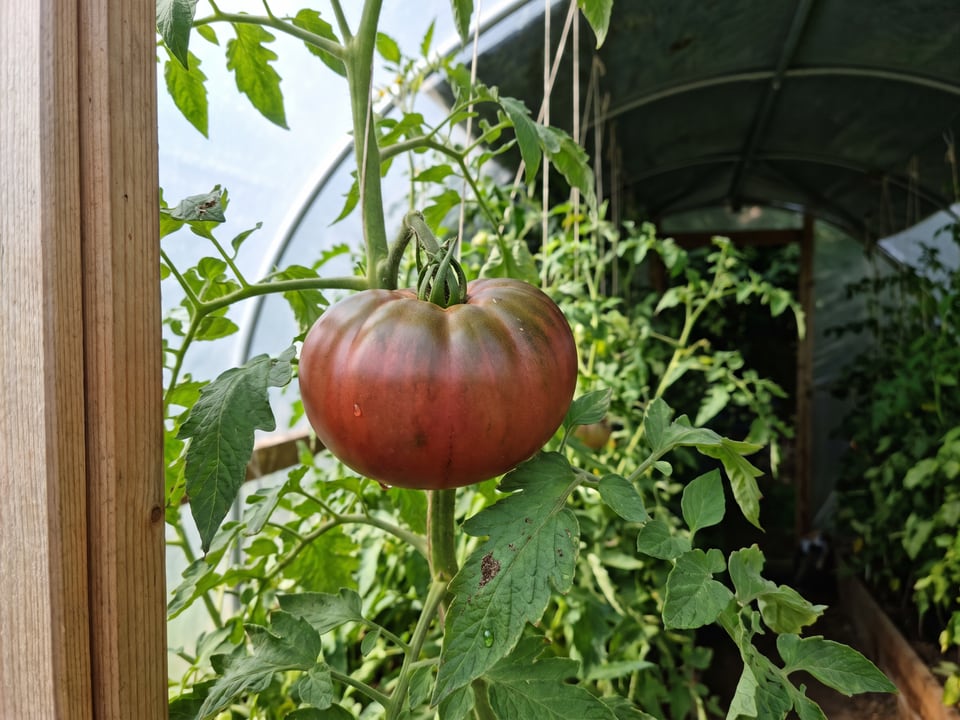
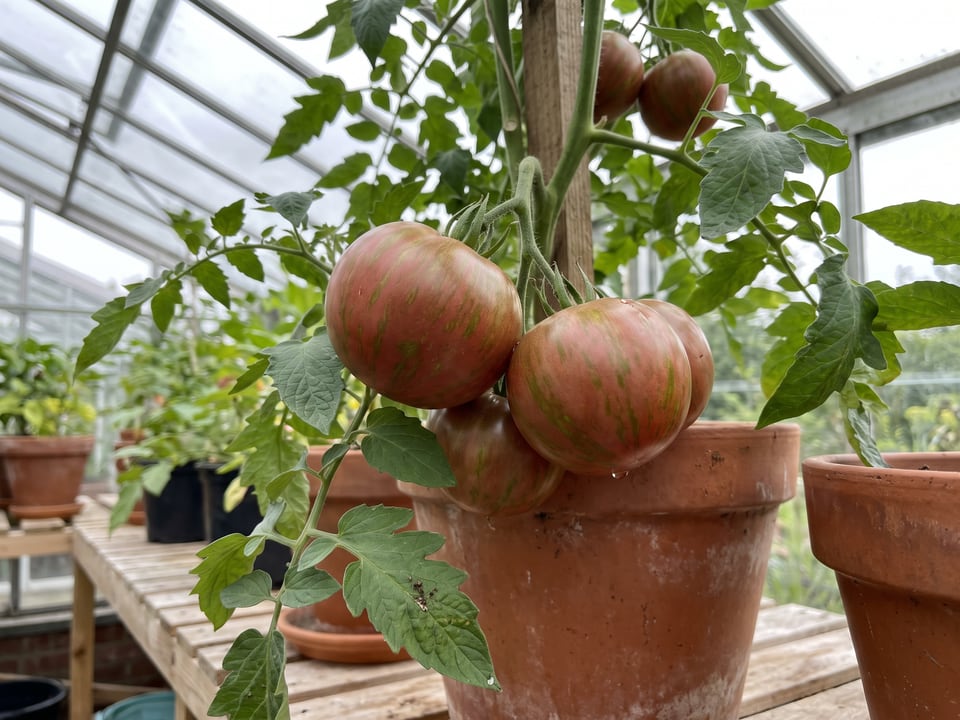
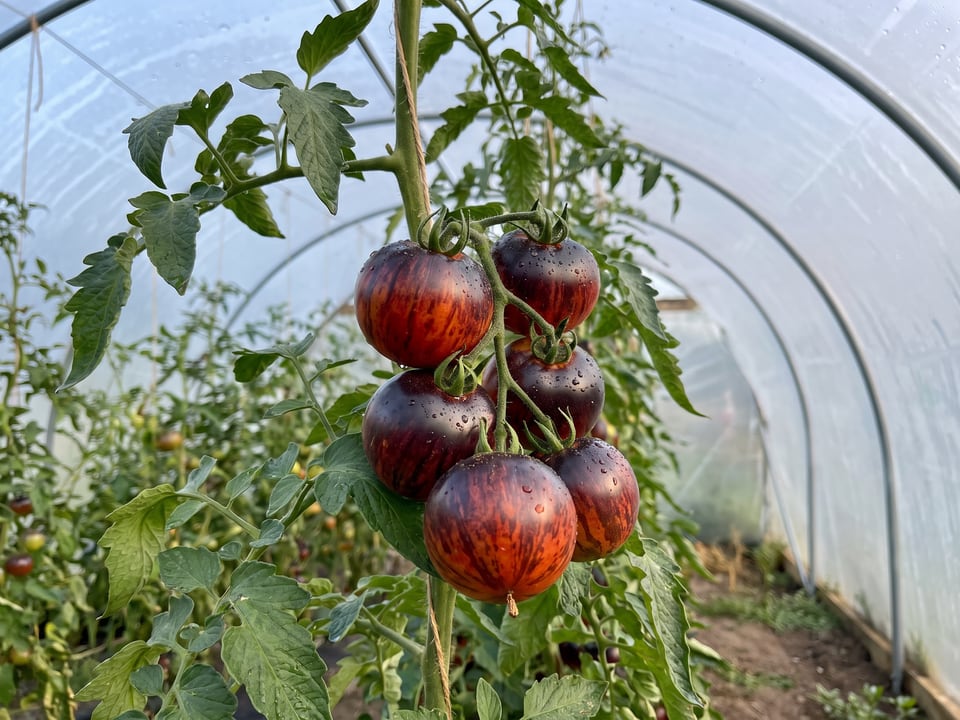
There are no black tomatoes. The six varieties on this page are deep mahogany, brick-brown or dusky red-green, and the trade calls them black the way it calls certain grapes black: as shorthand for the darkest end of the range. Knowing that changes what you expect from the fruit on the plate, which is a muddied red-brown with green gel rather than anything approaching the colour in the name. All six here are indeterminate, ripening between 75 and 85 days from transplant, and they span 1 to 12 oz (15 to 340 g), from Black Cherry at snacking size to Black Krim as a full slicer. The narrow day range makes this an unusually uniform group to plan around.
- Varieties
- 11
- Days to harvest (from transplant)
- 75–85
- Fruit weight
- 1–16 oz (15–450 g)
- Growth habit
-
10 Indeterminate
1 Determinate
All 11 black tomato varieties
How to choose
-
Start from size, because it is the only axis with real spread here. Black Cherry at roughly 20 g and Black Krim at up to 340 g are different crops with the same colour adjective. Between them sit Japanese Black Trifele and Queen of the Night in the 3 to 6 oz range, which is the size most people actually want for a salad rather than for a sandwich or a snack.
-
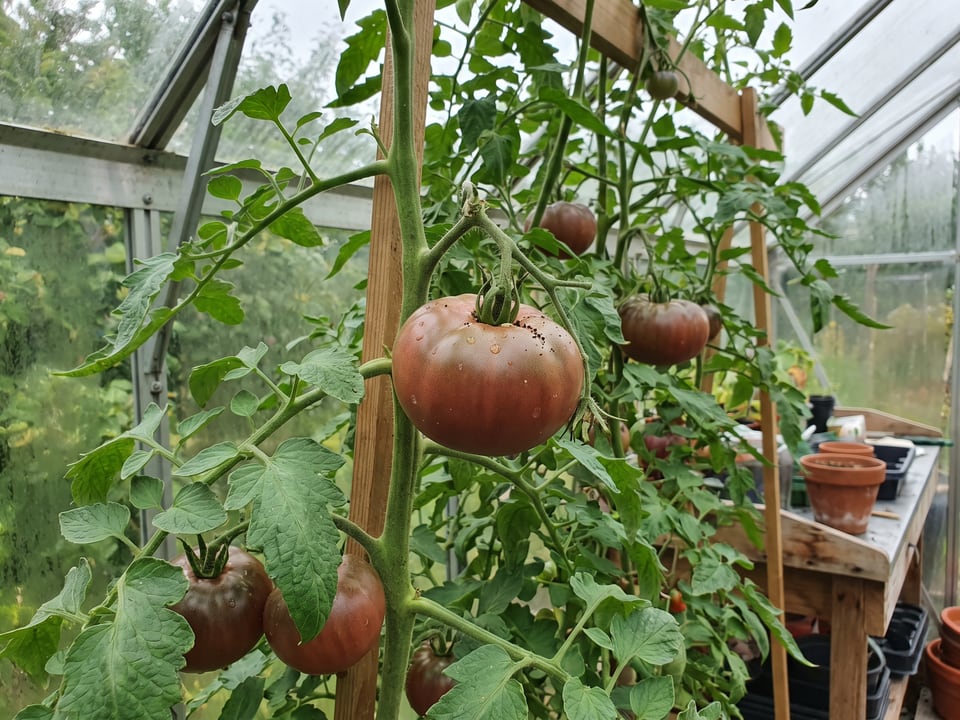
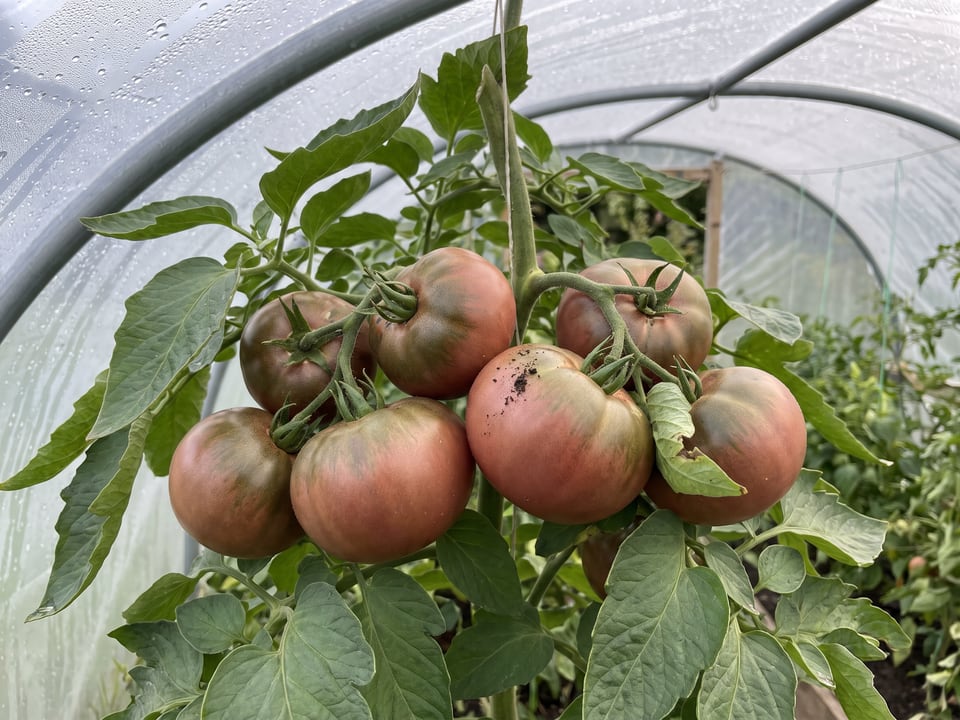
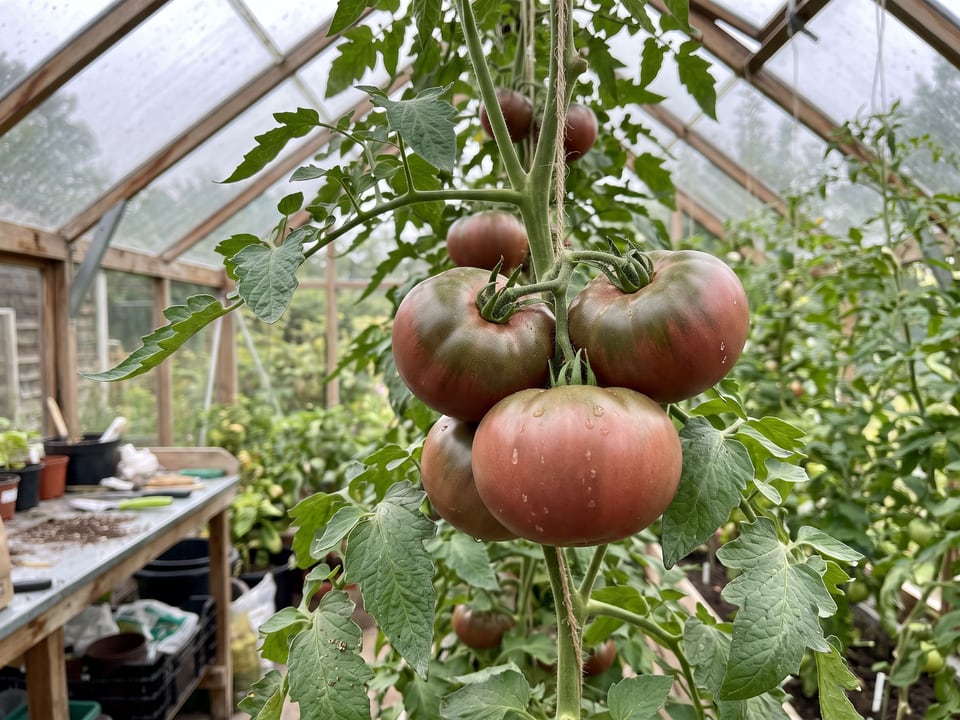
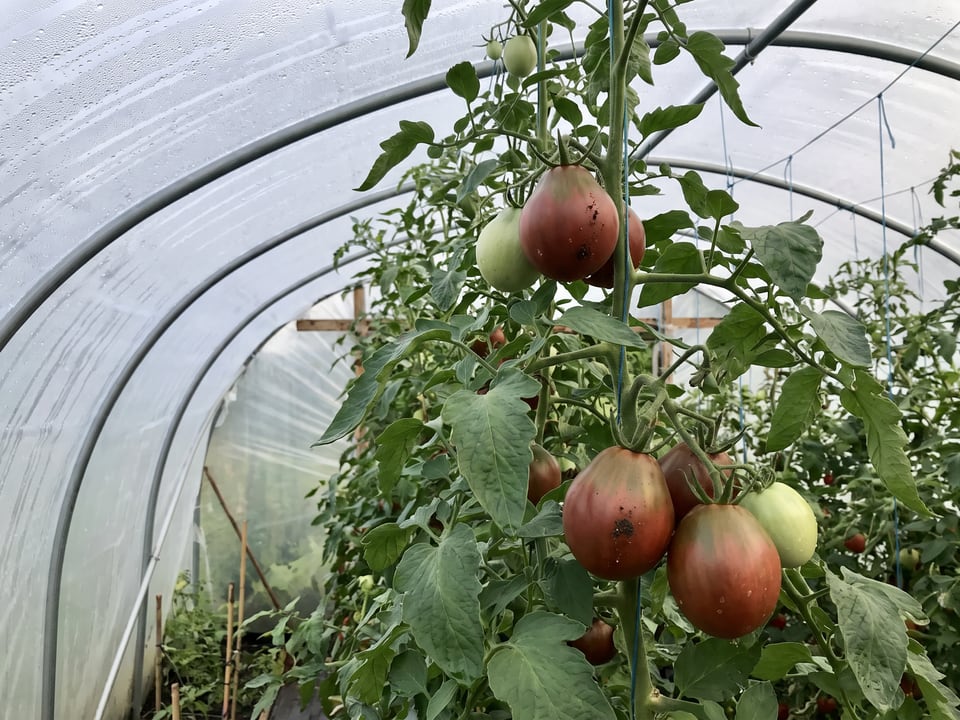
Expect green shoulders and accept them. Dark tomatoes commonly ripen with green or olive tops that never turn, and the fruit is ready anyway. If you wait for uniform colour the way you would with a red variety, you will pick overripe. Judge by give rather than by the shoulder.
-
This is a staked group with no exceptions. All six are indeterminate, and unlike the purple page there is no dwarf option here. If the plant has to stay small, the choice is a dark-fruited variety from the container-friendly page rather than anything on this one.
-
If you came here looking for chocolate or brown tomatoes, you are close but not exactly on target. Varieties sold as chocolate are usually a shade lighter and browner than these; Kumato, which many people are thinking of, is a protected commercial variety whose seed is not sold to gardeners at all. The closest seed-available equivalents sit partly on this page and partly under brown, and the catalogue is still filling that group out.
Compare side by side
| Color | Uses | |||||
|---|---|---|---|---|---|---|
| Black Beauty | 85 (estimated) | 6–10 oz (170–280 g) (estimated) | Indeterminate | 3 (estimated) / 2 (estimated) / 5 (estimated) | Slicing, Fresh & salads | |
| Black Cherry | 75 (estimated) | ~1 oz (15–25 g) (estimated) | Indeterminate | 4 (estimated) / 3 (estimated) / 5 (estimated) | Snacking, Fresh & salads | |
| Black Krim | 80 (estimated) | 8–12 oz (230–340 g) (estimated) | Indeterminate | 3 (estimated) / 3 (estimated) / 5 (estimated) | Slicing, Fresh & salads | |
| Black Prince | 75 | 5–8 oz (140–220 g) | Indeterminate | 3 (estimated) / 3 (estimated) / 3 (estimated) | Fresh & salads, Slicing | |
| Black Sea Man | 75 | 4–10 oz (110–280 g) | Determinate | 3 (estimated) / 2 (estimated) / 4 (estimated) | Slicing, Fresh & salads | |
| Brown Sugar | 75 | 5–8 oz (140–220 g) | Indeterminate | (estimated) | 3 (estimated) / 3 (estimated) / 3 (estimated) | Fresh & salads, Slicing |
| Carbon | 80 | 10–16 oz (280–450 g) | Indeterminate | 3 (estimated) / 3 (estimated) / 3 (estimated) | Fresh & salads, Slicing | |
| Japanese Black Trifele | 80 (estimated) | 4–6 oz (110–170 g) (estimated) | Indeterminate | 3 (estimated) / 3 (estimated) / 5 (estimated) | Fresh & salads, Slicing, Roasting | |
| Paul Robeson | 80 (estimated) | 7–12 oz (200–340 g) (estimated) | Indeterminate | 3 (estimated) / 3 (estimated) / 5 (estimated) | Fresh & salads, Slicing | |
| Pink Boar | 75 | 1–3 oz (40–80 g) | Indeterminate | 4 (estimated) / 3 (estimated) / 3 (estimated) | Fresh & salads, Snacking | |
| Queen of the Night | 80 | 3–4 oz (85–100 g) | Indeterminate | 4 (estimated) / 3 (estimated) / 4 (estimated) | Fresh & salads, Slicing, Snacking |
Values marked like this (estimated) are model estimates, not confirmed from a source.
Frequently asked questions
Are black tomatoes actually black?
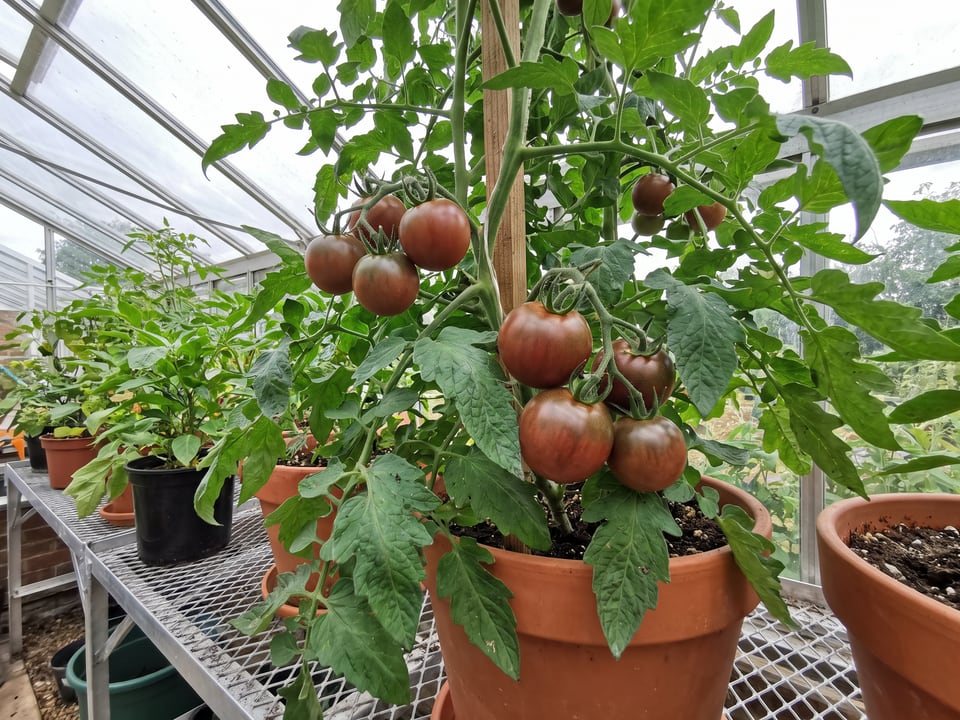
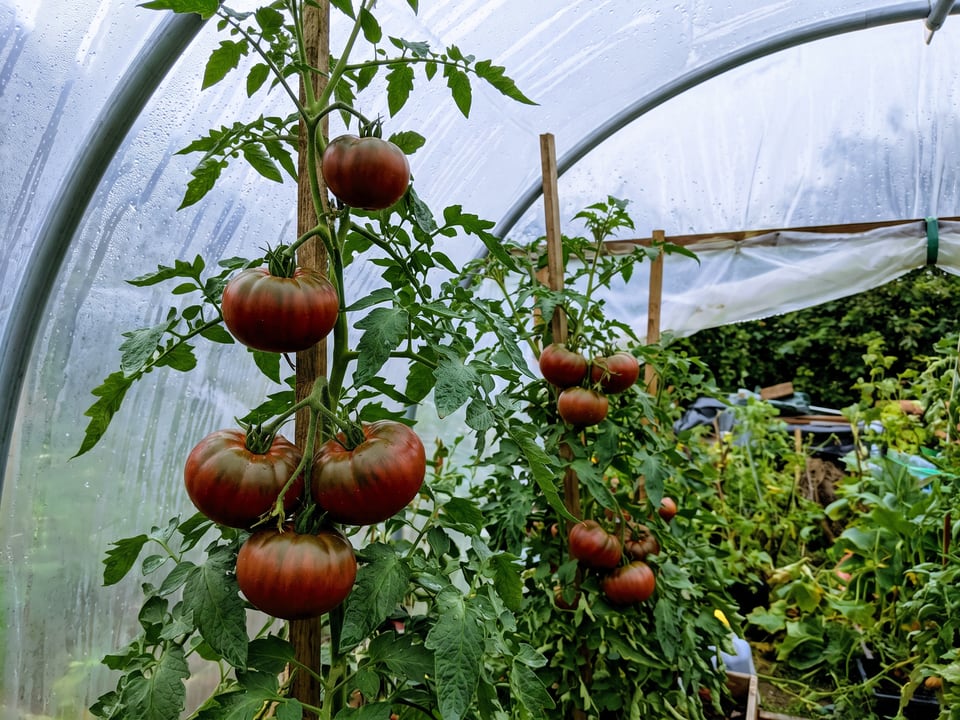
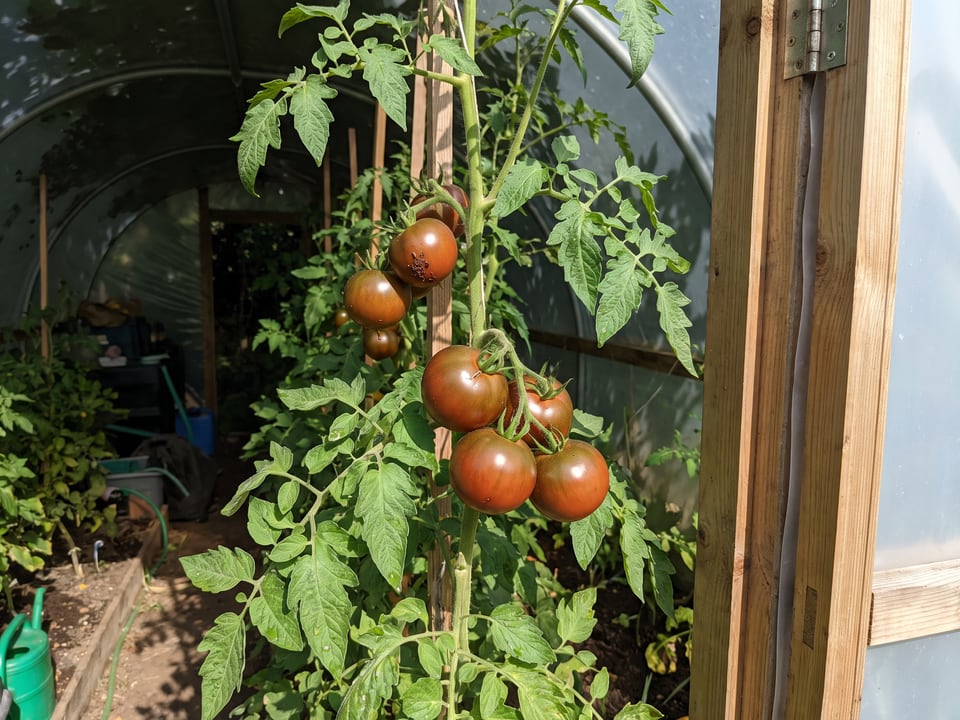
No. They are dark mahogany, brown-red or deep purple-red, sometimes with green or olive shoulders. Black is trade shorthand for the darkest tomatoes available, not a description of the colour you get.
What is the difference between black and brown tomatoes?
Mostly convention rather than biology. Both come from the same underlying combination of red flesh with retained green pigment; brown or chocolate types sit a shade lighter and warmer. Catalogues split them inconsistently, which is why the same variety turns up under both names in different shops.
Can I buy Kumato seeds?
No. Kumato is a trademarked commercial variety grown under licence, and seed is not sold to home gardeners. If that is the tomato you are looking for, the dark-fruited varieties on this page are the seed-available route to something similar, though none is the same cultivar.
Why do black tomatoes have green shoulders?
Because the chlorophyll that gives the shoulder its green does not break down the way it does in an ordinary red tomato. That retained green is part of what makes the fruit look dark in the first place. It is a characteristic, not unripeness.
How do I know when a black tomato is ripe?
By feel rather than by colour. The fruit gives slightly under light pressure and detaches easily. Waiting for the shoulders to lose their green will take you well past ripe on most of the varieties here.