Purple tomato varieties
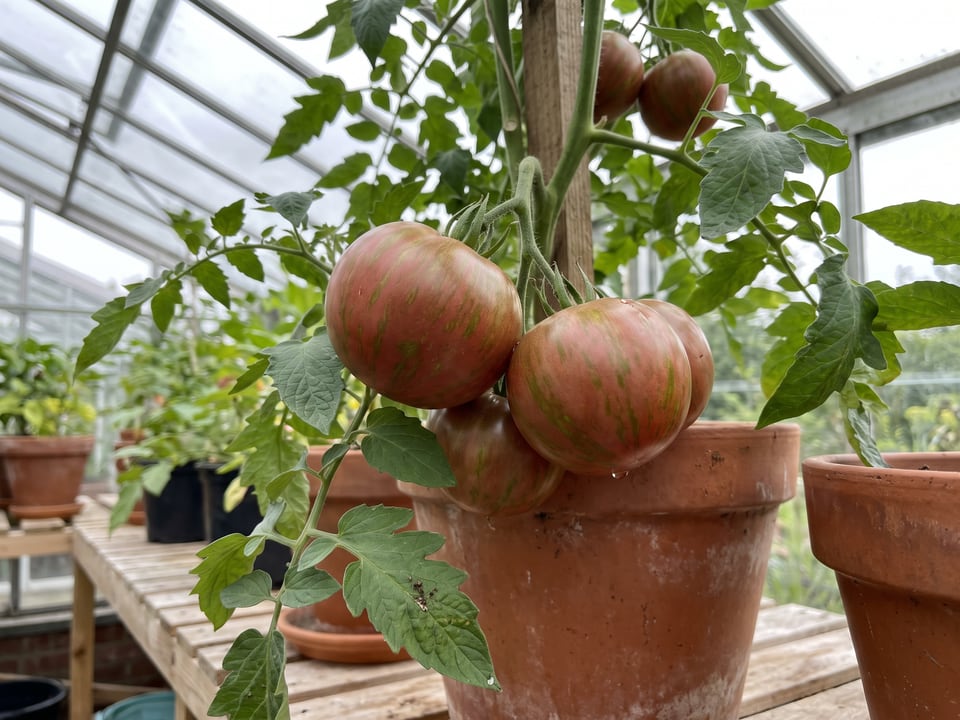
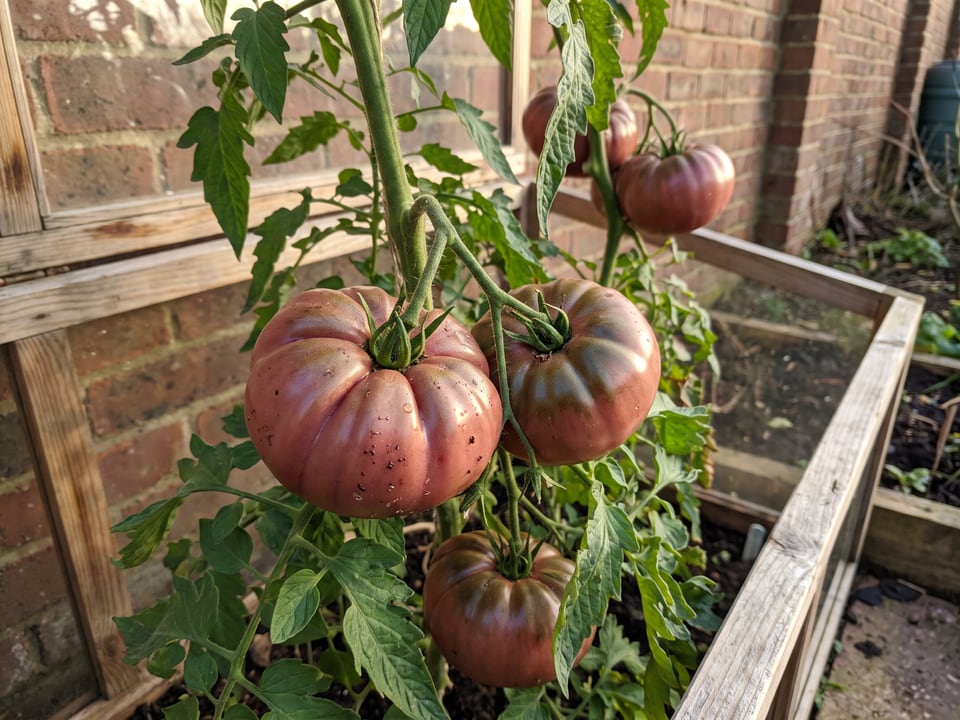
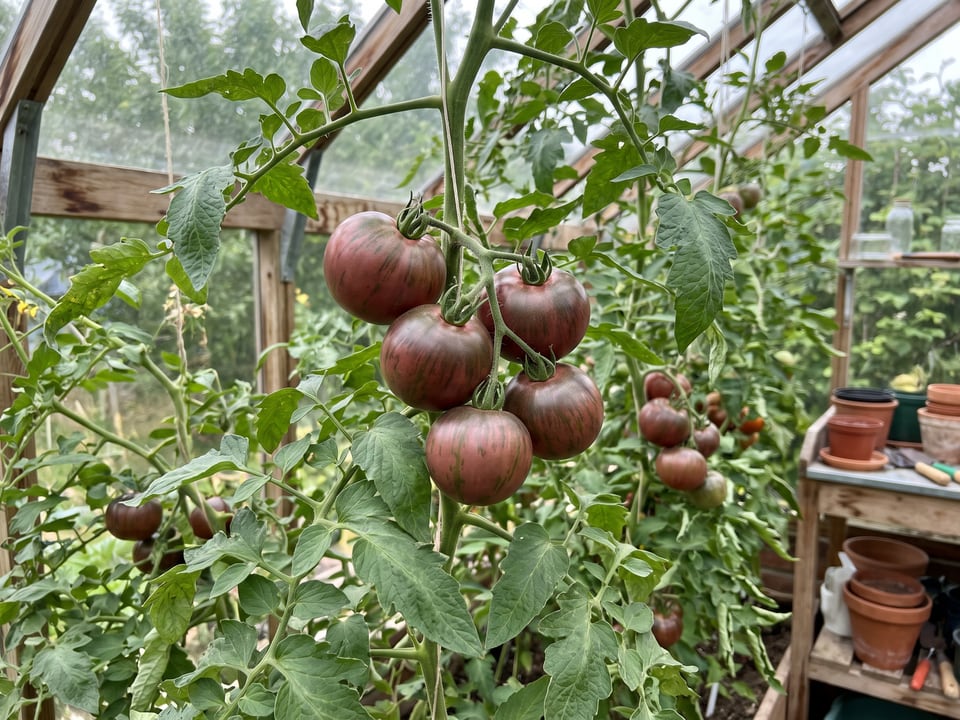
Purple covers two different things in tomatoes, and telling them apart matters more than the label suggests. In varieties like Indigo Rose, Indigo Apple and Purple Zebra the colour sits in the skin and develops in response to sunlight, so the shoulder facing the sun goes near-black while the shaded underside stays green or red. In Cherokee Purple, Purple Calabash and Rosella Purple the colour is in the flesh itself and appears regardless of exposure. The practical difference is ripeness: with the first group a dark fruit is not necessarily a ready fruit, and you judge by the underside instead. The six varieties here run 75 to 85 days from transplant and 1 to 16 oz (35 to 450 g), five of them indeterminate, with Rosella Purple the single dwarf for containers.
- Varieties
- 8
- Days to harvest (from transplant)
- 75–91
- Fruit weight
- 1–16 oz (35–450 g)
- Growth habit
-
7 Indeterminate
1 Dwarf
All 8 purple tomato varieties
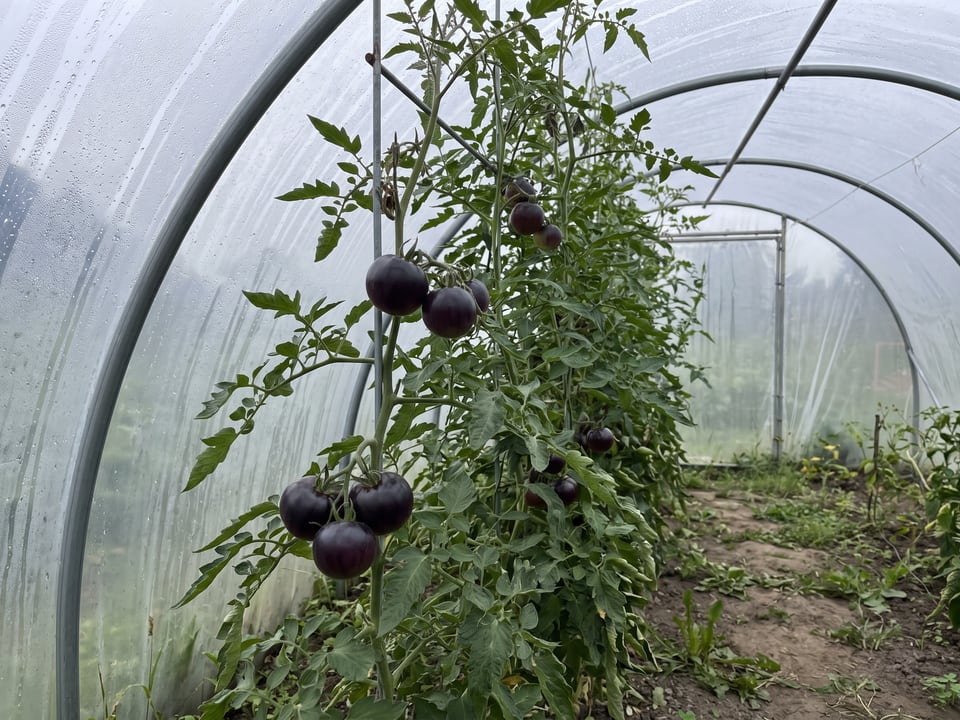
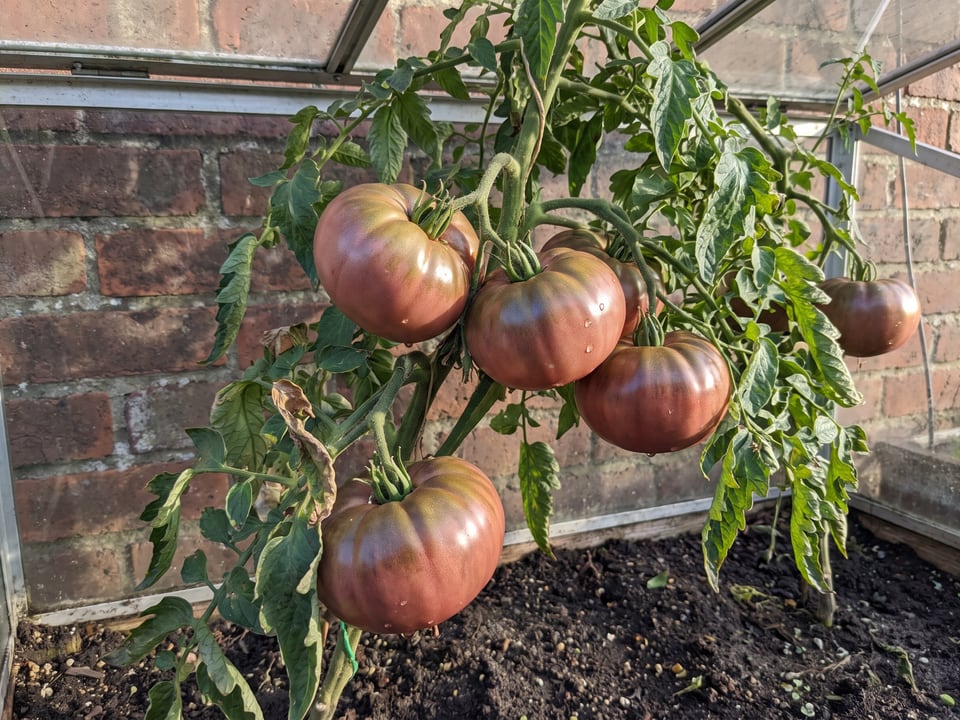
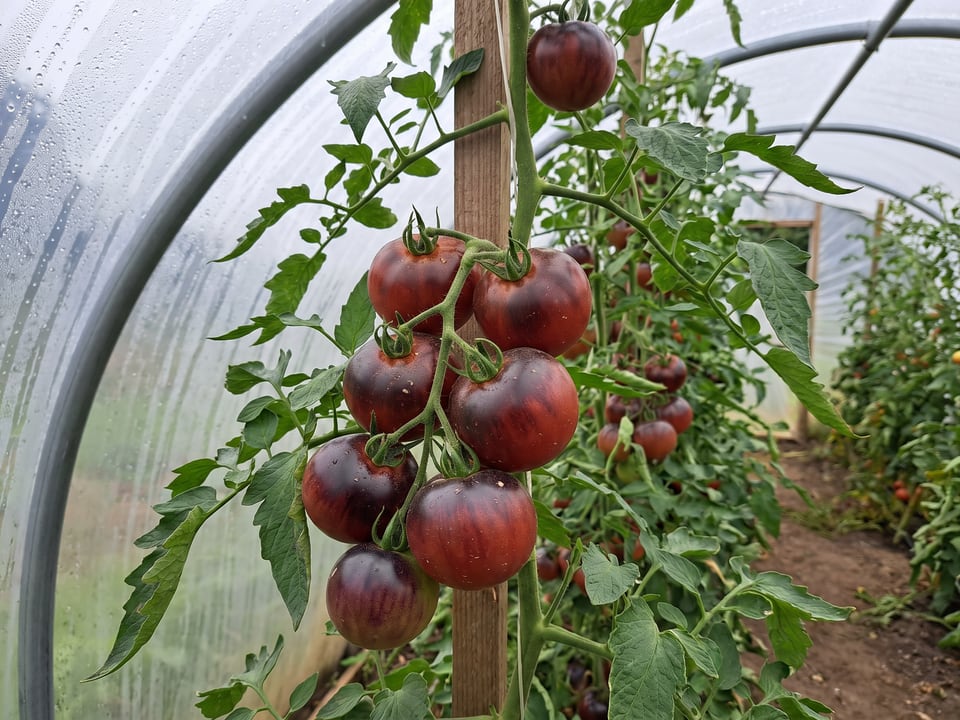
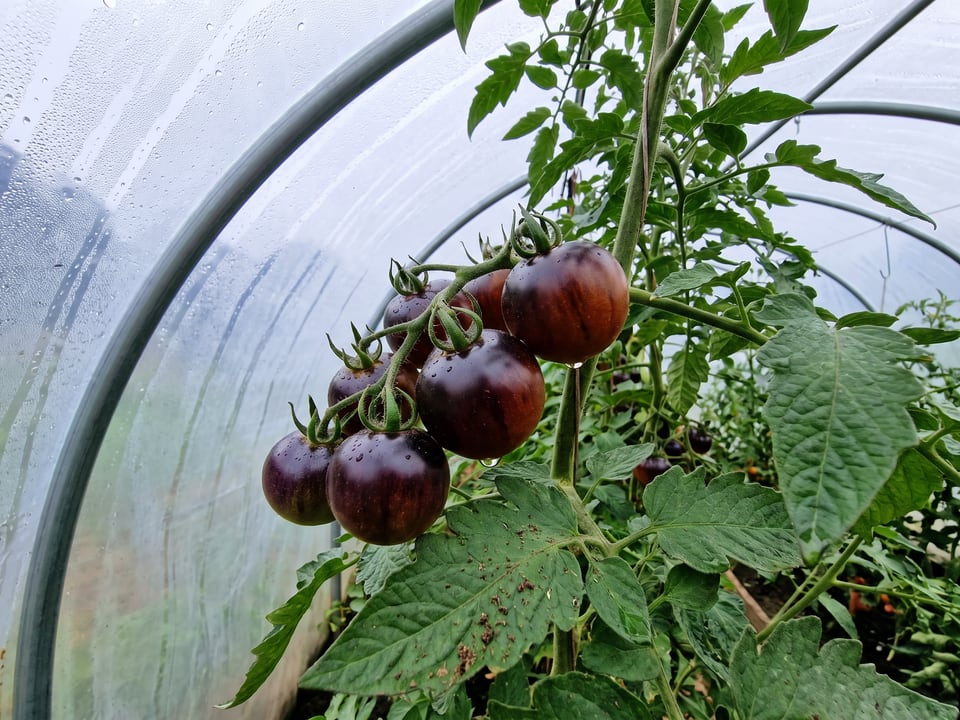
How to choose
-
Decide first which kind of purple you are after. If you want the near-black, glossy fruit that photographs dramatically, that is the skin-pigmented group, and it comes with a learning curve on picking. If you want the dusky brick-purple of a classic heirloom slicer, that is Cherokee Purple and its relatives, and ripeness reads the way it does on any ordinary tomato.
-
Weight splits this small group almost in half. Cherokee Purple at 10 to 16 oz and Purple Calabash at 6 to 10 oz are slicing tomatoes; Indigo Rose at 1 to 2 oz and Purple Zebra at 4 to 6 oz are snacking and salad fruit. There is no middle here, so the size decision effectively picks your variety before colour does.
-
Sun exposure is a growing decision, not just an aesthetic one, for the skin-pigmented varieties. Fruit shaded by heavy foliage will not colour up, which is one of the few cases where pruning for light does something visible to the crop rather than only to plant health.
-
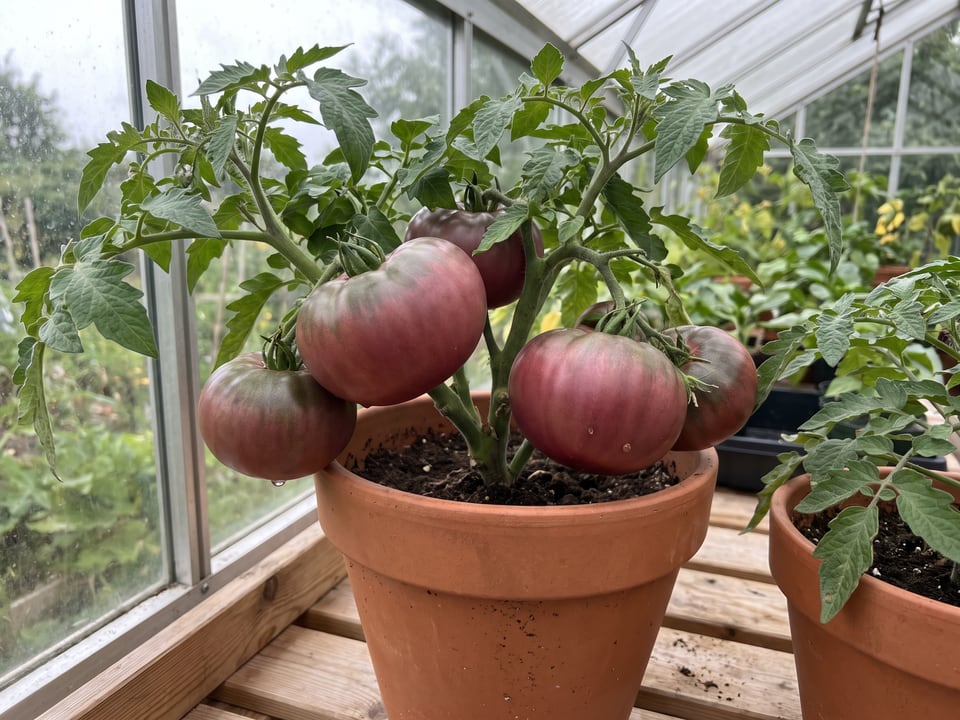
If the plant has to stay small, there is exactly one option. Rosella Purple is the only dwarf in this group, carrying 6 to 10 oz fruit on a container-sized plant. The other five are indeterminate and will need full-season support.
Compare side by side
| Color | Uses | |||||
|---|---|---|---|---|---|---|
| Brown Sugar | 75 | 5–8 oz (140–220 g) | Indeterminate | (estimated) | 3 (estimated) / 3 (estimated) / 3 (estimated) | Fresh & salads, Slicing |
| Cherokee Purple | 80 (estimated) | 10–16 oz (280–450 g) (estimated) | Indeterminate | 4 (estimated) / 3 (estimated) / 5 (estimated) | Slicing, Fresh & salads, Snacking | |
| Indigo Apple | 75 (estimated) | 2–3 oz (50–80 g) (estimated) | Indeterminate | 3 (estimated) / 3 (estimated) / 3 (estimated) | Fresh & salads, Snacking, Roasting | |
| Indigo Rose | 91 | 1–2 oz (35–55 g) (estimated) | Indeterminate | 3 (estimated) / 3 (estimated) / 3 (estimated) | Fresh & salads, Snacking | |
| Pink Boar | 75 | 1–3 oz (40–80 g) | Indeterminate | 4 (estimated) / 3 (estimated) / 3 (estimated) | Fresh & salads, Snacking | |
| Purple Calabash | 85 (estimated) | 6–10 oz (170–280 g) (estimated) | Indeterminate | 3 (estimated) / 4 (estimated) / 5 (estimated) | Fresh & salads, Slicing | |
| Purple Zebra | 80 | 4–6 oz (110–170 g) (estimated) | Indeterminate | 4 (estimated) / 3 (estimated) / 4 (estimated) | Fresh & salads, Slicing | |
| Rosella Purple | 80 (estimated) | 6–10 oz (170–280 g) (estimated) | Dwarf | 4 (estimated) / 3 (estimated) / 5 (estimated) | Fresh & salads, Slicing |
Values marked like this (estimated) are model estimates, not confirmed from a source.
Frequently asked questions
How do I know when a purple tomato is ripe?
It depends which type you are growing. For skin-pigmented varieties such as the Indigo group, the dark shoulder appears long before the fruit is ready, and the reliable signal is the underside changing from green to red or amber, plus a slight give when squeezed. For flesh-pigmented varieties such as Cherokee Purple, colour and ripeness track each other normally.
Why is one side of my purple tomato green?
Because that side was shaded. In anthocyanin-skinned varieties the pigment forms in response to direct light, so an unshaded shoulder darkens while the covered part does not. It is not a defect and does not affect the fruit underneath.
Are purple tomatoes the same as black tomatoes?
No, though the categories overlap in ordinary use and some varieties get filed under both. Black tomatoes in the seed trade are usually dusky red-brown, while purple covers both the brick-purple heirlooms and the genuinely near-black anthocyanin types. The black page lists what we classify that way, and the two lists are worth reading together if colour is your main criterion.
Do purple tomatoes taste different?
The colour does not predict flavour, and this catalogue records sweetness, acidity and intensity per variety precisely so you do not have to guess from appearance. Compare the figures in the table rather than assuming that darker means richer.
Can purple tomatoes be grown in containers?
Rosella Purple is the dwarf here and the straightforward answer. The remaining five are indeterminate, which means a large pot, daily watering and a tall support if you attempt it. The container-friendly page filters on documented suitability across the whole catalogue.