Dwarf tomato varieties
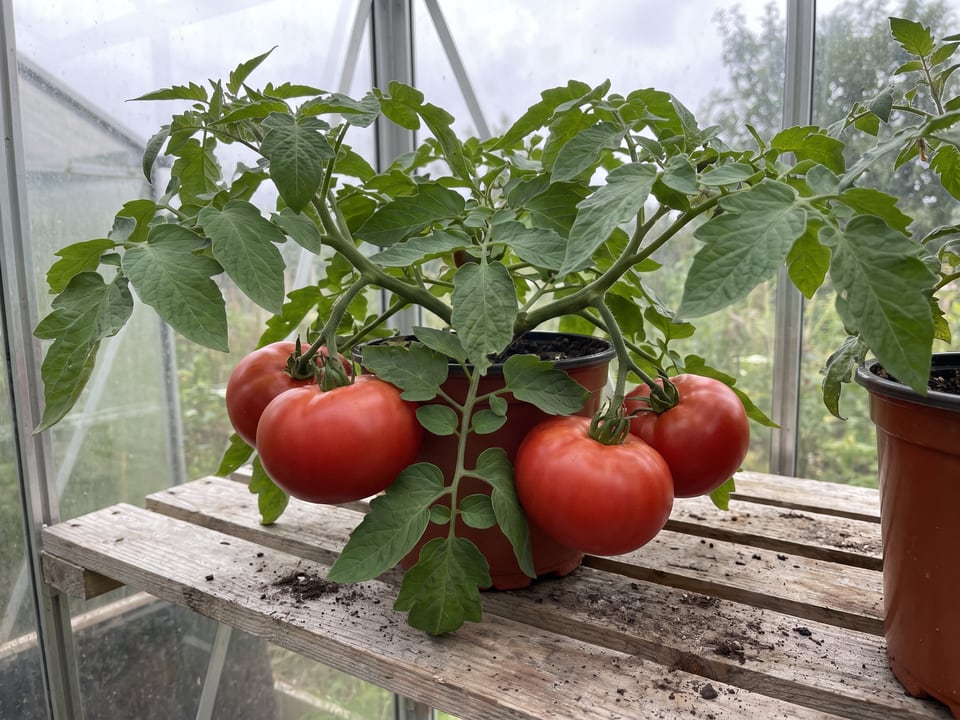
Dwarf tomatoes are a distinct breeding category, not simply small plants. They grow on thick, rugose-leaved stems that stop between knee and waist height, they are indeterminate in flowering behaviour despite the compact frame, and crucially they carry full-sized fruit. New Big Dwarf on this page produces 8 to 12 oz (230 to 340 g) tomatoes on a plant you can keep in a large pot, which is the whole point of the category. The seven varieties here span 12 g to 450 g and 60 to 80 days from transplant, so the fruit range is nearly thirtyfold while the plants stay roughly the same size. If you have a balcony and want a real slicing tomato rather than a handful of cherries, this is the page.
- Varieties
- 8
- Days to harvest (from transplant)
- 60–80
- Fruit weight
- 0–16 oz (10–450 g)
- Growth habit
-
8 Dwarf
All 8 dwarf tomato varieties
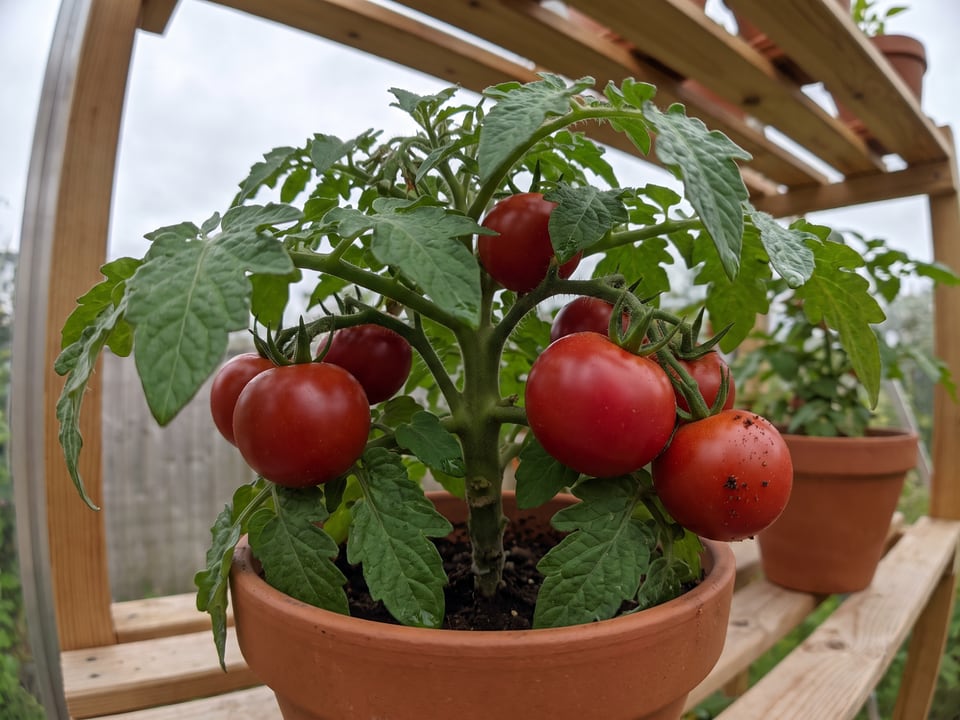
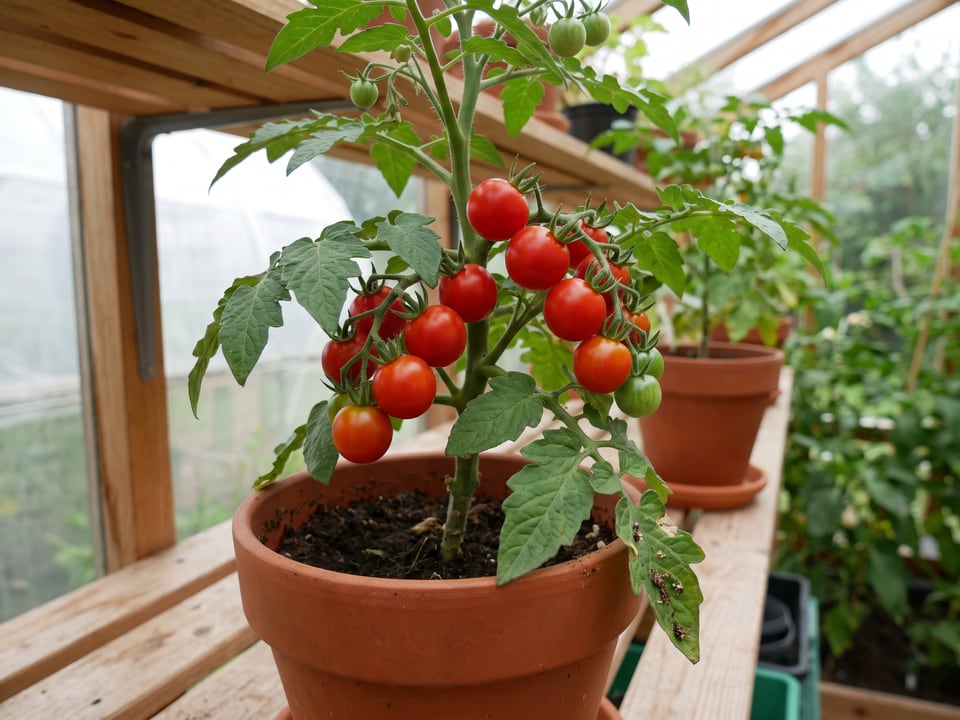
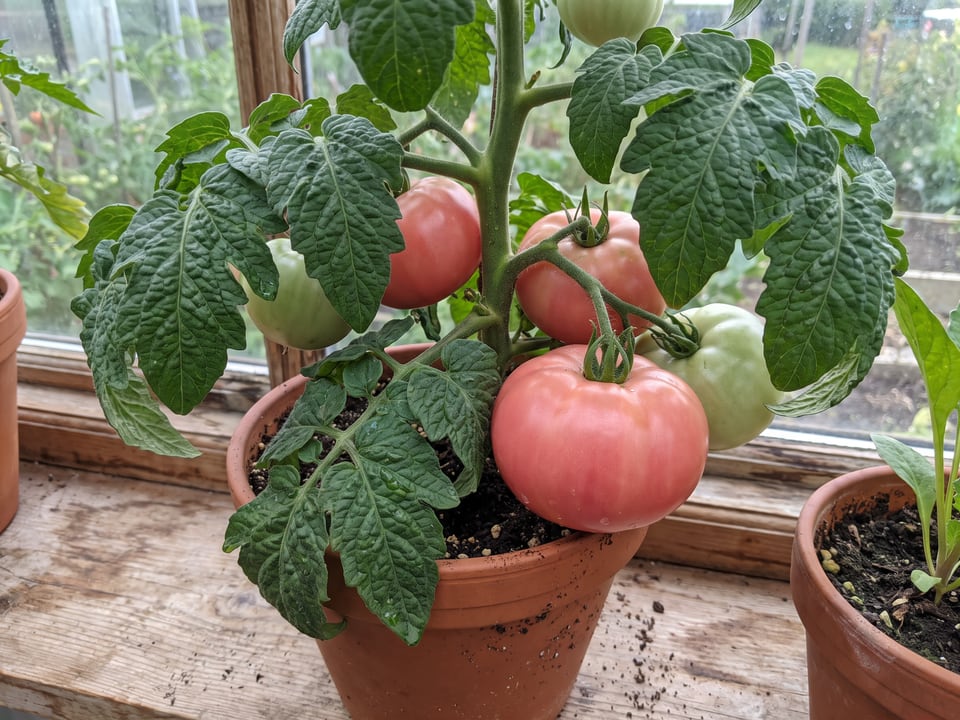
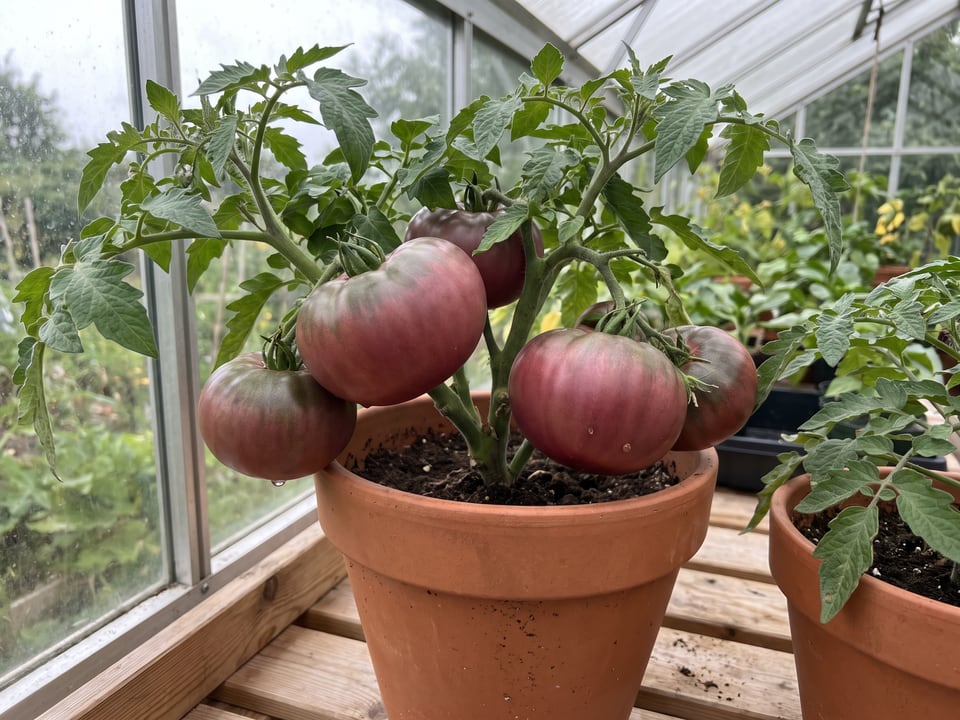
How to choose
-
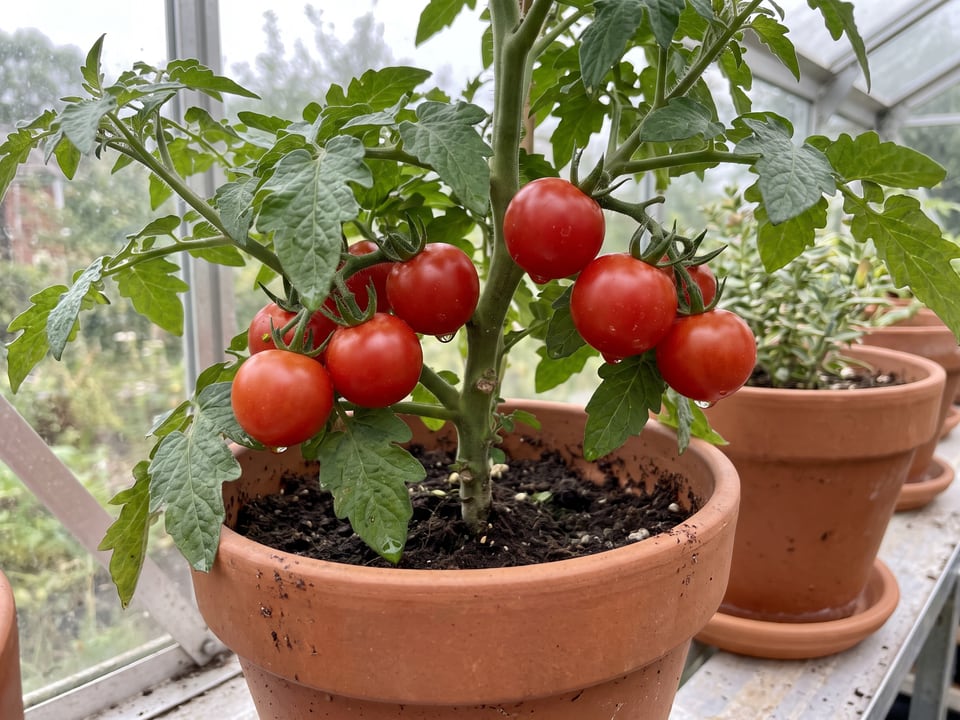
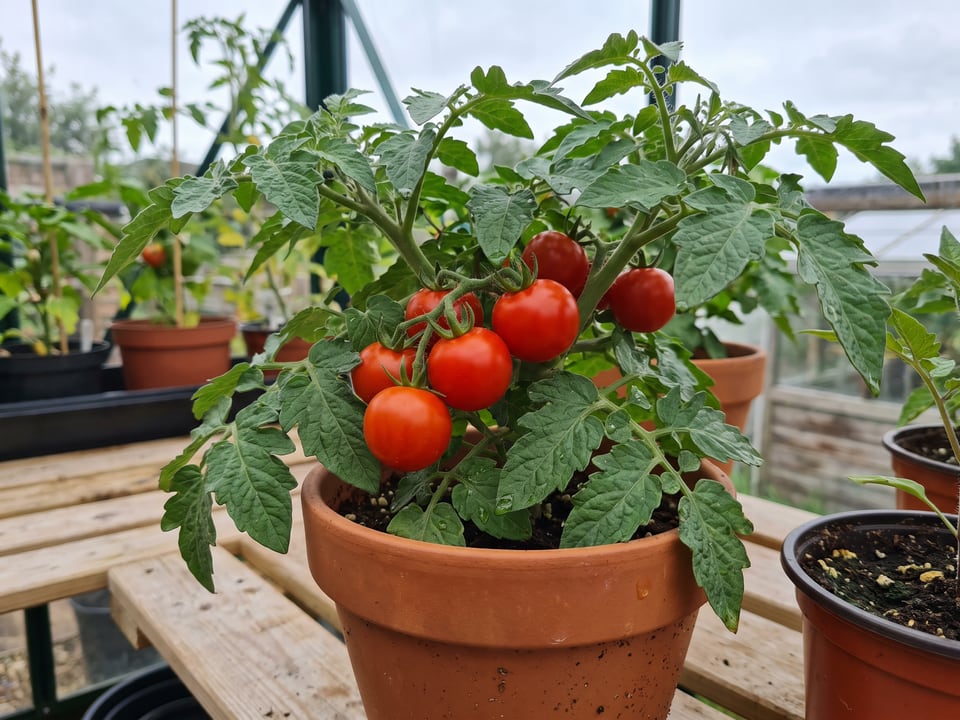
Fruit size is the only meaningful variable here, and it varies enormously. Tiny Tim and Tumbling Tom at 15 to 25 g are snacking plants; Rosella Purple at 170 to 280 g and New Big Dwarf at 230 to 340 g are slicing tomatoes in a pot. Decide what you want on the plate, because the plant will be a similar size either way.
-
Dwarf is not the same as determinate, and confusing them costs you fruit. A determinate plant sets its crop and finishes; a dwarf keeps flowering and setting all season, just on a compact frame. That means you prune a dwarf sparingly if at all, and you keep feeding and watering it long after a determinate would have wound down.
-
Pot size matters more than for any other group, because the plant is doing indeterminate work in a confined root zone. The minimum container volume recorded per variety is the number to check before buying, and going larger is nearly always the right call. Under-potting shows up as blossom end rot and early decline, not as a smaller plant.
-
Season length is a secondary filter. Tiny Tim at 60 days and Sweet Scarlet Dwarf at 65 are the early options; Rosella Purple at 80 is the latest here. Twenty days matters on a balcony in a short-season region, where a pot cools faster than open ground.
Compare side by side
| Color | Uses | |||||
|---|---|---|---|---|---|---|
| Husky Cherry Red | 60 | ~1 oz (15–30 g) | Dwarf | 4 (estimated) / 3 (estimated) / 3 (estimated) | Fresh & salads, Snacking | |
| Little Bing | 60 | 0–1 oz (10–18 g) (estimated) | Dwarf | 4 (estimated) / 3 (estimated) / 3 (estimated) | Snacking | |
| New Big Dwarf | 75 (estimated) | 8–12 oz (230–340 g) (estimated) | Dwarf | 4 (estimated) / 2 (estimated) / 4 (estimated) | Fresh & salads, Slicing, Juicing | |
| Patio Princess | 68 (estimated) | 3–5 oz (90–140 g) (estimated) | Dwarf | 3 (estimated) / 3 (estimated) / 3 (estimated) | Fresh & salads, Slicing | |
| Rosella Purple | 80 (estimated) | 6–10 oz (170–280 g) (estimated) | Dwarf | 4 (estimated) / 3 (estimated) / 5 (estimated) | Fresh & salads, Slicing | |
| Sweet Scarlet Dwarf | 65 (estimated) | 6–16 oz (170–450 g) (estimated) | Dwarf | 4 (estimated) / 3 (estimated) / 3 (estimated) | Fresh & salads, Snacking | |
| Tiny Tim | 60 (estimated) | 0–1 oz (12–20 g) (estimated) | Dwarf | 3 (estimated) / 3 (estimated) / 3 (estimated) | Fresh & salads, Snacking | |
| Tumbling Tom | 70 (estimated) | ~1 oz (15–25 g) (estimated) | Dwarf | 4 (estimated) / 3 (estimated) / 3 (estimated) | Fresh & salads, Snacking |
Values marked like this (estimated) are model estimates, not confirmed from a source.
Frequently asked questions
What is a dwarf tomato?
A variety bred for a compact, thick-stemmed plant that stops at knee to waist height while still flowering and fruiting all season. The fruit is usually full-sized. It is a deliberate breeding category, not a stunted plant.
Is a dwarf tomato the same as a determinate one?
No, and this is the most common confusion in the category. Determinate refers to flowering: the plant sets a crop and finishes. Dwarf refers to plant structure: compact growth with continued flowering. A dwarf keeps producing long after a determinate has stopped.
Can dwarf tomatoes produce large fruit?
Yes, and that is the point of the category. New Big Dwarf here carries 8 to 12 oz fruit and Rosella Purple 6 to 10 oz, both on plants suitable for a large container. That combination is what dwarf breeding was created to achieve.
What is the difference between dwarf and micro dwarf?
Scale. Dwarf plants reach knee to waist height and carry normal-sized fruit; micro dwarfs top out around 20 to 30 cm and carry fruit of a few grams. Micro dwarfs are windowsill plants; dwarfs need a proper pot and a balcony.
Do dwarf tomatoes need staking?
Usually a short stake or a small cage. The stems are thick and self-supporting to a point, but a plant carrying 300 g fruit will lean. They do not need the tall stakes and weekly tying that indeterminate varieties require.