Pepper companion plants: what helps and what to keep away
Sep 22, 2026 · 6 min read
Basil, onions and flowers are easy neighbors for peppers. Corn, potatoes and black walnut are not, and marigolds only fight nematodes when grown first.
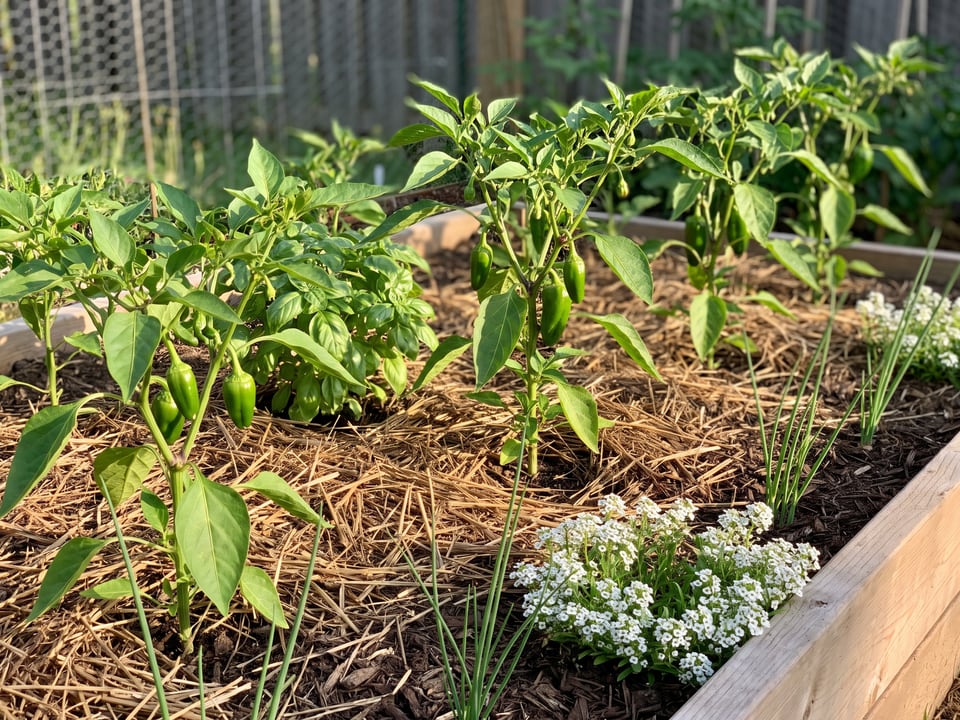
Good companions for peppers are plants that want the same sun and warmth and take little of the pepper’s water and space: basil, onions, garlic, chives, low flowers. The neighbors worth avoiding are the ones that share the pepper’s pests and diseases, chiefly corn, potatoes, eggplant and tomatoes grown on the same ground year after year, plus black walnut trees.
Most companion planting charts mix those two kinds of advice with a third kind: pairings passed from book to book that nobody has tested. This guide keeps them apart. The same approach runs through our guide to tomato companion plants, and since peppers and tomatoes are close relatives, much of it carries over.
What to plant next to peppers
Basil is the easy one. It wants the same heat, sun and steady water as a pepper, stays low, and fits between plants without shading them. Claims that it repels pests from peppers are thin; grow it because the two share a bed well.
Onions, garlic and chives are tradition more than evidence. They take very little room or water and fill the gaps around young pepper plants. There is no reason not to plant them, and no good reason to expect them to protect the peppers.
Low flowers such as sweet alyssum, and herbs left to flower such as dill and cilantro, are often planted to attract insects that prey on pests. Aphids are among the pests Clemson Extension lists for peppers. Whether a few flowers in one bed make a measurable difference is less certain than the books suggest, but they cost little.
Lettuce and spinach work early in the season. They grow in the spring gaps between young pepper plants and are finished by the time the peppers fill in. Pull them before midsummer, when the peppers need the water.
Marigolds: what the evidence says
French marigolds (Tagetes patula) do suppress root-knot nematodes, microscopic worms that feed on pepper roots. University of Florida IFAS Extension finds them the most effective marigold against the widest range of nematodes. The same publication is clear about how they have to be used: intercropping marigolds with other crops to reduce nematodes does not appear to be effective. They work as a cover crop, grown thickly for at least two months on the ground where the peppers will go, and they have to be grown again before each susceptible crop.
A row of marigolds between the peppers is decoration and a food source for pollinators. If your peppers have knotted, swollen roots at the end of the season, that is the case for growing marigolds across the whole bed next year, before you plant.
What not to plant next to peppers
Corn. Clemson Extension lists European corn borer and corn earworm among the caterpillars that attack peppers. Corn is the European corn borer’s main host, and University of Maryland Extension describes what it does to a pepper: the borer enters near the stem and feeds on the seed core, so the damage is inside a fruit that looks sound. Growing sweet corn beside peppers keeps both pests close all summer. Put the corn in a different part of the garden.
Tomatoes, eggplant and potatoes on last year’s ground. All four are nightshades, and they share soil-borne diseases. Clemson Extension advises against planting peppers, tomatoes, eggplant or potatoes in the same spot more often than once every three years. Growing peppers and tomatoes side by side in one season is fine; putting peppers where tomatoes or potatoes grew last year is the mistake.
Black walnut. Penn State Extension names peppers, with tomatoes and potatoes, among the vegetables least tolerant of juglone, the compound black walnut releases from its roots. It advises planting beyond the root zone, 50 to 60 feet (15 to 18 m) from a mature tree.
Fennel and beans appear on many lists of plants to keep away from peppers. We have not found tests behind either claim. Pole beans can smother a pepper if they climb into it, which is a spacing problem and not chemistry.
Can you plant peppers and tomatoes together
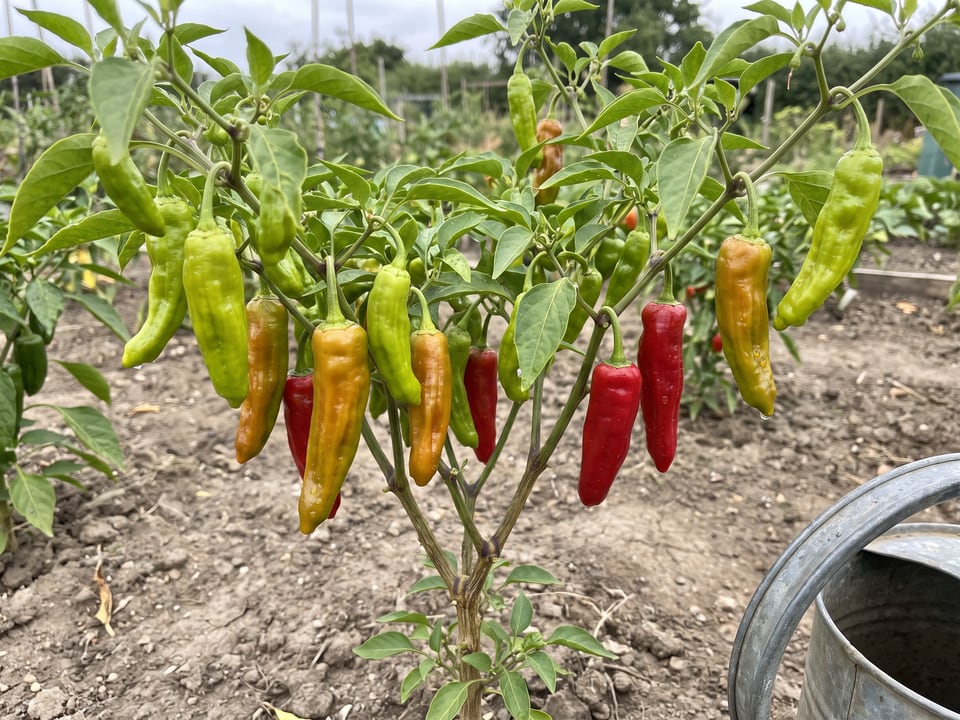
Yes, for one season, with rotation in mind. They want the same conditions, and planting them side by side is common in home gardens.
The disease question is more specific than most charts suggest. Bacterial spot affects both crops, but NC State Extension notes that the species that dominates on tomatoes (Xanthomonas perforans) differs from the one that dominates on peppers (X. euvesicatoria). The same publication still groups the two crops when it comes to ground: avoid fields that grew peppers or tomatoes within the past year. So share the bed, and move both somewhere else the following year.
Peppers are the shorter plant. Put them on the sunny side of the bed, where a staked tomato will not shade them by midsummer.
Spacing comes first
Companion planting fails most often as a spacing problem. Clemson Extension spaces peppers 12 inches (30 cm) apart in rows 3 feet (90 cm) apart, and our catalog estimates run wider for full-size varieties, at 18 inches (46 cm) between plants and 24 inches (61 cm) between rows. Anything planted between peppers has to fit in what is left.
If adding a companion means the peppers go in closer than their spacing, the companion costs more than it gives. Crowded plants hold humid air in the canopy, where leaf diseases start, and compete for the water peppers need most while the fruit is setting.
In a container, skip it. One pepper per pot, and a herb beside it is drinking the pepper’s water.
The short version
Basil, onions, chives and low flowers are easy neighbors. Marigolds help against nematodes only when grown across the bed before the peppers go in. Keep corn in another part of the garden, keep peppers off ground that grew nightshades in the last three years, and keep them well clear of black walnut. Peppers and tomatoes can share a bed for one season.
The pepper catalog lists spacing and plant size for every variety, and the planting guide covers when to set them out.
Sources
- Clemson Cooperative Extension, Pepper: aphids, European corn borer and corn earworm as pepper pests, rotating peppers, tomatoes, eggplant and potatoes no more often than once every three years, spacing.
- University of Maryland Extension, European corn borer on vegetables: corn as the main host, borers entering peppers near the stem and feeding on the seed core.
- University of Florida IFAS Extension, Marigolds (Tagetes spp.) for nematode management: French marigold as the most effective species, intercropping not effective, at least two months as a cover crop before each crop.
- NC State Extension, Bacterial spot of pepper and tomato: predominant species on each crop, avoiding ground planted with peppers or tomatoes within a year.
- Penn State Extension, Allelopathy in the home garden: peppers among the vegetables least tolerant of juglone, 50 to 60 feet from a mature black walnut.