Tomato companion plants: what helps and what is folklore
Sep 16, 2026 · 7 min read
Basil, marigolds, garlic, carrots: which pairings have research behind them, which are tradition, and the 4 neighbors worth keeping in another bed.
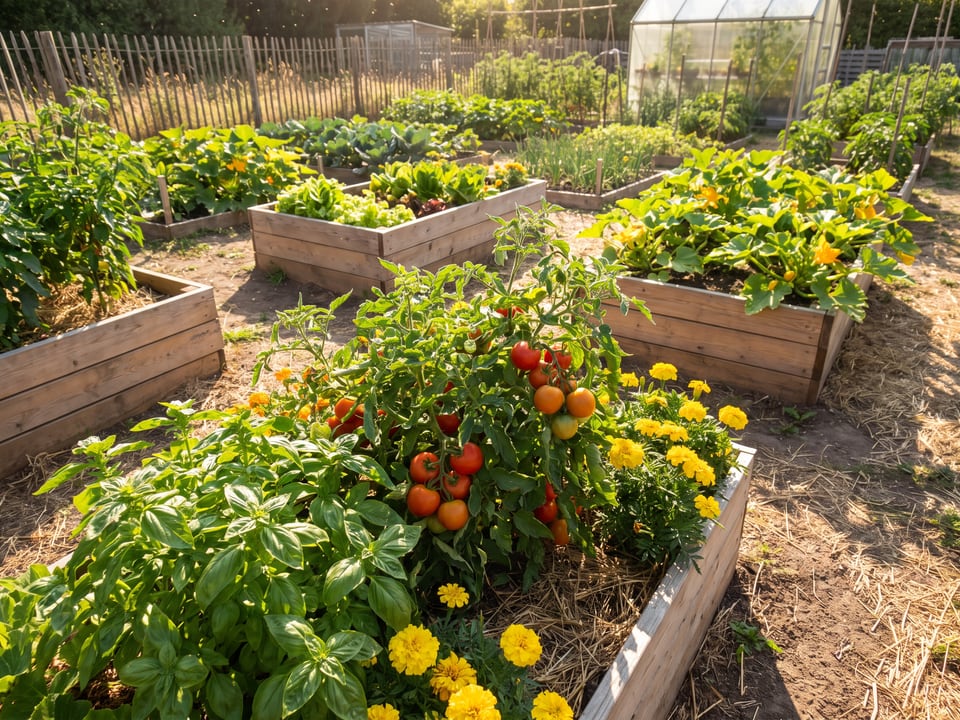
Much companion planting advice for tomatoes has never been tested in a research study. Some of it holds up, some is harmless tradition, and a short list of neighbors is genuinely worth avoiding because of diseases and pests the two plants share.
This guide splits those three groups and says which is which, because “basil improves tomato flavor” and “potatoes spread late blight to tomatoes” are not claims of the same kind.
What to plant next to tomatoes
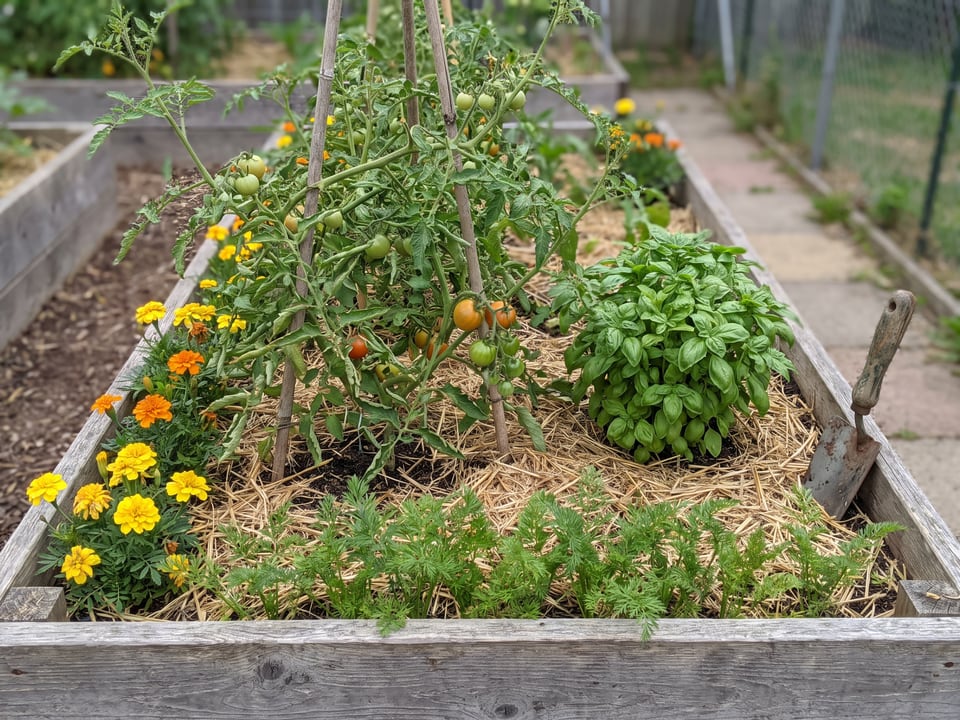
Basil. Plant it, with clear eyes about why. Basil and tomatoes want the same warmth, the same water and the same sun, so they are easy to grow in one bed, and basil stays low enough not to compete for light. The University of Minnesota cites a few studies in which basil reduced thrips on tomatoes in field and greenhouse. The pairing is good horticulture and good kitchen logic either way.
French marigolds. The evidence here is real and narrower than the folklore. Tagetes patula releases compounds that suppress root-knot nematodes in soil, which is why it is used as a cover crop over a whole season before a susceptible crop. A few marigolds dotted between tomatoes is not the same treatment. If your soil has a nematode problem, grow marigolds thickly across the bed for at least two months before the tomatoes go in, and again before each crop; University of Florida IFAS Extension found interplanted marigolds ineffective. If it does not, plant them because they occupy ground and feed hoverflies.
Garlic, onions and chives. Tradition, widely repeated, poorly tested. They compete for very little, and they fit in the gaps around a young tomato. No reason not to; no reason to expect much.
Carrots. Also tradition. They take up little light, so they use space that would otherwise be bare. The classic book claim that tomatoes improve carrot flavor is not something we will repeat as fact.
Lettuce and spinach. Genuinely useful, for a reason that has nothing to do with chemistry. The University of Minnesota suggests planting lettuce or spinach early in the season and transplanting tomatoes into the same bed as that crop matures.
Borage and nasturtium. Both pull in pollinators and hoverflies, which prey on aphids. Nasturtium is also grown as a trap crop, and it does attract aphids away from a neighboring plant, though a heavily infested nasturtium next to your tomatoes is a reservoir as much as a decoy. Cut it out when it gets bad.
What not to plant next to tomatoes
This is the half of the subject with actual consequences.
Potatoes. Keep them apart, and this one is not negotiable. Tomatoes and potatoes are both Solanum and share late blight, Phytophthora infestans, the pathogen of the Irish famine. Penn State notes the spores travel 30 to 40 miles on the wind, so its advice is to stop volunteer potatoes and get rid of infected tubers. They also share the Colorado potato beetle. Keep them in different beds.
Corn. The corn earworm and the tomato fruitworm are the same insect, Helicoverpa zea. University of Florida IFAS notes that moths prefer silking corn to tomato, so tomato is more at risk once the corn is no longer silking. Corn also shades a tomato badly by August.
Brassicas. Grow them in a different bed and neither is stressed.
And one that is not a vegetable: black walnut. Penn State Extension lists tomatoes, peppers and potatoes among the vegetables least tolerant of juglone, the compound in its roots, and advises planting 50 to 60 feet (15 to 18 m) from a mature tree, beyond the root zone.
Can you plant tomatoes and cucumbers together
Yes.
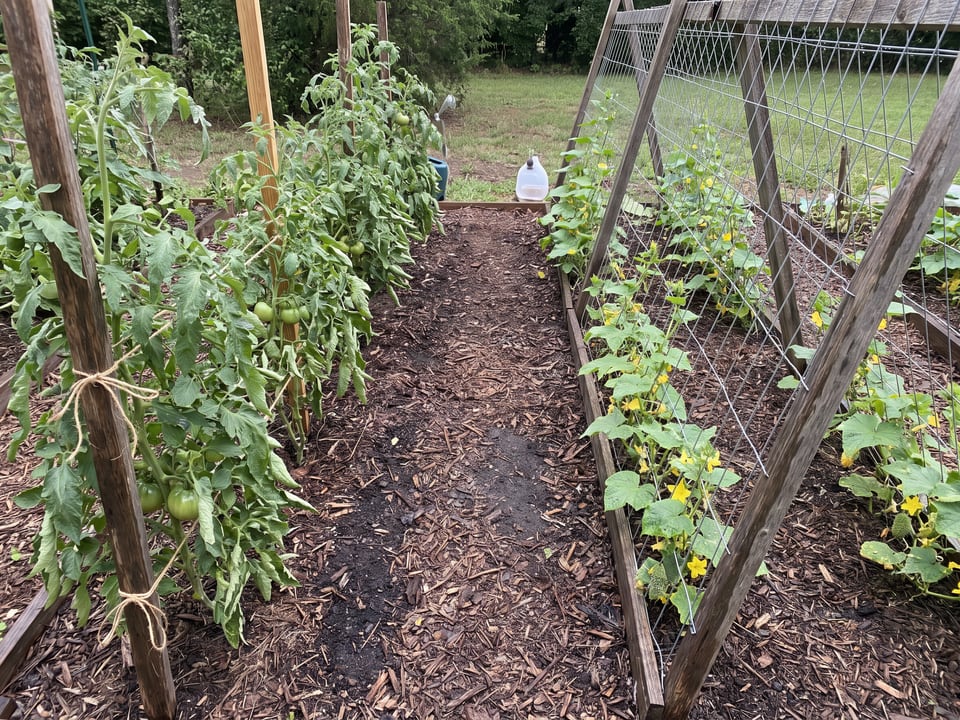
Two conditions. Give them room, because a cucumber vine will climb straight into a tomato if you let it, and a tangled pair of plants holds humid air exactly where fungal leaf disease starts. Grow the cucumber up its own trellis and leave at least 24 inches (60 cm) between the stems.
The second is water. Utah State notes that irregular watering can cause blossom end rot in tomatoes, so water the shared bed on a steady schedule. The watering guide has the volumes.
Can you plant tomatoes and peppers together
Yes, and the caveat is worth knowing. They are close relatives, so they need the same conditions and share soil-borne diseases. Bacterial spot is the one most often cited, and it is more specific than that: NC State Extension notes that the species dominating on tomatoes (Xanthomonas perforans) differs from the one dominating on peppers (X. euvesicatoria), and still advises against ground that grew either crop within the past year.
That makes them good bedfellows for one season and a bad rotation habit. Do not plant peppers where tomatoes grew last year, or the other way around, and keep both out of ground that grew potatoes or eggplant. Clemson Extension puts it at no more than once every three years for peppers, tomatoes, eggplant or potatoes in the same spot.
Practically: peppers are shorter, so put them on the sunny side where a 6-foot tomato will not shade them out by July. The guide to pepper companion plants covers the same question from the pepper’s side.
How much space any of this needs
Companion planting fails most often as a spacing problem rather than a botany one. The numbers from our catalog records: about 24 inches (60 cm) between tomato plants and 36 inches (90 cm) between rows for a full-size plant, and roughly 10 inches (25 cm) for a micro dwarf.
Anything you tuck between them has to live in what is left. Basil at the base, lettuce on the shaded side, garlic in the corners, carrots along the front edge. If the interplanting means the tomatoes go in at 18 inches instead of 24, the companion has already cost more than it can give.
In a container, skip the whole idea. A 5-gallon (20 L) pot holds one tomato and a token herb, and the herb is drinking the tomato’s water. Growing tomatoes in pots covers what fits where.
Which varieties this changes
Not many. Companion planting is a bed-layout question, and it barely interacts with variety choice.
The one place it does: a mixed bed is easier with plants that stop growing. A determinate variety like Roma or Oregon Spring holds a fixed height and a fixed footprint all season, so the lettuce you sowed beside it in June is still getting the light you planned for. An indeterminate like Sungold is 7 feet (2 m) of moving target, and everything under it is in deeper shade each week.
For a small mixed bed, dwarf varieties such as Tiny Tim or Rosella Purple leave the most room for anything else.
The short version
Plant basil, lettuce and flowers around tomatoes because they use space and light the tomato is not using. Keep potatoes, corn and brassicas in another bed because of shared pests, shared disease and competition. Grow cucumbers and peppers alongside, and move both tomatoes and peppers to fresh ground next year.
And treat every claim about one plant improving another’s flavor, including the ones in the books everyone quotes, as untested. Nothing on this page is doing anything for taste.
Sources: University of Minnesota Extension, Utah State University Extension, University of Florida IFAS Extension (marigolds and nematodes), NC State Extension (bacterial spot), Clemson Cooperative Extension (nightshade rotation), Penn State Extension (black walnut).