Fertilizer for tomato plants, and 4 myths worth dropping
Sep 16, 2026 · 6 min read
Soil test first, fertilizer worked in before planting, then light nitrogen side dressings. Plus what eggshells, coffee grounds, Epsom salt and baking soda actually do, with the evidence.
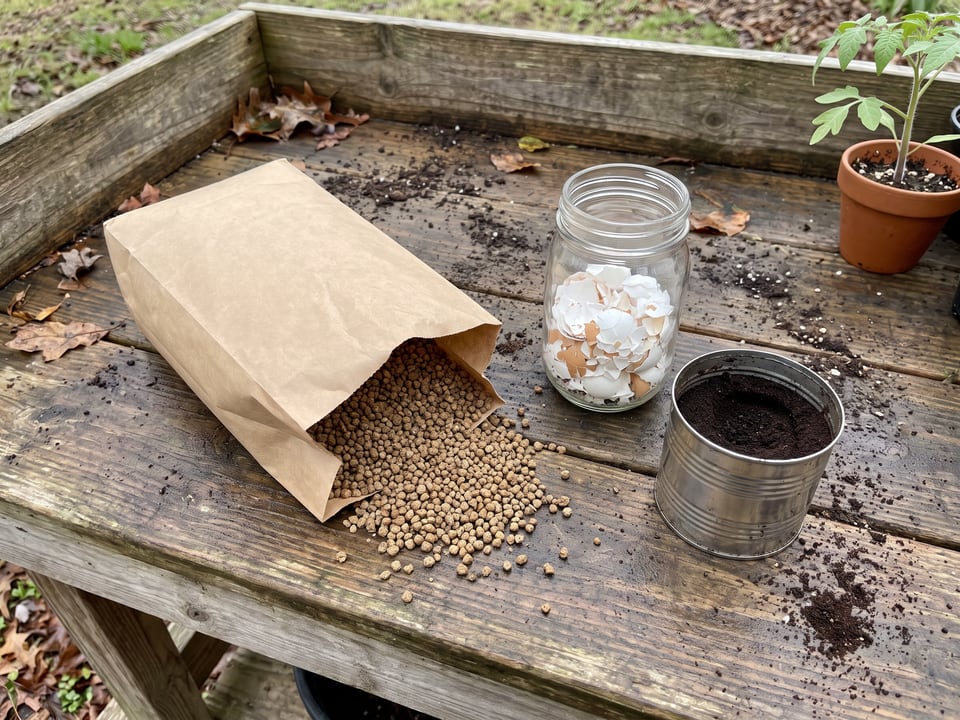
Feeding tomatoes starts with a soil test. Utah State University Extension’s advice is to test before planting, follow the report, work any fertilizer it calls for into the top 6 inches of soil, and then side dress with a small amount of nitrogen at 4 and 8 weeks after transplanting. Feed more than that and you get a large green plant with fewer tomatoes: Utah State warns that over-fertilizing causes excess leaf growth and delays fruit set and maturity.
The rest of this page is the detail, and then the four kitchen remedies people ask about most, each with the short answer first.
What the plant needs, and when
Before planting. Test the soil and add what the report asks for, worked into the top 6 inches. If you use compost instead, Utah State puts the limit at 1 inch of well-composted organic matter per 100 square feet.
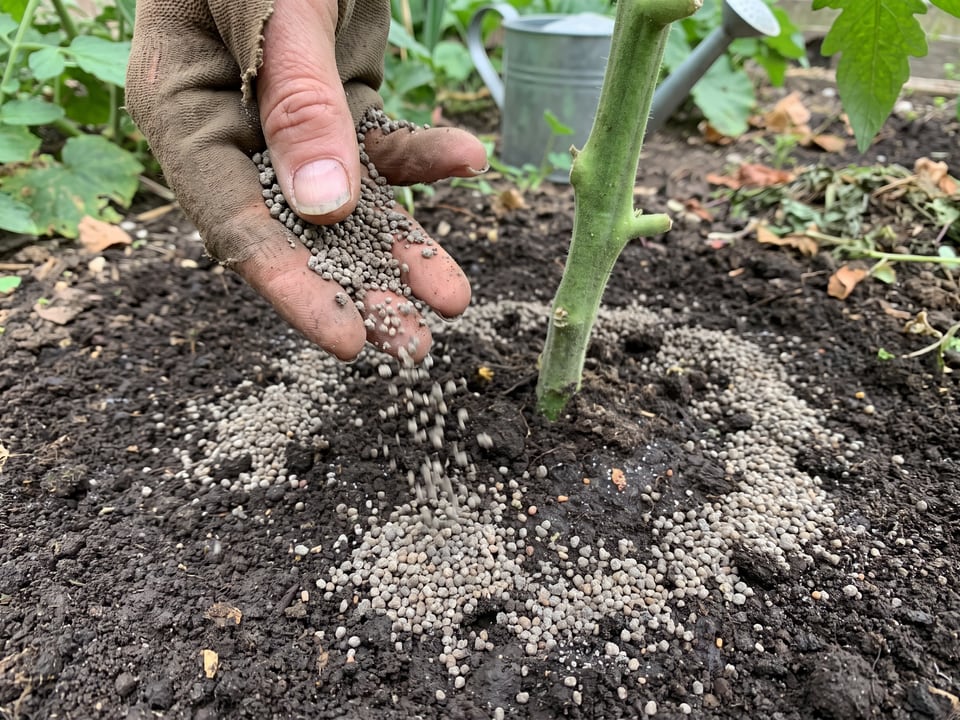
After planting. Utah State side dresses each plant with 1/2 tablespoon of 21-0-0 at 4 and 8 weeks after transplanting, sprinkled around the plant and watered in. Clemson Cooperative Extension prefers calcium nitrate (15.5-0-0) as the side dressing, monthly at 2 pounds per 100 feet of row, and advises avoiding ammoniacal nitrogen and excessive potassium or magnesium, because those work against the calcium the fruit needs.
In containers, more often. Plants in pots run through their nutrients faster than plants in the ground, and the pots guide has the schedule Iowa State recommends.
How to read N-P-K
The three numbers are the percentages by weight of nitrogen, phosphorus (as P₂O₅) and potassium (as K₂O). A 10-10-10 is 10 percent of each; a 21-0-0 is 21 percent nitrogen and nothing else.
That is the whole code. What it does not tell you is what your soil already holds, which is why a soil test through your state extension service is the way to know whether you need phosphorus or potassium at all.
How much, and how often
Granular, in the ground: whatever the soil test asks for before planting, then 1/2 tablespoon of 21-0-0 per plant at 4 and 8 weeks, as above.
Liquid, in containers: follow the label. Doubling the concentration does not double growth.
How much a plant is carrying varies widely inside one catalog. A beefsteak such as Brandywine or Mortgage Lifter carries fruit of 10 to 16 ounces (280 to 450 g) on a plant that runs 6 to 8 feet (180 to 240 cm). A cherry like Tiny Tim at 12 to 18 inches (30 to 45 cm) carries a fraction of the weight on a fraction of the plant.
Over-feeding shows as excess leaf growth and late fruit, Utah State notes. If that is what you have, stop feeding.
Organic or mineral
Both work. What differs is the delivery. Mineral fertilizers are immediately available and precisely dosed, which makes them easy to overdo. Organic sources, compost, fish emulsion, alfalfa meal, blood meal, release as soil organisms break them down, which is slower.
For most gardens the practical answer is what the soil test asks for, compost within Utah State’s limit, and the light side dressings above.
Does a tomato need calcium
Rarely as an addition, and this is the most expensive myth on the list because people treat a watering problem with a soil amendment.
Blossom end rot, the sunken leathery patch on the bottom of a fruit, is a calcium delivery failure inside the plant. University of Minnesota Extension explains that calcium enters only through actively growing root tips and moves into the fruit with water, so damaged roots or uneven water uptake can short the fruit even in soil with plenty of calcium, which most Minnesota soils have. Clemson lists low soil calcium as one factor among several, alongside extreme swings in moisture, root damage from cultivation and excess ammoniacal nitrogen, potassium or magnesium, so a soil test is the way to know.
Eggshells do not fix it. UMN is direct about it: eggshells do not prevent blossom end rot, and they decompose too slowly to supply calcium even where it is needed. They are a fine thing to compost.
The fix is steady moisture and a mulch, covered in how often to water tomato plants. If a soil test genuinely shows low calcium, Clemson’s answer is lime applied 3 to 6 months ahead, or gypsum before planting if the pH is already right, which makes it a job for next year’s bed, not an emergency treatment.
Are coffee grounds good for tomato plants
Mildly, as a soil amendment, and not for the reason usually given.
UMN describes used grounds as containing carbon, nitrogen and other compounds that feed soil organisms, and calls them an excellent addition to compost. The claim that they lower soil pH does not hold: UMN notes they have not been shown to consistently do so.
Compost them. Do not build a feeding program around them.
Is Epsom salt good for tomato plants
Only if a soil test shows a magnesium deficiency.
Epsom salt is magnesium sulfate. Clemson and UMN agree on the rule: do not add it to garden soil unless a recent soil test shows magnesium is short. UMN adds that it will not prevent blossom end rot, that there is no evidence it raises yields in soil with enough magnesium, and that too much magnesium can block calcium uptake and make blossom end rot worse. Sprayed on leaves, it can cause leaf scorch.
Is baking soda good for tomato plants
No. The story is that a sprinkle of sodium bicarbonate on the soil makes tomatoes sweeter, and none of the extension services cited here recommend it. Leave it in the kitchen.
If a plant looks hungry
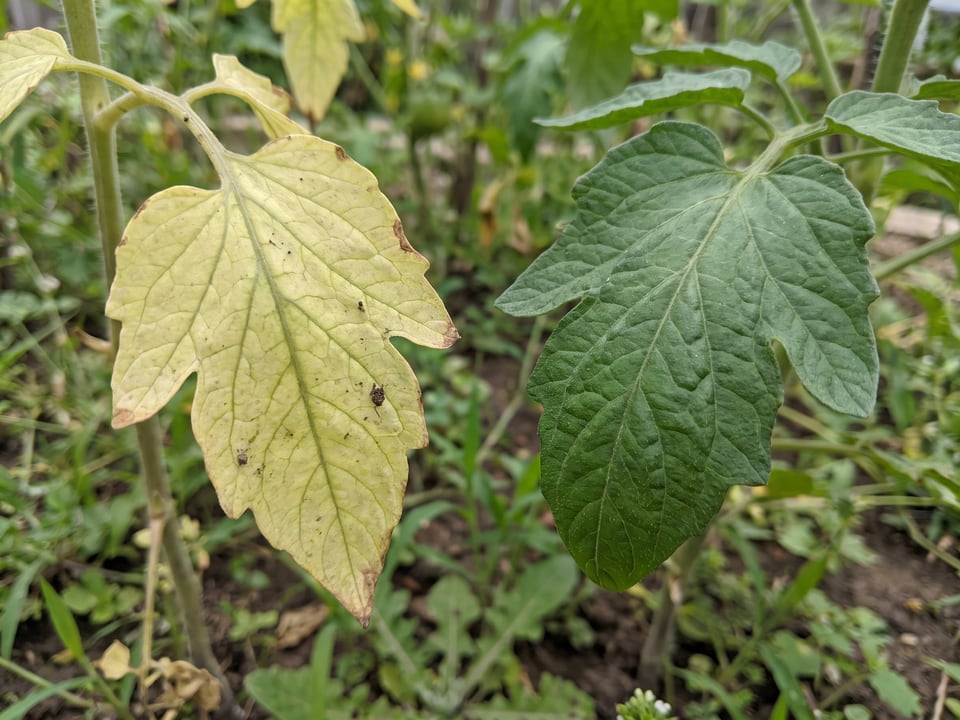
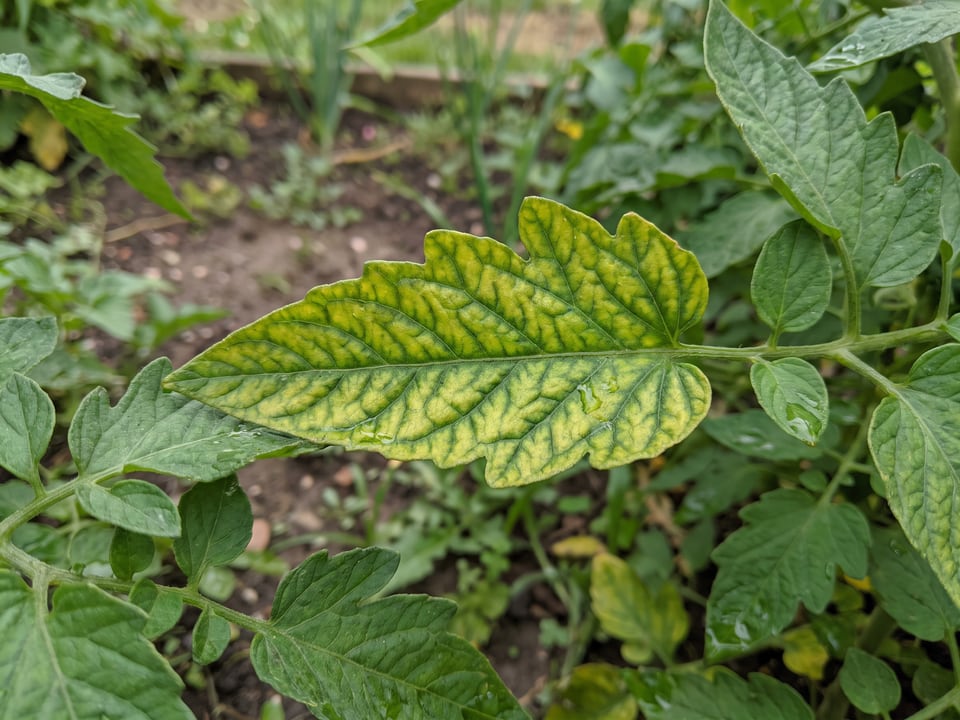
Feeding is the answer less often than it feels like it should be. Yellow lower leaves can be nitrogen, and can equally be overwatering, natural aging, or early blight, and the three want completely different responses. Yellow leaves on tomato plants tells them apart by pattern and position.
The short version
Soil test before planting, and add what it asks for. Side dress lightly with nitrogen at 4 and 8 weeks. Feed containers more often. Do not overdo potassium or magnesium.
Compost the eggshells and the coffee grounds, keep the Epsom salt for a diagnosed magnesium deficiency, and leave the baking soda in the kitchen.
Sources: Utah State University Extension, Clemson Cooperative Extension, University of Minnesota Extension, soil health home remedies.