How to grow tomatoes in pots: size, soil and water
Sep 16, 2026 · 8 min read
A 5-gallon pot is the working minimum and 10 gallons is better. Container sizes by growth habit, grow bags, buckets, and the watering that decides the crop.
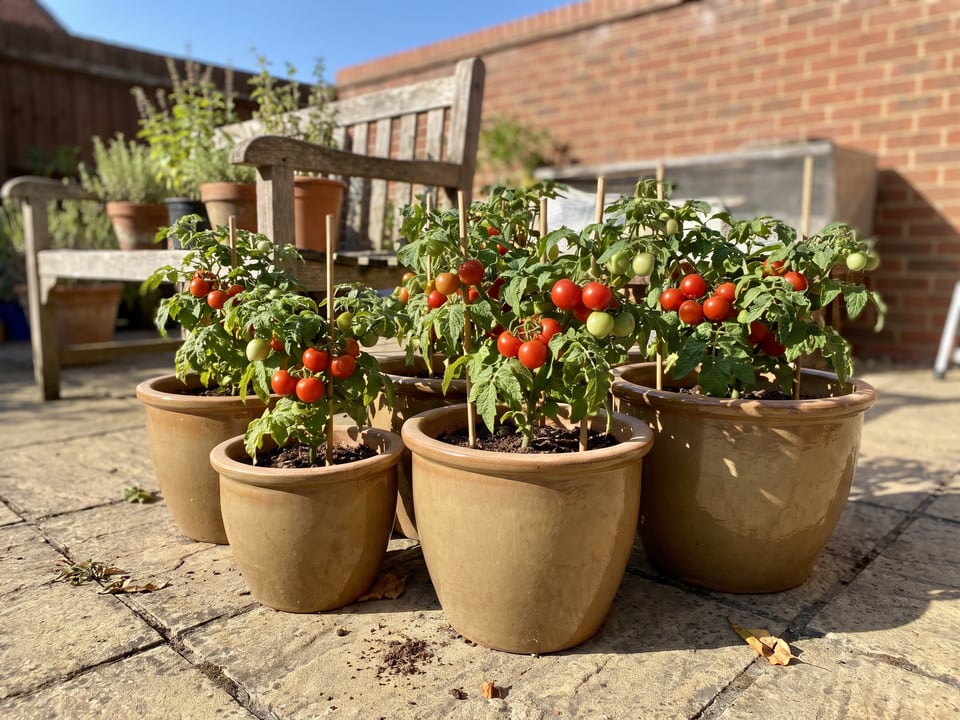
A tomato in a pot lives on whatever you gave it. In the ground, roots reach sideways for water when the top few inches dry out. In a 3-gallon (10 L) pot there is nowhere to reach, so every choice you make at planting time is still affecting the plant in August.
Three of those choices do most of the work: how big the pot is, which variety goes in it, and how consistently you water. The short answer is a 5-gallon (20 L) pot as an absolute minimum for a full-size plant, 10 gallons (40 L) if you want to stop thinking about it, one plant per pot, and water every day in summer.
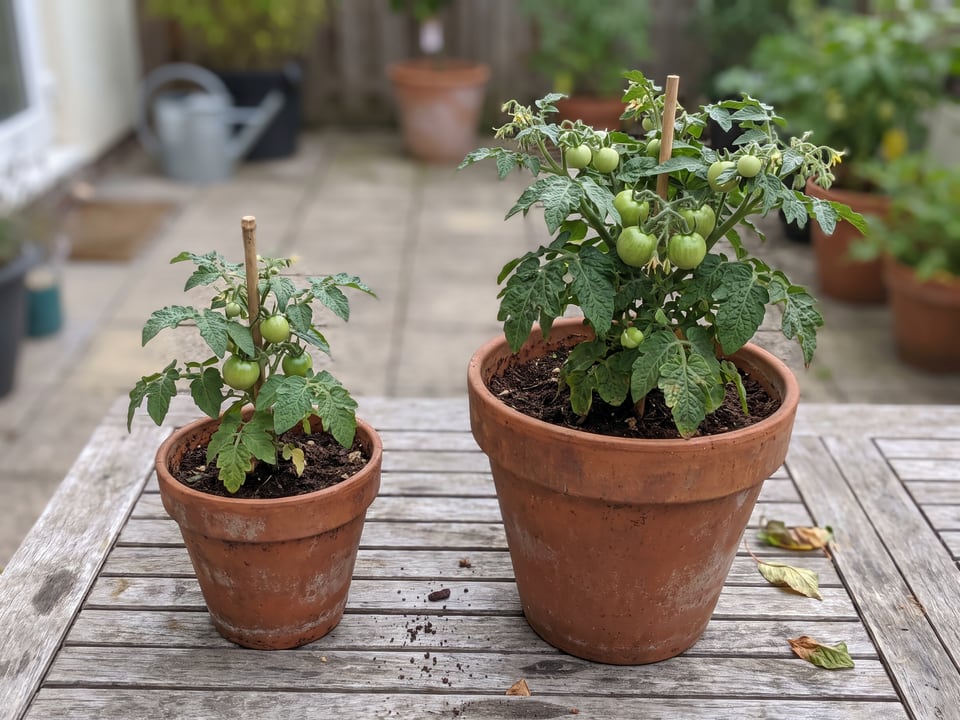
What size pot for a tomato plant
Every record in our catalog carries a minimum soil volume. Those figures are our estimates, not measurements, and they group by growth habit:
| Growth habit | Catalog minimum (estimate) | Comfortable size | Mature height |
|---|---|---|---|
| Micro dwarf | 1 gal (3 L) | 2 gal (8 L) | 5 to 12 in (13 to 30 cm) |
| Dwarf | 4 gal (15 L) | 5 gal (20 L) | 12 to 36 in (30 to 90 cm) |
| Determinate | 5 to 8 gal (20 to 30 L) | 10 gal (40 L) | 2 to 4 ft (60 to 125 cm) |
| Indeterminate | 7 to 8 gal (25 to 30 L) | 15 gal (57 L) | 3 to 10 ft (90 to 300 cm) |
The “catalog minimum” column is what the plant survives in with daily attention. The “comfortable” column is what it takes to crop well without you watering twice a day in a heat wave.
Two extension services give their own floors. Iowa State University Extension asks for at least a 2-gallon pot for a cherry tomato and 4 gallons for a standard one, and Clemson’s Home & Garden Information Center calls a 14 to 20 in container, or a 5-gallon bucket, suitable for most compact cultivars.
A tomato will live in a 3-gallon (10 L) pot. It will not do much. The usual result is a plant that wilts by mid-afternoon in July, sets a first truss, and then drops flowers because it cannot keep up with its own leaf area.
What size grow bag for tomatoes
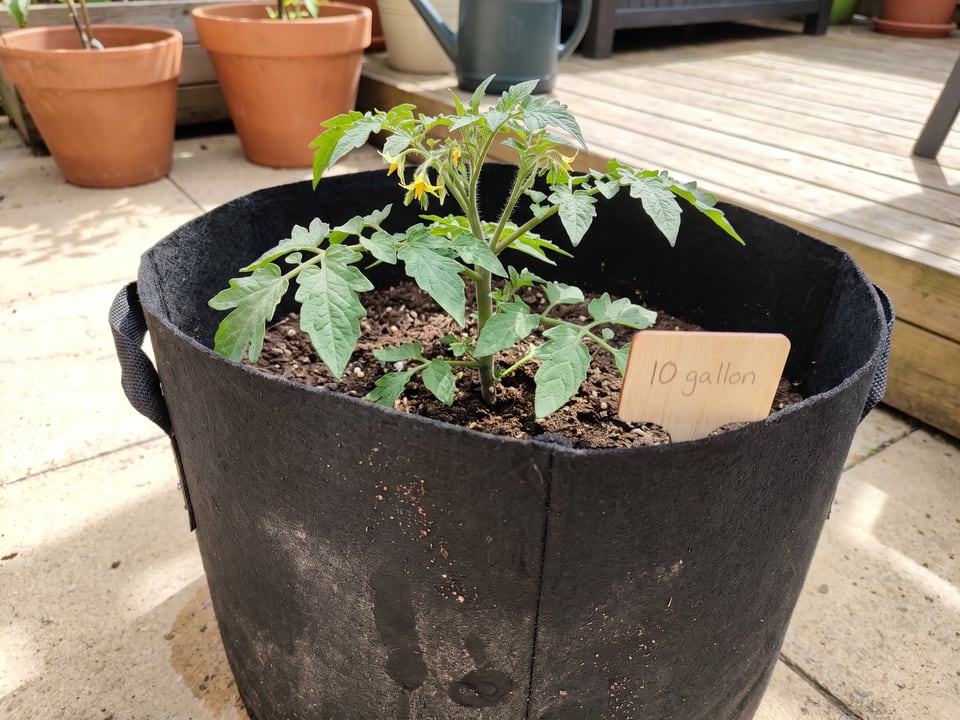
Fabric grow bags are sold by gallon and the sizing maps straight onto the table above: 5 gallons for a dwarf or a compact determinate, 10 gallons for most determinates and any indeterminate you intend to keep short, 15 gallons for a full-size indeterminate or a beefsteak.
What fabric changes is the watering. Bags breathe through their sides, so roots air-prune instead of circling, and the soil dries noticeably faster than in the same volume of plastic.
They collapse and store flat over winter.
Growing tomatoes in a 5-gallon bucket
A food-grade 5-gallon bucket is close to the minimum for a full-size plant, and it works if you do two things.
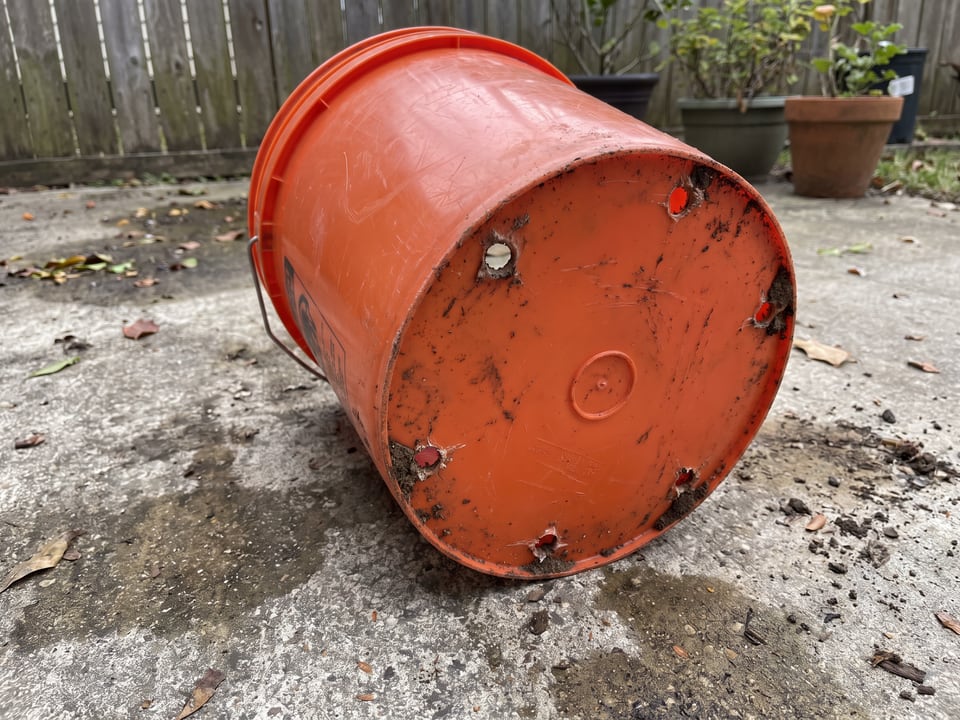
Drill the drainage. Clemson and Iowa State both specify holes in the bottom, so the bucket is not sitting in the water it collected. This is the step people skip and the reason bucket tomatoes fail.
One plant per bucket. The question “how many tomato plants can I put in one container” gets asked constantly and the answer is one; Iowa State gives its minimum pot sizes per plant.
Which varieties take to a pot
Growth habit first. Fruit size second.
Dwarf and micro dwarf plants are compact by genetics, with short internodes and thick stems, so they hold themselves up and stay in bounds all season. A determinate variety stops at a set height and ripens most of its crop in a few weeks, which is a drawback in a big garden and an advantage on a balcony where you are not trying to eat a tomato a day for three months.
The container-friendly list holds the 31 varieties in the catalog that carry the field. Reliable places to start:
- Tiny Tim: 12 to 18 in (30 to 45 cm), 60 days, cherry
- Red Robin: 8 to 12 in (20 to 30 cm), 55 days, fits a 1-gallon pot
- Tumbling Tom: 12 to 18 in (30 to 45 cm), trails, made for a hanging basket
- Patio Princess: 18 to 24 in (45 to 60 cm), a full-size slicer on a dwarf plant
- Gold Nugget: determinate, 58 days, one of the earliest in the catalog
- Oregon Spring: determinate slicer, 58 days, 2 to 4 ft (60 to 120 cm)
- Rosella Purple: dwarf beefsteak, for a large pot
- Celebrity: the practical upper limit at 3 to 4 ft (100 to 125 cm) with five resistance codes
An indeterminate variety in a 5-gallon pot is not impossible, it is a summer of daily watering for a fraction of the fruit the same plant gives in the ground. If the balcony is the only space you have, take the trade knowingly and use the biggest container you can lift.
Soil
Use a peat-free multipurpose or container mix. Garden soil in a pot compacts, drains badly and brings whatever soil-borne disease your beds have.
Container plants need feeding more often than garden plants. Iowa State recommends a soluble fertilizer such as 15-30-15 or 20-20-20 every week or two, and notes that if your mix contains a slow-release fertilizer you may not need to start until mid-summer. Follow the label rather than improvising. Fertilizer for tomato plants covers the phases and the myths.
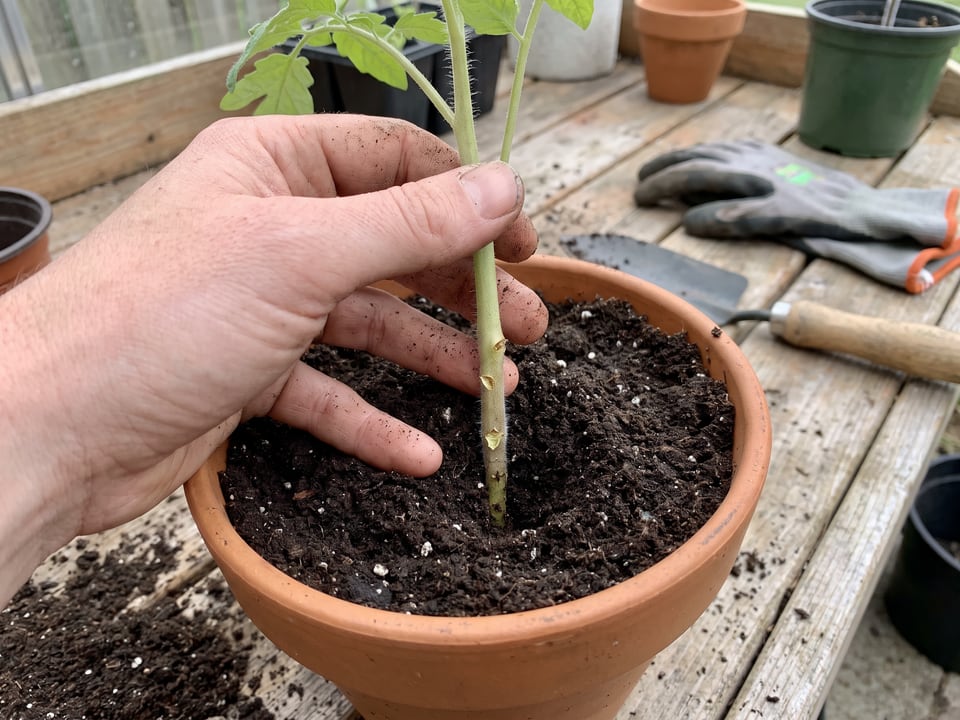
Plant deep, with the lower leaves stripped off. Utah State notes that tall plants can go in deeper because tomatoes form roots from their stems, and a pot-grown plant needs every root it can make.
Watering, which is where pots are won and lost
From the point the plant is taller than its pot, water every day in summer, in the morning, until water runs from the drainage holes.
Blossom end rot, the sunken dark patch on the bottom of a fruit, is a calcium delivery problem and almost always a watering problem wearing a disguise. The calcium is usually in the compost. What fails is the water carrying it, because the pot dried out, roots took damage, and the fruit swelling at that moment got shorted. Adding calcium does not fix it; steady watering does. The watering guide has the volumes and the checks.
Mulch the surface. A layer of bark, straw or even gravel cuts evaporation and stops compost splashing onto the lower leaves every time you water, which is how a lot of foliage disease starts.
A saucer helps on the hottest days and rots roots if the pot stands in water all season. Empty it in the evening.
Support, in a pot
Set it at planting time. Driving a stake into an established root ball in a container cuts roots you cannot see, and in a pot there are not many to spare.
Clemson advises a cage or other support at planting for any variety that grows taller than two feet. An indeterminate needs a taller support and a pot heavy enough not to blow over, which in practice means the pot has to be wider than it is tall. Details and tie technique are in stakes, cages and strings.
Do tomatoes do better in the ground or in pots
In the ground, given the choice. More root volume, a buffer against your watering habits, and a soil ecosystem the plant did not have to be handed.
Pots win on the things that are not about the plant: you can put them where the sun is, you can grow where there is no soil, you avoid soil-borne disease in a bed that has it, and you can move a plant under cover when blight weather arrives. A well-run 10-gallon pot beats a badly run garden bed comfortably.
A reasonable first attempt
One 10-gallon (40 L) pot, one determinate or dwarf variety, peat-free compost, a cane and a soft tie, a layer of mulch, and a soluble fertilizer every week or two. Water every morning once the plant is taller than the pot.
That combination gives most people a crop in their first season, which is the thing that makes them do it again.
Sources: University of Minnesota Extension, Utah State University Extension, Iowa State University Extension, Clemson HGIC.