When to harvest peppers: bell, banana, jalapeño and hot types
Sep 22, 2026 · 7 min read
Pick peppers at full size and firm, either green or once colored, 35 to 45 days after flowering. Size and color cues for bell, banana, jalapeño, serrano, poblano, Anaheim and habanero.
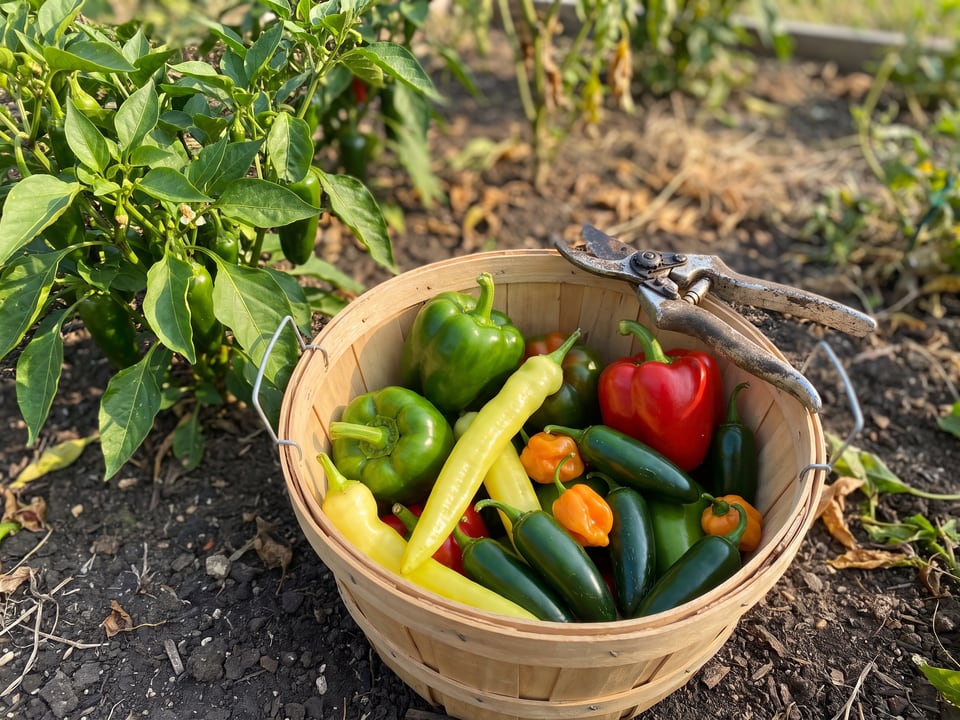
A pepper is ready to pick once it has reached full size and the walls feel firm. From there you have a choice. Pick it green, or leave it on the plant until it turns red, yellow, orange or brown, which Utah State University Extension puts at 35 to 45 days from flowering. Cut the stem instead of pulling, because pepper branches snap.
Green or colored
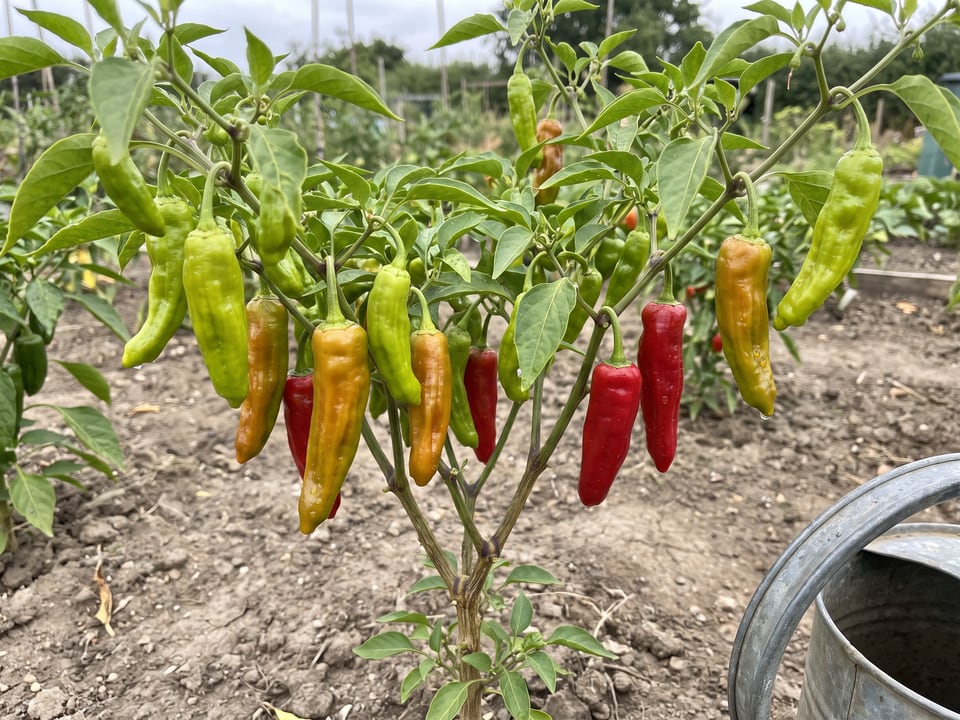
Every pepper starts green and changes color as it matures. Utah State describes the two stages gardeners pick at: green, which is immature, and fully colored, which is ripe. Clemson Extension adds the practical rule for the second one: a pepper left to color should be picked as soon as it reaches the color you want, not left hanging.
Waiting for color keeps each pepper on the plant longer, so over the same weeks you pick fewer of them.
How to tell a pepper is ready
Size comes first. Clemson Extension’s test for sweet peppers is full size and firm walls, so a green pepper at the size its variety is known for can be picked green. The sizes below come from the records in our catalog.
Then feel it. Utah State describes a pepper ready to pick as firm, plump and smooth-skinned. Some pods never get smooth: shishito, cayenne and habanero pods are wrinkled by nature, so for those, firmness and color are the test.
Bell peppers
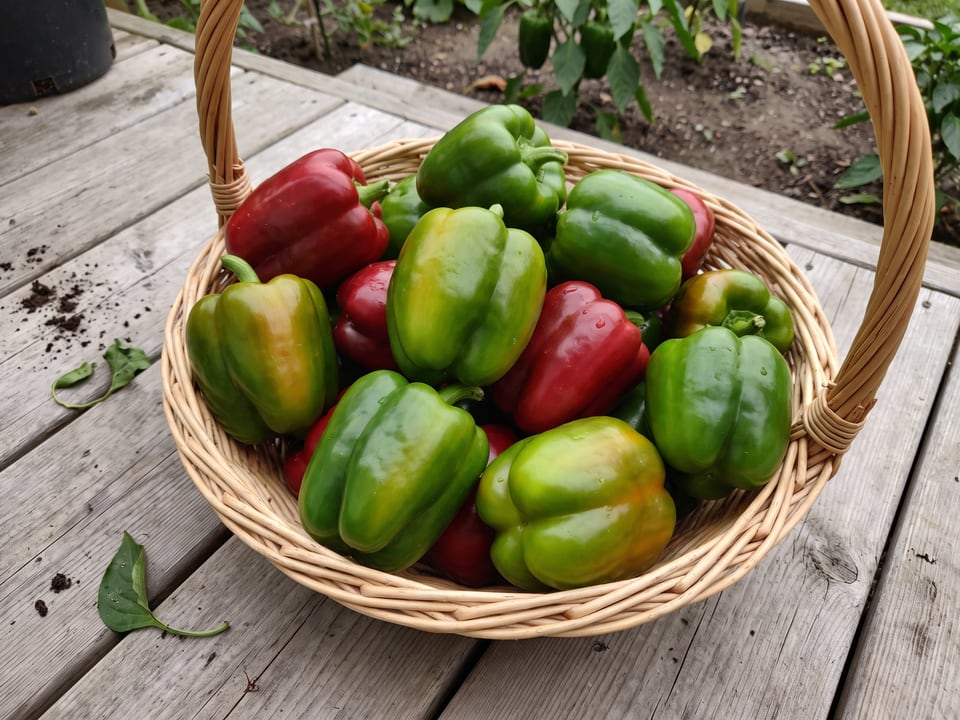
University of Illinois Extension gives the green-stage size for bell peppers as 3 to 4 inches (8 to 10 cm) long, firm and green. Larger bells go further: California Wonder is about 4 inches (100 mm) across, and King of the North and Big Bertha run to 6 inches (150 mm) long.
All three are recorded as ripening from green to red. Utah State counts 35 to 45 days from flowering to full color, so a red bell comes some weeks after the same fruit would have been ready green. King of the North is listed at 68 days from transplant, which makes it the quickest bell of the three to reach picking size.
Banana and wax peppers
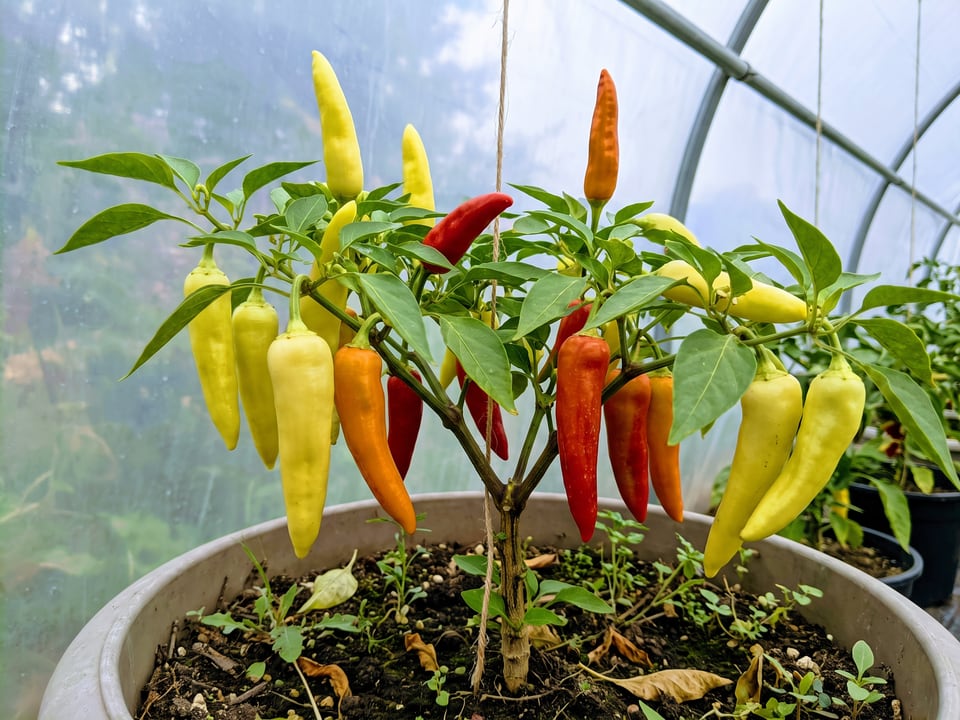
Banana and wax types are picked yellow and turn red if left. Sweet Banana is a long, waxy, tapering pod listed at 72 days from transplant. Hungarian Yellow Wax is 5 to 6 inches (13 to 15 cm) long and about 2 inches across at the shoulder, listed at 85 days.
Pick either once the pod reaches that length, is waxy yellow and firm. A red pod is still usable; it has simply gone on to the next stage. Pepperoncini follows the same pattern, and the guide to pepperoncini and banana peppers covers how to tell the two apart.
Jalapeños
Clemson Extension’s rule is specific: pick jalapeños when the fruit turns a deep black-green. Both jalapeños in the catalog are about 3 inches (76 mm) long at that stage. TAM Jalapeño is listed at 70 days from transplant and Early Jalapeño at 67.
Left on the plant, a jalapeño turns red. That is its colored stage, and it is picked the same way.
Serrano, poblano and Anaheim
These three follow Clemson Extension’s rule for hot peppers, picked green or left to color, and each has its own size to wait for.
Serranos are small. Serrano Tampiqueño, the named serrano most US seed catalogs sell, grows pods 2 to 2½ inches (50 to 64 mm) long, which True Leaf Market likens to a small jalapeño; Tomato Growers Supply says 3 to 4 inches. Pick them firm and glossy green, or wait for bright red. Sellers list it at 70 to 80 days from transplant, and it is hot at both stages.
Poblano and ancho are the same pepper at two stages: poblano when picked fresh and green, ancho once it has ripened and been dried. Ancho San Luis makes flattened, heart-shaped pods about 6 by 3 inches, dark green at 75 to 78 days, then red and finally mahogany brown. For poblanos, pick at full size while still dark green. For anchos, leave the pods on the plant until they turn red-brown, then dry them.
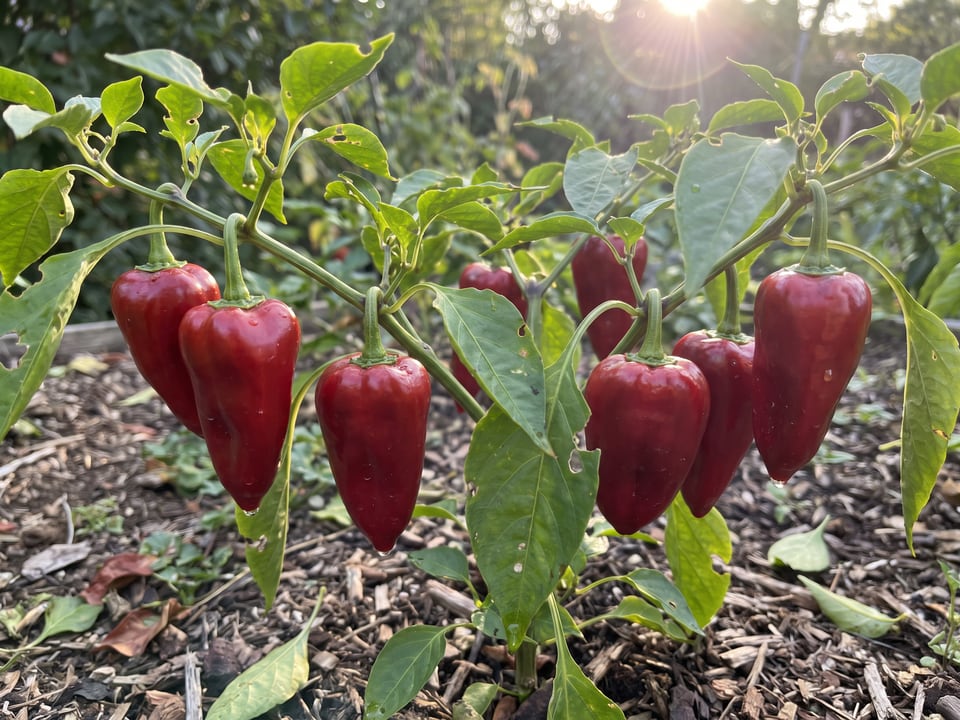
Anaheim is the long, mild chile of the three. Anaheim TMR is about 7½ inches long and 2 inches wide at the shoulder, deep green at 75 days and red later; Tomato Growers Supply sells it for canning and drying. Pick it green once it reaches full length, or let it go red if you plan to dry it.
Shishito and other thin-walled peppers
Shishito is picked green, at 3 to 4 inches (75 to 100 mm), with the tip often crumpled; that is how its record describes the pod. It is listed at 65 days from transplant. Cubanelle, also at 65 days, is picked at 5 to 6 inches (12 to 15 cm) at the green stage or left to turn red.
Cayenne, habanero and superhots
Clemson Extension notes that hot peppers may be picked green or left to ripen and change color on the plant.
Cayenne Long Slim is 5 to 6 inches (127 to 152 mm) long and ripens from dark green to red, at 75 days from transplant. Orange Habanero turns from green to bright orange at 105 days, and Chocolate Habanero to brown at 95. Bhut Jolokia, the ghost pepper, is listed at 120 days. Tabasco ripens red, on pods that stand upright on the plant.
These are long-season peppers, and in a short season the first fall frost can arrive before the last pods color. The very hot peppers page lists the whole group with its days to maturity.
How to pick
Cut, do not pull. Clemson Extension notes that pepper stems are brittle, and University of Illinois Extension that less damage is done to the plant if the fruit is cut rather than pulled off. Hand pruners or scissors through the stem leave the branch whole and the cap on the fruit.
Wear gloves when you pick the hot ones, and keep your hands away from your eyes until you have washed them.
Before the first frost
Frost ends the pepper season in one night. Utah State’s advice for the end of the season is to gather every mature green and slightly colored fruit and store it at 55°F. Clemson and Illinois both describe pulling whole hot pepper plants before frost and hanging them in a shed or basement, where the pods dry on the stem.
Look up your first fall frost date by ZIP code, and plan the final picking for the week before it.
Storing picked peppers
Utah State gives 50 to 55°F for storing peppers for one to two weeks, and warns that peppers suffer chilling injury if kept in the refrigerator for long. Clemson gives 45 to 50°F at high humidity for two to three weeks. Both put the right temperature around 50°F, which is warmer than a household refrigerator is usually set, so peppers keep best in the warmest part of it, for one to three weeks depending on the source.
Sources
- Utah State University Extension, Peppers in the garden: 35 to 45 days from flowering to full color, picking green or fully colored, firm, plump and smooth-skinned fruit, end-of-season harvest and storage at 50 to 55°F, chilling injury.
- Clemson Cooperative Extension, Pepper: picking as soon as the desired color is reached, cutting instead of pulling, jalapeños at the black-green stage, hot peppers picked green or colored, whole plants pulled and hung before frost, storage at 45 to 50°F.
- University of Illinois Extension, Peppers: green bell peppers at 3 to 4 inches, cutting rather than pulling, pulling and hanging plants before frost.