Cherry vs grape tomatoes: what actually separates them
Sep 19, 2026 · 4 min read
Shape, not size, is the reliable difference. What each one tastes like, which holds up better in a lunchbox or a hot pan, and why the categories blur in both the supermarket and the seed catalogue.
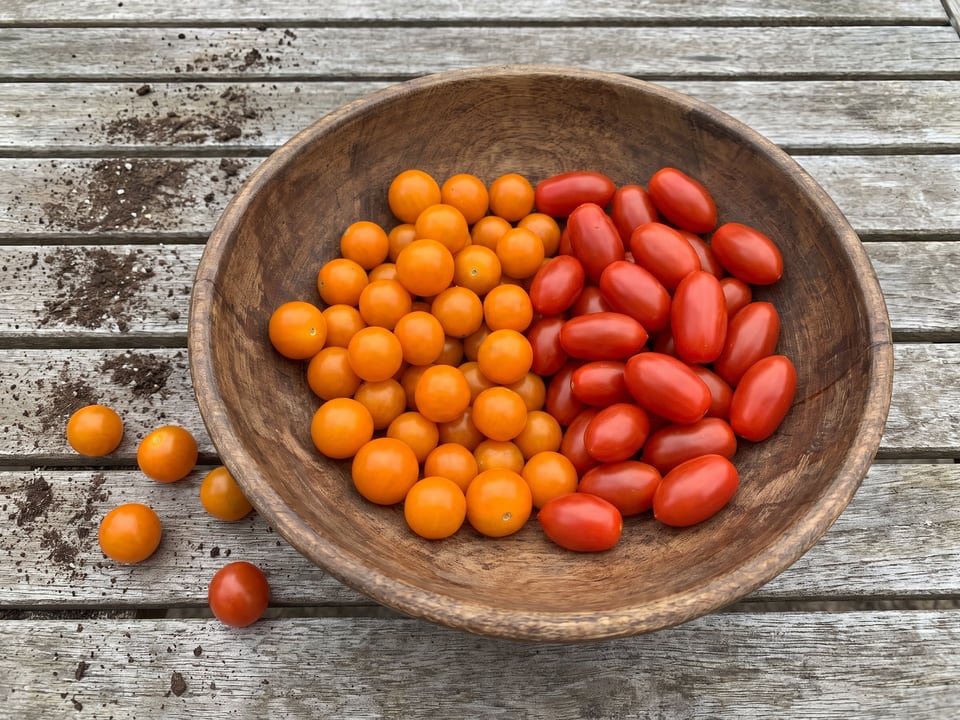
Cherry tomatoes are round. Grape tomatoes are oblong. That is the difference that holds up; almost everything else people say about the two — that grapes are smaller, sweeter, meatier — is true of some varieties and false of others.
It helps to know where the two names come from, because they are not the same kind of name. Extension services classify tomatoes by fruit size using long-established terms: Utah State University Extension lists the classes as “cherry, pear, plum or large”. Grape is not in that list. It is a newer, informal label for small oblong tomatoes, which is part of why the boundary feels vague.
What the catalogue actually shows
Of the 132 tomato varieties recorded here, 22 are classed cherry and 6 grape. Lined up, the pattern is clear and it is not about size:
| shape | typical fruit weight | |
|---|---|---|
| Cherry | round in 19 of 22 records | 1–55 g |
| Grape | oval or elongated in all 6 | 15–60 g |
The weight ranges overlap almost completely. Spoon and White Currant are cherries at 1–3 g; Indigo Rose is a cherry at up to 55 g, heavier than most grapes. Meanwhile Lucky Tiger, a grape, reaches 60 g. If you are trying to work out which you are holding, look at the outline, not the scale.
Taste and texture
Here the generalisations have some substance, though they describe tendencies rather than rules.
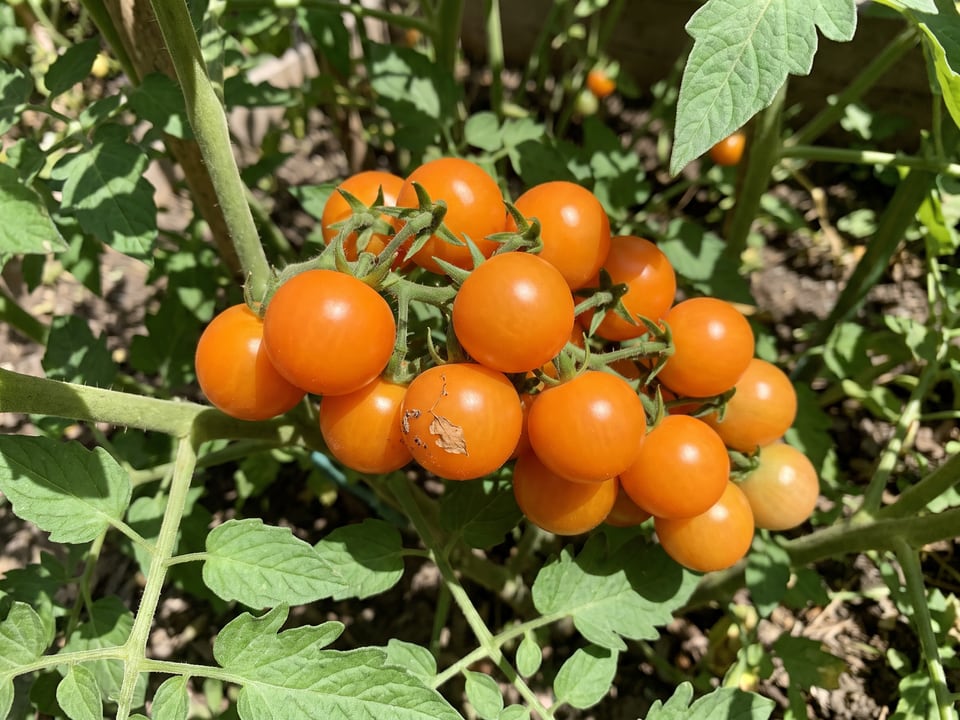
Cherry tomatoes are often juicier. They burst when you bite them, which is what makes the good ones memorable — a ripe Sungold or Sun Sugar is closer to fruit than to salad vegetable.
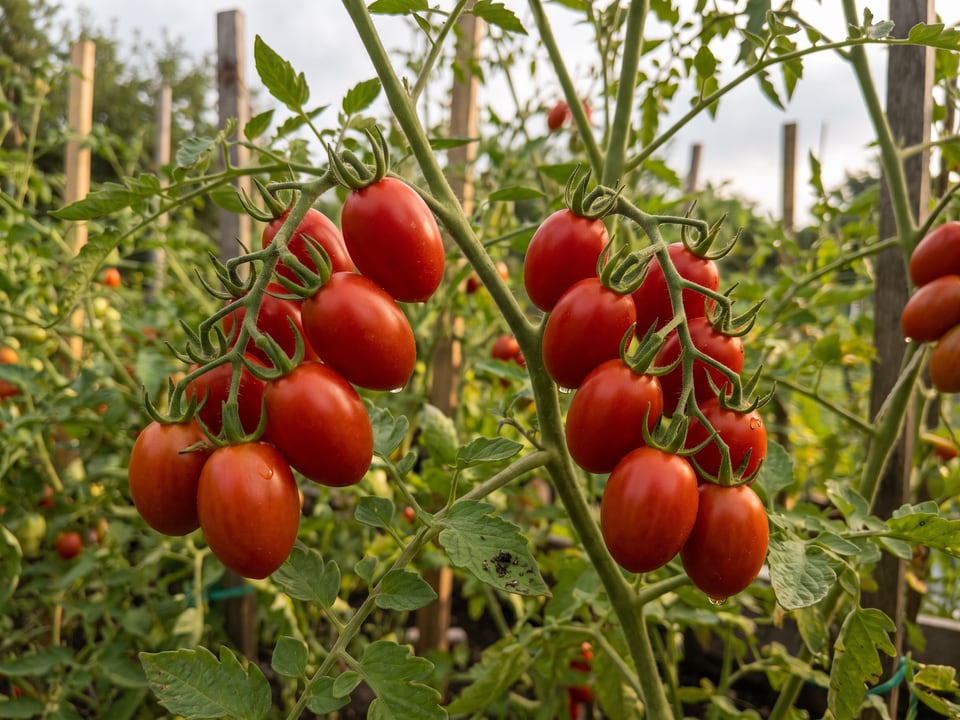
Grape tomatoes are often firmer. Juliet is the standard example, sturdy enough to be treated as a small plum tomato.
Which to use for what
- Eaten raw, out of hand or in a salad: cherry, for the juice and the sweetness.
- Packed lunches, picnics, anything that has to survive being carried: grape. Thicker skin, no burst.
- Roasting or a hot pan: grape holds its shape; cherry collapses into sauce, which may be exactly what you want.
- Drying: UF/IFAS recommends plum or pear-shaped tomatoes for drying, so an oblong grape is the closer fit.
- Cut in half for a salad: grape halves stay halves; cherry halves often turn into a mess and a puddle.
Growing either one
Both are easier than large tomatoes in hot weather. UF/IFAS notes that cherry and grape tomatoes are the exceptions that “typically perform well throughout Florida summers”, where larger types stop setting fruit in the heat.
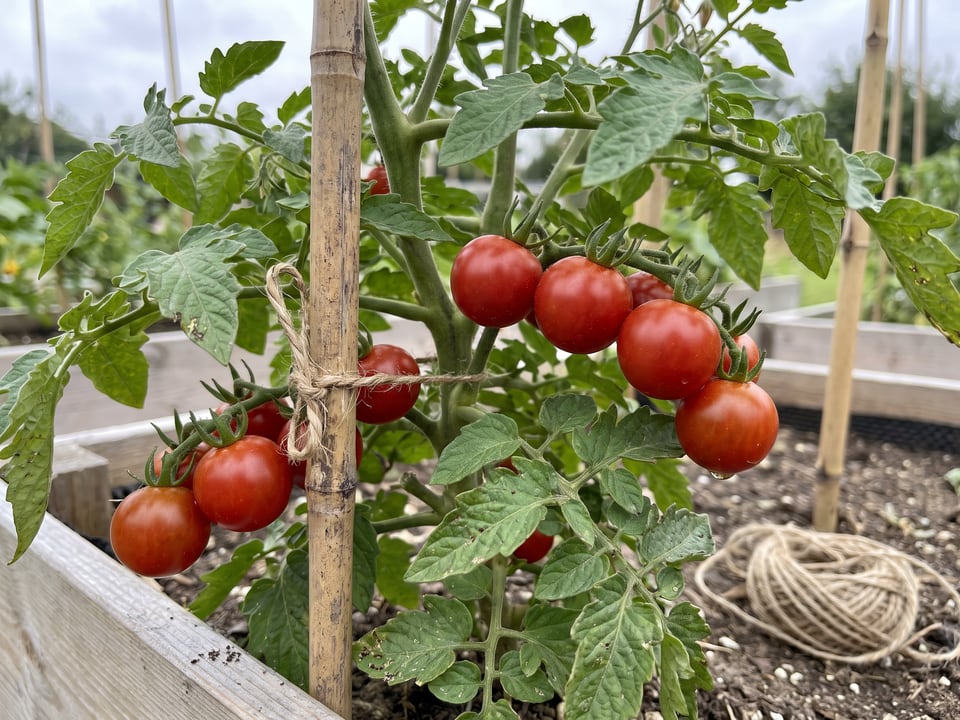
Most are indeterminate and need real support; there is a whole compact branch of the cherry group that is not, including Tiny Tim, Red Robin and the micro-dwarfs, which finish under 45 cm and grow on a windowsill. The grape group has no such branch — all six here are indeterminate.
Browse the catalogue by class: cherry tomatoes and grape tomatoes.
The short version
Round and juicy, or oblong and firm. Choose cherry if the tomato is going to be eaten where it was picked, and grape if it has to go somewhere first.