What is an heirloom tomato, and should you grow one?
Sep 16, 2026 · 6 min read
Heirloom, open-pollinated and F1 hybrid explained in plain terms, plus how to pick a variety for your space, your season and what you will do with the fruit.
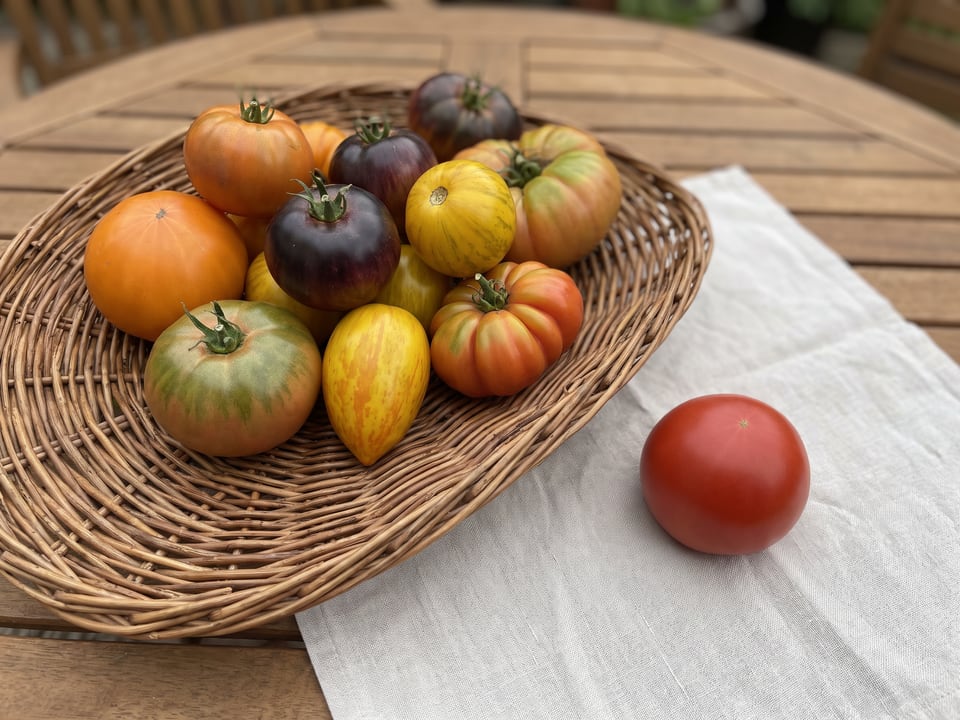
An heirloom tomato is an open-pollinated variety that has been passed down and grows true from its own seed. That is the whole definition. It says nothing about size, color, shape or how the fruit tastes, which is where most of the confusion in seed catalogs comes from.
Three words cover every tomato you can buy, and our catalog labels every record with one of them.
Heirloom, open-pollinated, F1 hybrid
Open-pollinated means the variety reproduces itself. Pollination happens without human control, the line is stable, and seed from this year’s fruit grows into the same thing next year. It is a statement about genetics, not about age.
Heirloom is an open-pollinated variety with a history: handed down through families, seed-saver networks or a region. Every heirloom is open-pollinated. Not every open-pollinated variety is old enough to be called an heirloom, which is why our catalog separates the two: 57 heirlooms, 51 other open-pollinated varieties.
F1 hybrid is the first generation from a deliberate cross between two inbred parent lines. The breeder selects for disease resistance, yield, uniformity or earliness, and the F1 generation expresses all of it at once. What it will not do is come true from seed: save it, and next year splits back into its grandparents. We hold 19 of them.
None of these is a quality grade. An F1 is not a lesser tomato and an heirloom is not automatically a better one; they are two different deals.
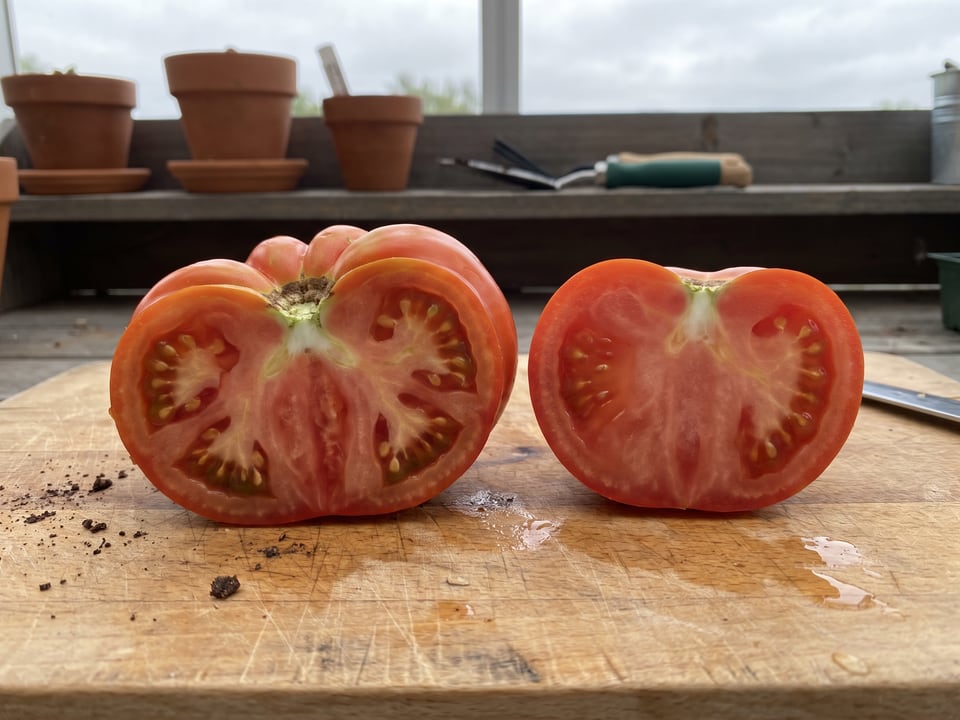
Heirloom versus beefsteak is not a comparison
This one gets searched often enough to be worth stating plainly: heirloom and beefsteak are not alternatives. Heirloom describes how a variety was bred. Beefsteak describes the fruit: large, broad-shouldered, often ribbed, usually many-chambered.
A tomato can be both. Brandywine is an heirloom beefsteak. Big Boy is an F1 hybrid beefsteak. Sungold is neither: it is an F1 cherry.
Our beefsteak list and our heirloom list overlap heavily and are answering different questions.
What you gain and what you give up
Growing heirlooms, you gain seed you can keep. One packet of an open-pollinated variety, saved properly, is a line you never buy again, and saving tomato seed is an evening’s work per variety. You also gain range: shapes, colors and fruit sizes that the commercial breeding programs never had reason to keep, from white through purple to striped.
You give up bred-in disease resistance and uniformity.
Growing hybrids, you gain the resistance codes on the variety page, tighter yields and, frequently, earliness. You give up seed saving, and you accept that the variety exists as long as the company keeps producing it.
Most gardens end up with both: a hybrid or two carrying the reliability, and heirlooms for everything else. That is not a compromise, it is how a sensible seed order looks.
Which tomato should you grow
Pick by the question you actually have.
You have a balcony, a patio or a windowsill
Look at growth habit before anything else. Dwarf and micro dwarf plants stay compact by genetics, not by pruning, and the container-friendly list holds all 31 varieties in the catalog that carry the field.
Tiny Tim tops out at 12 to 18 inches (30 to 45 cm) and crops in 60 days. Red Robin is smaller again, at 8 to 12 inches (20 to 30 cm) in a 1-gallon (3 L) pot. Gold Nugget is a determinate that holds its size on a balcony and ripens in 58 days. Sizes and soil volumes are in the pots guide.
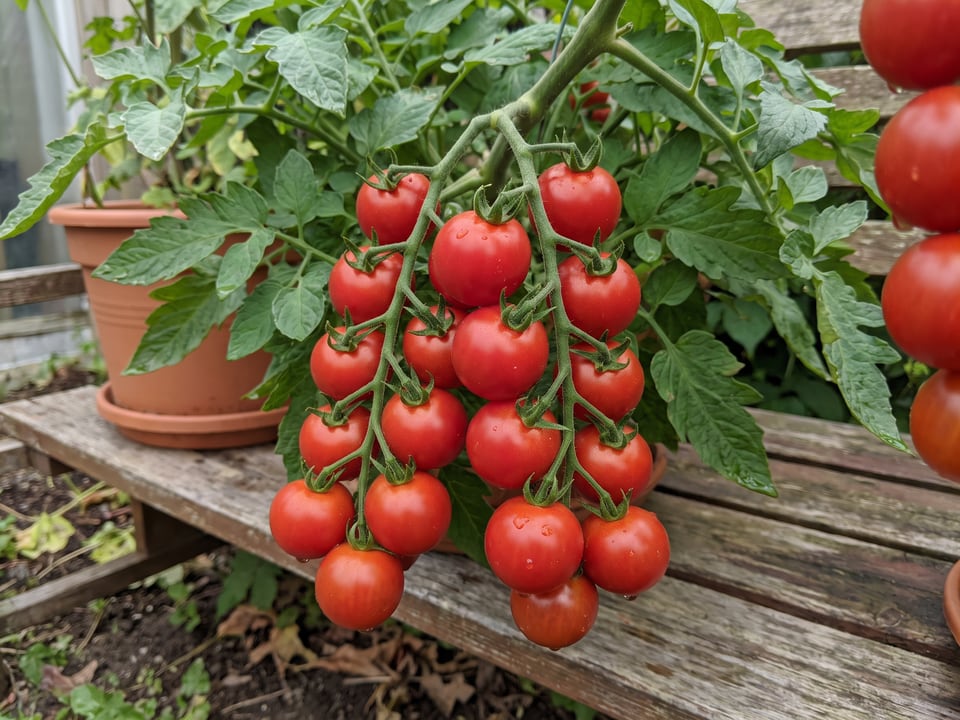
Your season is short
Sort by days to maturity, which every record in our catalog counts from transplant on the same basis, so the numbers are comparable.
Siletz at 52 days is the earliest in the catalog, Glacier and Stupice at 55, Early Girl at 59. Against 88 to 91 days for the latest beefsteaks, that is five weeks, and in a short season five weeks is the whole argument. The early season list is filtered on the field.
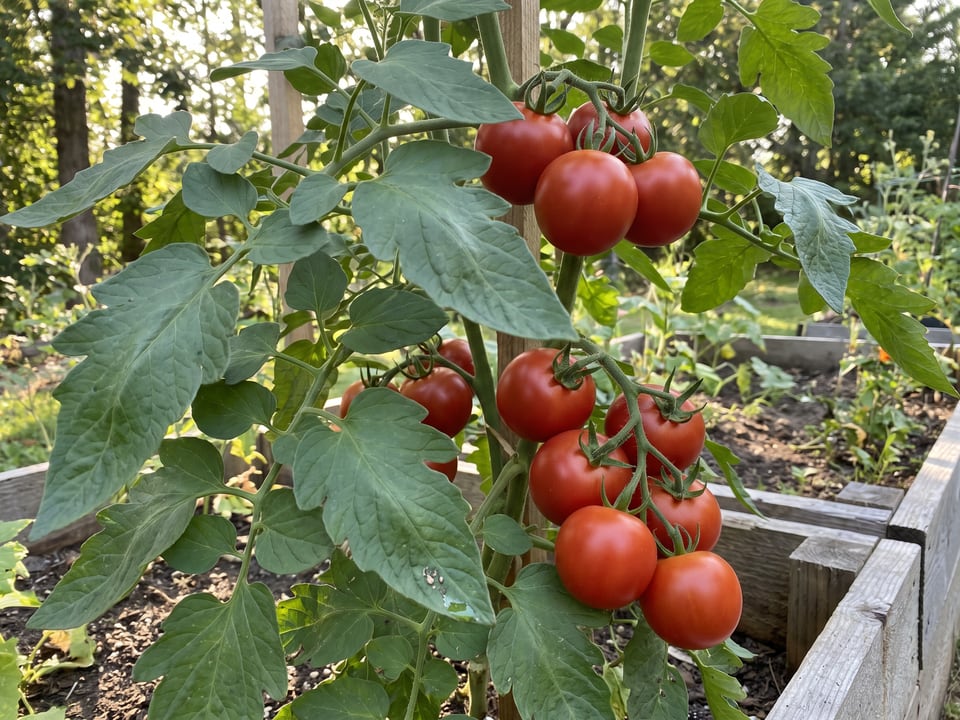
You are making sauce, paste or canning
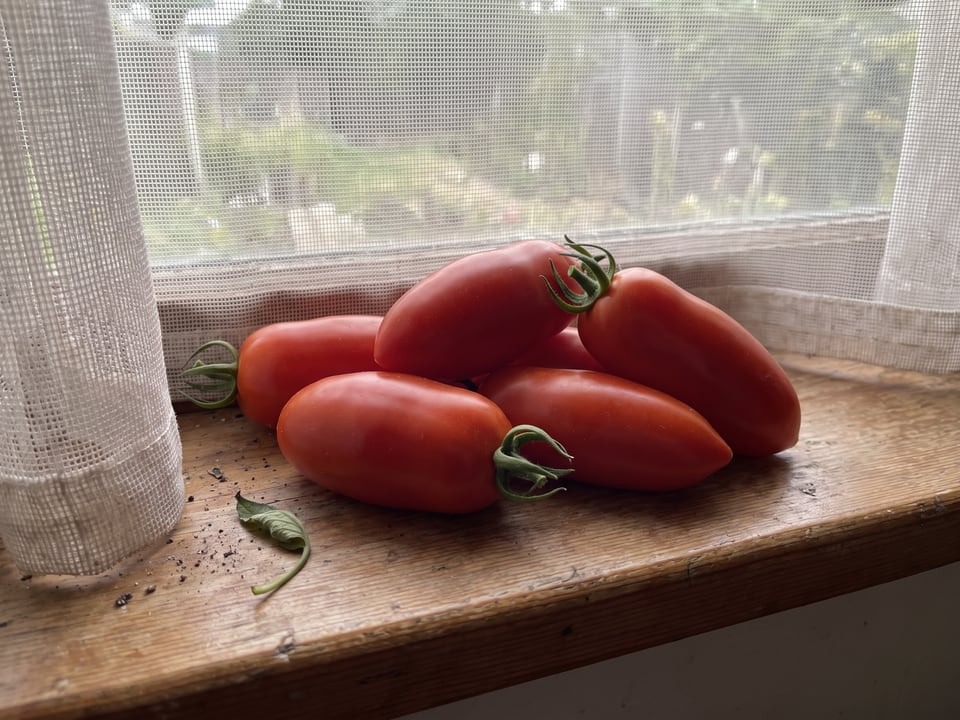
You want dense flesh and few seeds, so there is less water to cook off. The catalog splits those between two fruit types: paste, where Amish Paste and Opalka sit, and plum, which holds San Marzano, Roma and Martino’s Roma. Roma and Martino’s Roma are determinate, so their crop arrives in a concentrated flush. That matters when you are canning: 30 pounds ripening over two weeks is a Saturday’s work, and the same 30 pounds dribbling in over two months is not.
You want slices for a sandwich
Beefsteaks and large slicers. Brandywine, Mortgage Lifter and Cherokee Purple are the three heirlooms most people start with; Celebrity is the hybrid equivalent with five resistance codes behind it.
They are the slowest and hungriest tomatoes you can grow, they need real support, and a single fruit can run over a pound (450 g).
It is your first tomato
Grow something determinate and forgiving, and grow two plants rather than six. Celebrity and Roma both carry resistance codes and fixed heights. Stupice is an early heirloom.
What makes first seasons fail is rarely the variety. It is a pot that is too small, watering that comes and goes, and no support until July.
You want something you cannot buy in a store
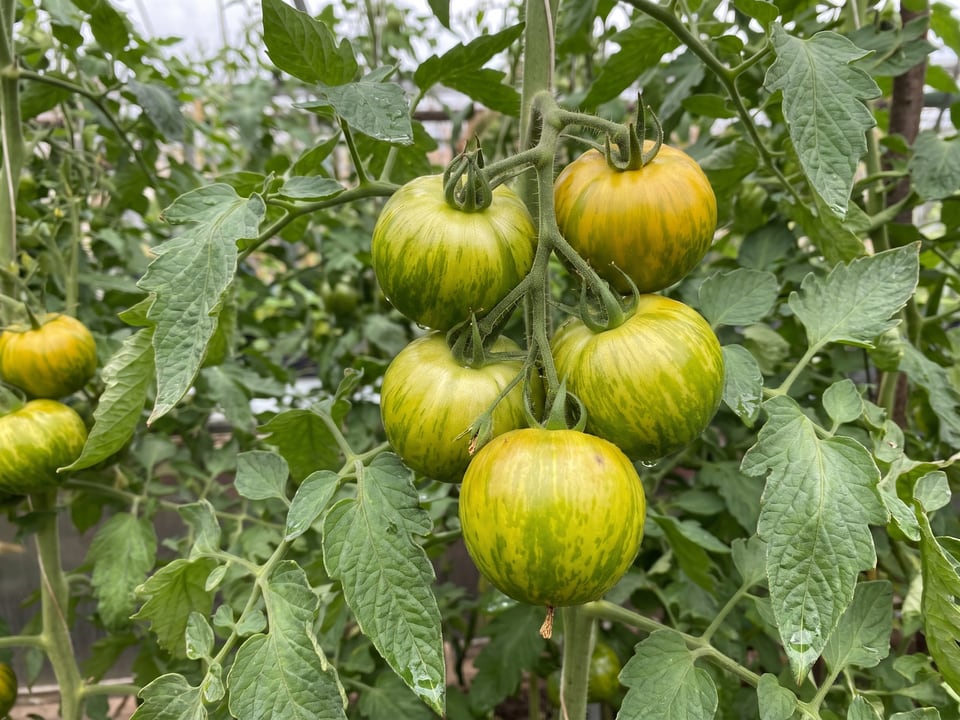
This is the actual case for heirlooms. Green Zebra, Black Krim, Atomic Grape, Great White and the bicolor group exist because someone kept them going, not because they ship well.
About flavor
You will notice this guide does not tell you which tomatoes taste best, and that is deliberate. Flavor in a tomato moves with sunlight, water, soil and how ripe it was when you picked it, and two people growing the same variety 500 miles apart can reasonably disagree.
Every variety page in the catalog carries a flavor profile as structured values, sweetness, acidity and intensity, each on the same scale, so you can compare varieties against each other rather than against someone’s adjectives. Use those, and treat any prose that promises you a taste as marketing.
Start with three
A first order that covers most of what a garden needs: one early variety so something ripens in July, one paste or slicer for the kitchen, one heirloom you have never seen in a shop.
Add a fourth if you have a pot. That is a season’s worth of learning, and it leaves room next year for the ones you actually missed.
Sources: Seed Savers Exchange, University of Minnesota Extension.