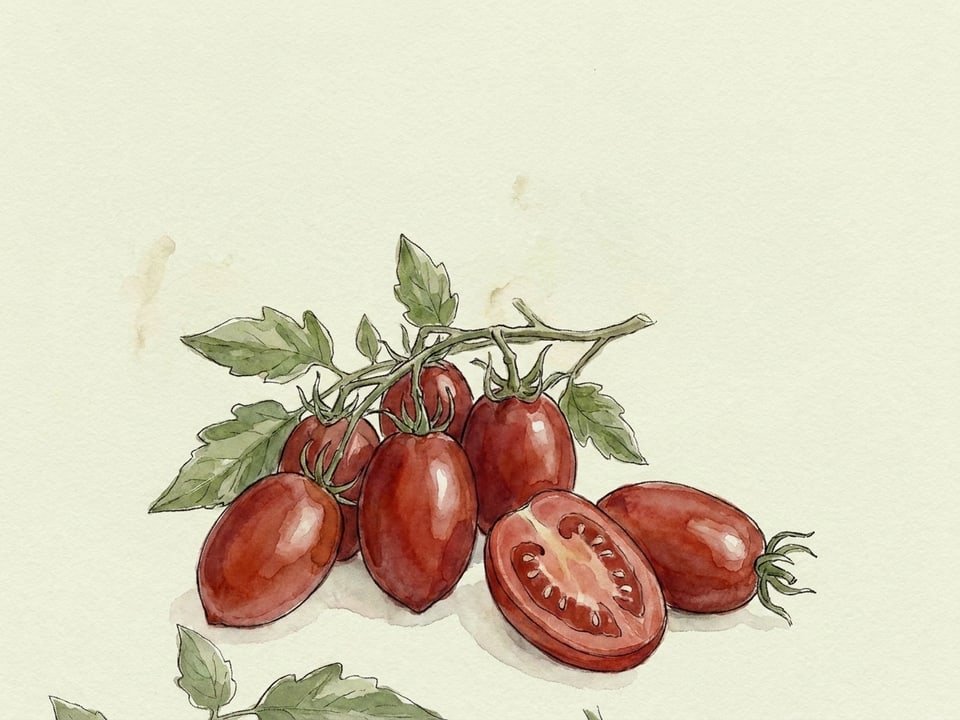
Plum tomato varieties
Plum tomatoes are the oval, thick-walled processing type, and in this catalogue they come with a growth habit attached: five of the six are determinate, meaning the plant reaches a set size and ripens its whole crop inside two or three weeks. That pairing is not a coincidence. A concentrated harvest is what a sauce or canning crop needs, and determinate growth is how you get one. The six here weigh 20 to 140 g and ripen between 75 and 80 days from transplant, a five-day spread. San Marzano is the single indeterminate exception and the only one that will keep producing into autumn. If you are looking for the same fruit on a plant that does not stop, the paste page is the other half of this picture.
- Varieties
- 6
- Days to harvest (from transplant)
- 75–80
- Fruit weight
- 1–5 oz (20–140 g)
- Growth habit
-
4 Determinate
1 Semi-determinate
1 Indeterminate
All 6 plum tomato varieties
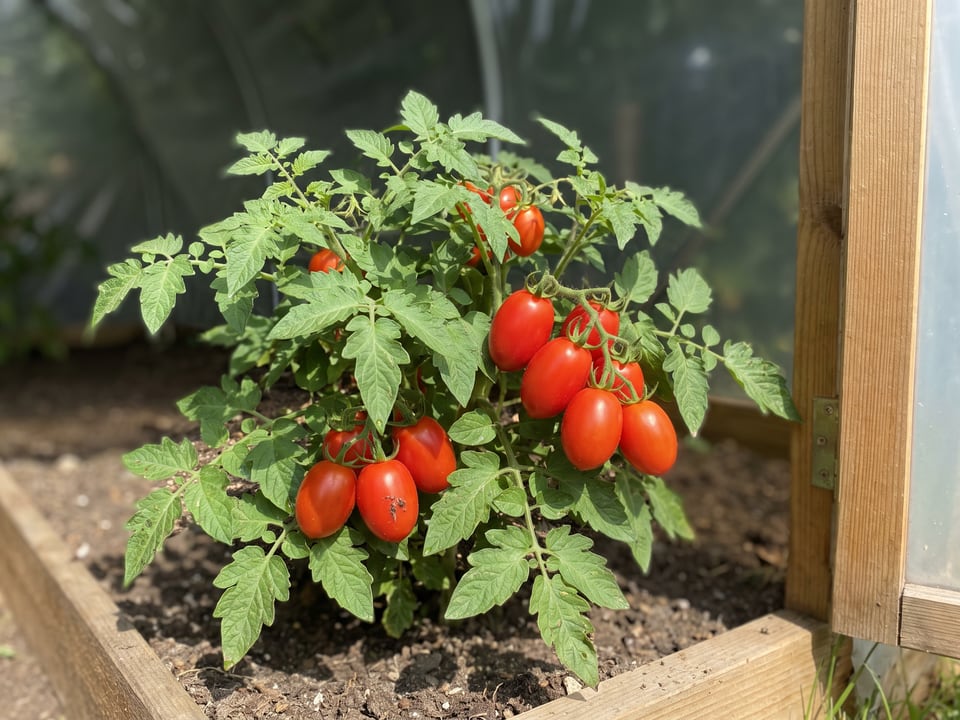
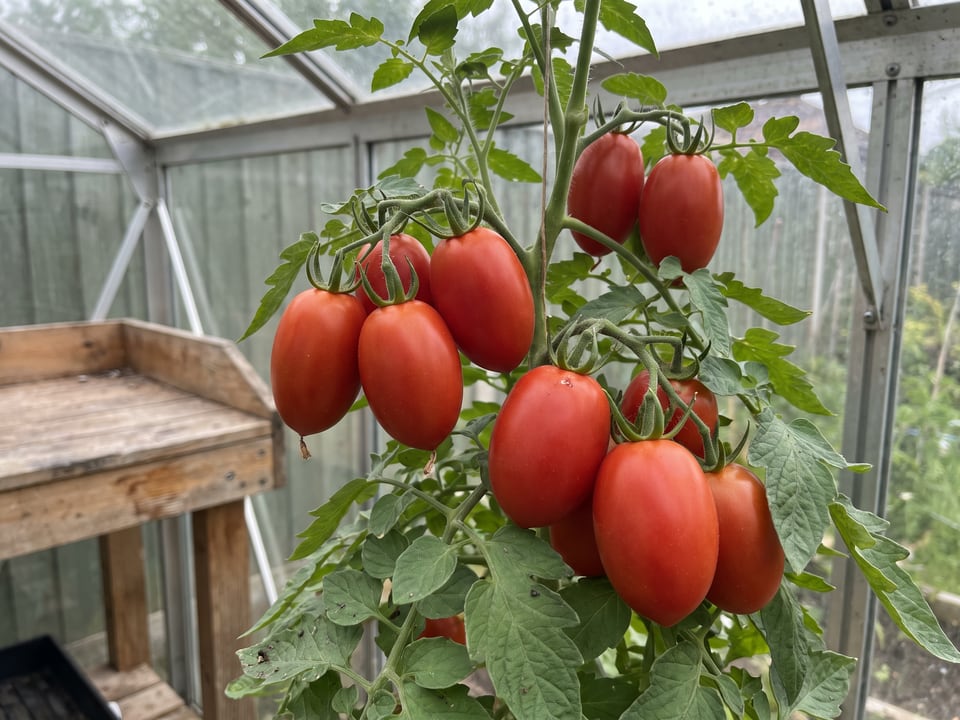
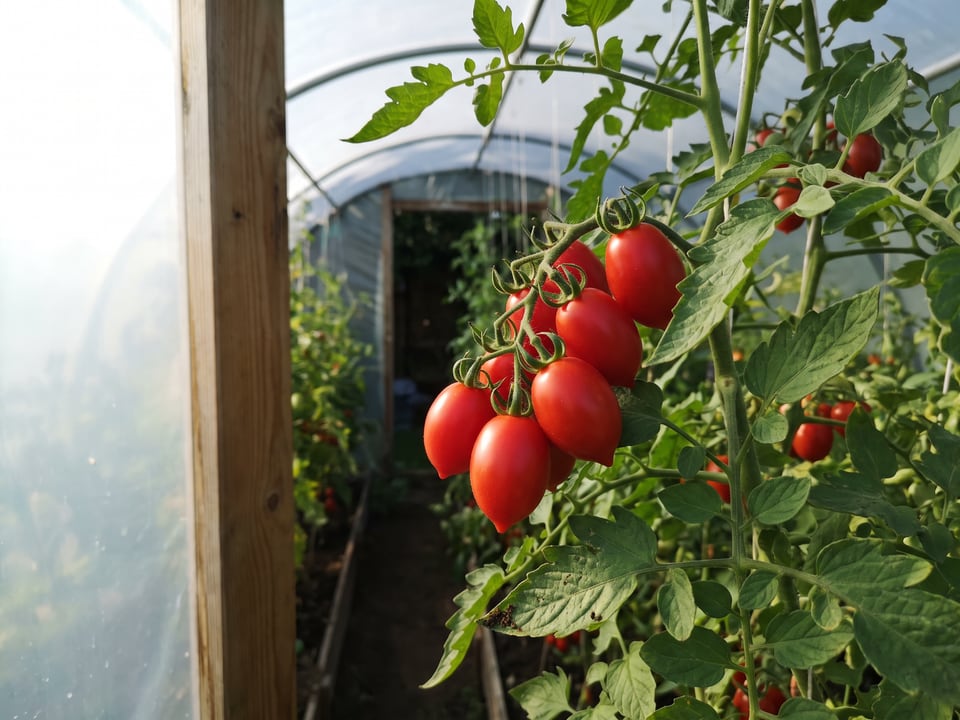
How to choose
-
Choose plum when you want the harvest to arrive on a date. Five of these six will give you most of their crop in a fortnight, which is the difference between making passata in one afternoon and picking four tomatoes a day for three months. If that concentration is not what you want, San Marzano or the paste varieties are the better fit.
-
The five-day season range means timing will not decide this page. Everything lands between 75 and 80 days from transplant. Choose on size and on habit instead: Rio Grande and Plum Regal at 90 to 140 g are the largest, Principe Borghese at 20 to 40 g is the smallest and is traditionally a drying tomato rather than a sauce one.
-
Do not prune the determinate ones. Removing side shoots takes off flower clusters the plant cannot replace, so you are cutting directly into a harvest that was already going to arrive all at once. San Marzano, being indeterminate, is the opposite case and benefits from the usual pruning.
-
Plan the kitchen before the garden. A determinate plum crop lands together whether or not you are ready, and twenty kilograms of tomatoes arriving in one week is a logistics problem if the jars, the pot and the afternoon are not already lined up.
Compare side by side
| Color | Uses | |||||
|---|---|---|---|---|---|---|
| Martino's Roma | 75 (estimated) | 2–3 oz (50–90 g) (estimated) | Determinate | 3 (estimated) / 3 (estimated) / 4 (estimated) | Sauce & paste, Canning, Drying, Roasting | |
| Plum Regal | 75 | 3–5 oz (90–140 g) (estimated) | Determinate | 2 (estimated) / 3 (estimated) / 3 (estimated) | Sauce & paste, Canning, Drying, Roasting | |
| Principe Borghese | 75 (estimated) | ~1 oz (20–40 g) (estimated) | Semi-determinate | 3 (estimated) / 3 (estimated) / 4 (estimated) | Sauce & paste, Canning, Drying, Roasting | |
| Rio Grande | 78 (estimated) | 3–5 oz (90–140 g) (estimated) | Determinate | 2 (estimated) / 3 (estimated) / 3 (estimated) | Sauce & paste, Canning, Drying, Roasting | |
| Roma | 76 (estimated) | 2–3 oz (60–90 g) (estimated) | Determinate | 2 (estimated) / 3 (estimated) / 3 (estimated) | Sauce & paste, Canning, Drying, Roasting | |
| San Marzano | 80 (estimated) | 2–4 oz (70–110 g) (estimated) | Indeterminate | 3 (estimated) / 2 (estimated) / 4 (estimated) | Sauce & paste, Canning, Drying, Roasting |
Values marked like this (estimated) are model estimates, not confirmed from a source.
Frequently asked questions
What is a plum tomato?
An oval or oblong tomato with thick walls, dense flesh and low seed content, bred for cooking rather than for slicing. Roma is the reference example and the name is now used loosely in shops for almost any oval red tomato.
What is the difference between plum and paste tomatoes?
In ordinary usage almost nothing, and catalogues treat them as synonyms. In this catalogue they separate cleanly on growth habit: five of six plum varieties are determinate, and all six paste varieties are indeterminate. If you want a concentrated harvest, plum; if you want dense cooking fruit spread across the season, paste.
Are plum tomatoes determinate?
Usually, and here specifically five of six are. San Marzano is the exception and grows indeterminate, which is worth knowing before you plant it next to a row of Romas and expect them to behave alike.
Which plum tomato is best for drying?
Principe Borghese is the traditional choice and the smallest here at 20 to 40 g. Small, dense, low-moisture fruit dries faster and more evenly than larger sauce types, which is why this variety has stayed in cultivation for that one purpose.
Do plum tomatoes need staking?
Lightly. The determinate ones stay around a metre and do not need weekly tying, but they carry their whole crop simultaneously and will lean under it. San Marzano, being indeterminate, needs full-season support like any climbing variety.