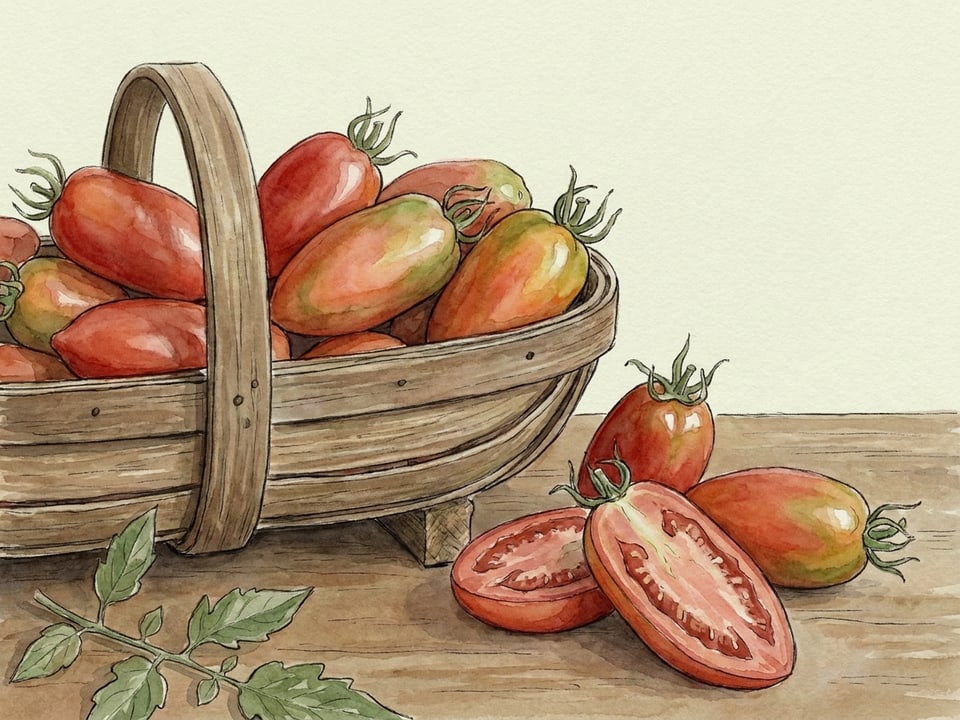
Paste tomato varieties
Paste tomatoes are the dense, low-moisture cooking type, and every one of the six here is indeterminate. That is the opposite of what the plum page shows, where five of six are determinate, and the two categories are usually treated as synonyms in seed catalogues. The practical consequence is real: these plants keep setting fruit until frost, so the sauce crop arrives steadily over months rather than in one concentrated fortnight. They weigh 110 to 280 g, larger than most plum types, and ripen between 78 and 85 days from transplant. Amish Paste, Opalka and Jersey Devil are the long-fruited heirloom end of this group; Speckled Roman is striped, which is unusual for a cooking tomato.
- Varieties
- 7
- Days to harvest (from transplant)
- 70–85
- Fruit weight
- 1–10 oz (40–280 g)
- Growth habit
-
6 Indeterminate
1 Determinate
All 7 paste tomato varieties
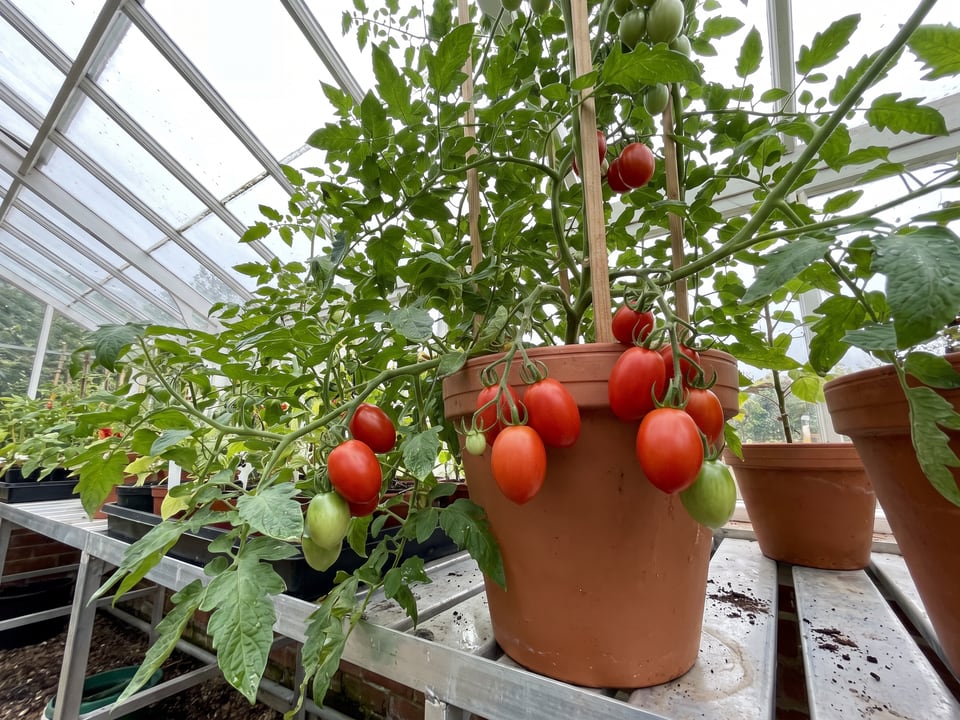
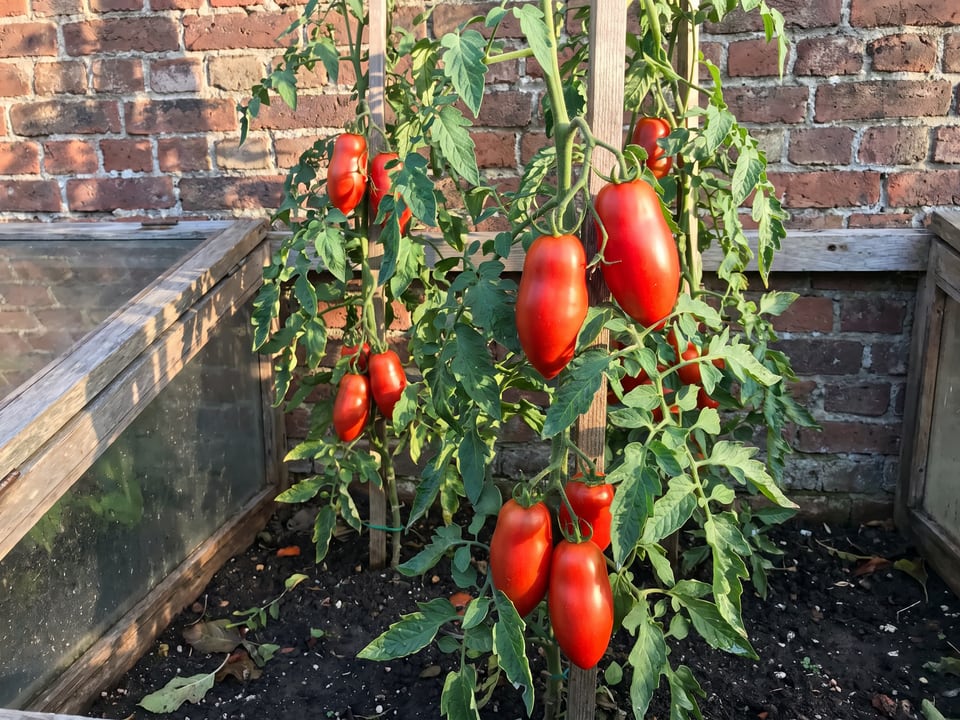
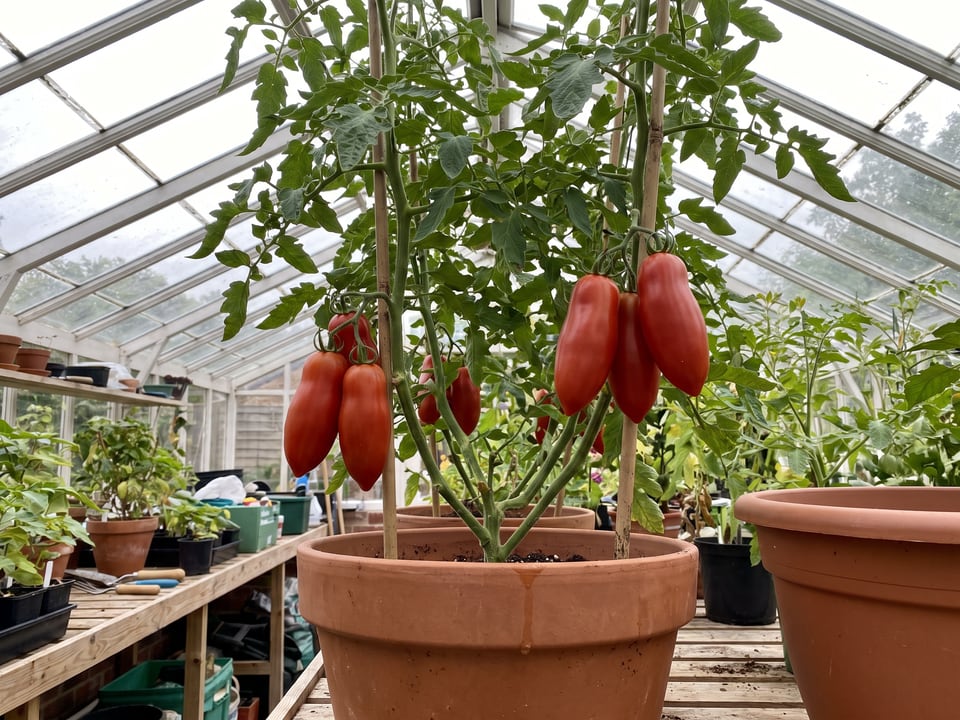
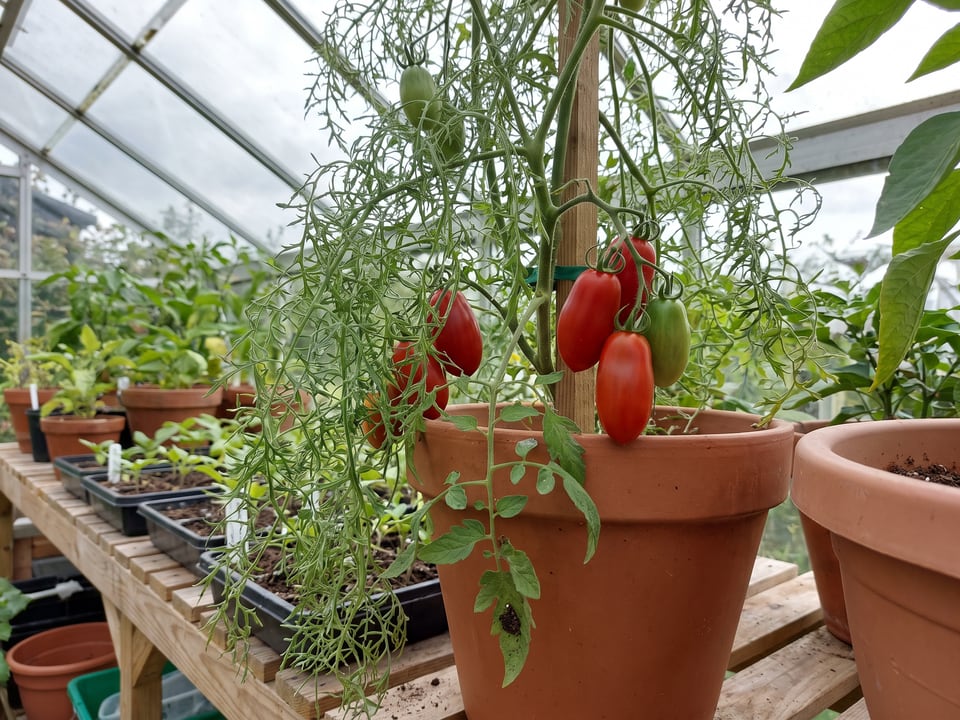
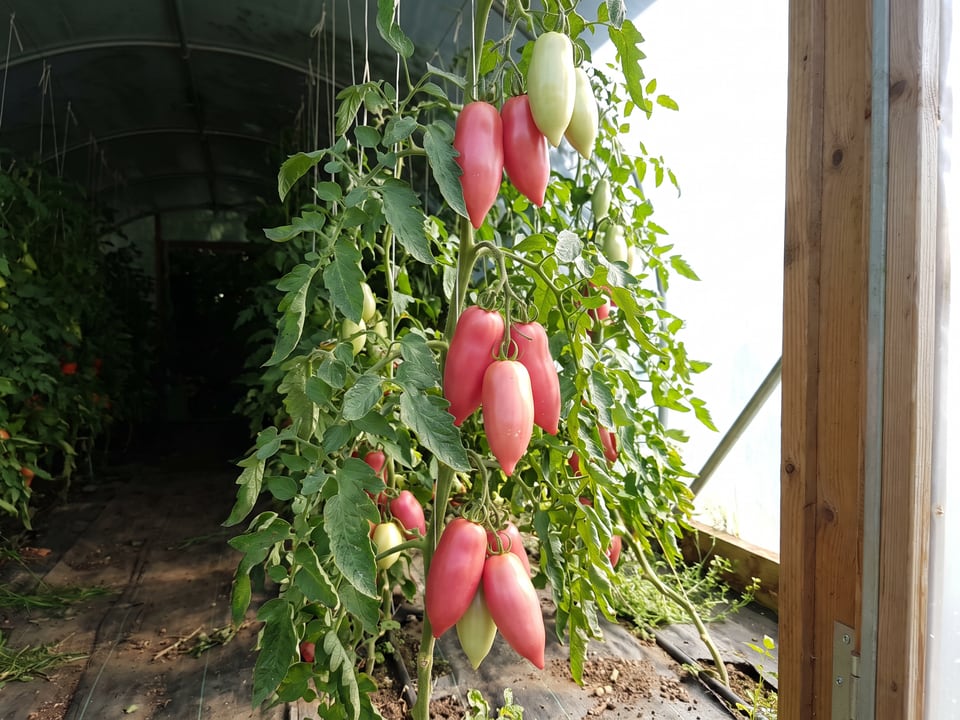
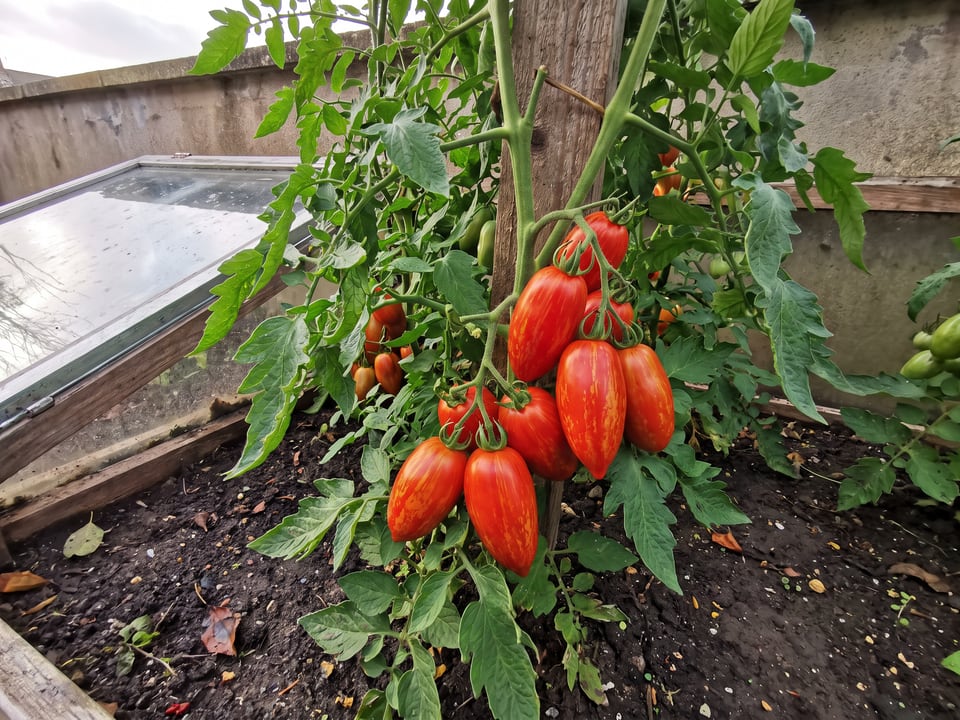
How to choose
-
Choose paste over plum when you cook in small batches. An indeterminate paste plant supplies a few kilograms a week for months, which suits a household making sauce as it goes. If you want to spend one Saturday canning the entire crop, the determinate plum varieties are built for that instead.
-
These are big plants carrying substantial fruit all season, so support properly from the start. At 110 to 280 g each, on plants that pass two metres, a light cage will not hold. This is the group where the difference between a stake driven at planting and a cage added in July shows up as broken stems in August.
-
Blossom end rot is the common failure here and the shape is part of why. Elongated fruit puts more distance between the calcium supply and the growing tip, so irregular watering shows up as dark sunken bottoms more readily than on round tomatoes. It is a consistency problem, not a soil deficiency, and mulch fixes it more reliably than any additive.
-
Read the weight column before assuming these are small. Paste varieties here average heavier than the plum types, with Blue Beech and Amish Paste at 170 to 280 g. That is slicing-tomato weight on a fruit built for cooking, which is why several of them double as sandwich tomatoes in a way Roma never does.
Compare side by side
| Color | Uses | |||||
|---|---|---|---|---|---|---|
| Amish Paste | 80 (estimated) | 4–8 oz (110–230 g) (estimated) | Indeterminate | 3 (estimated) / 2 (estimated) / 4 (estimated) | Slicing, Sauce & paste, Canning, Drying, Roasting | |
| Blue Beech | 85 (estimated) | 6–10 oz (170–280 g) (estimated) | Indeterminate | 3 (estimated) / 2 (estimated) / 4 (estimated) | Sauce & paste, Canning, Drying, Roasting | |
| Jersey Devil | 85 (estimated) | 5–7 oz (140–200 g) (estimated) | Indeterminate | 3 (estimated) / 2 (estimated) / 4 (estimated) | Slicing, Sauce & paste, Canning, Drying, Roasting | |
| Nova | 70 | 1–3 oz (40–80 g) | Determinate | 2 (estimated) / 3 (estimated) / 3 (estimated) | Sauce & paste, Canning | |
| Opalka | 85 (estimated) | 4–6 oz (110–170 g) (estimated) | Indeterminate | 3 (estimated) / 2 (estimated) / 4 (estimated) | Sauce & paste, Canning, Drying, Roasting | |
| Pink Fang | 78 | 5–7 oz (140–200 g) | Indeterminate | 4 (estimated) / 2 (estimated) / 4 (estimated) | Slicing, Sauce & paste, Drying, Snacking, Roasting | |
| Speckled Roman | 85 (estimated) | 4–6 oz (110–170 g) (estimated) | Indeterminate | 3 (estimated) / 3 (estimated) / 4 (estimated) | Slicing, Sauce & paste, Canning, Drying, Roasting |
Values marked like this (estimated) are model estimates, not confirmed from a source.
Frequently asked questions
What makes a tomato a paste tomato?
Dense flesh, thick walls and low seed and gel content, so it cooks down with less liquid to drive off. The shape is usually elongated or blocky rather than round, and the flavour tends toward less acidity than a fresh-eating variety.
Are paste tomatoes determinate?
Not in this catalogue. All six paste varieties here are indeterminate and will produce until frost. That is the reverse of the plum page, where five of six are determinate, and it is the clearest practical difference between two categories that most catalogues treat as one.
Can I use paste tomatoes for slicing?
Several of these, yes. Amish Paste and Blue Beech at 170 to 280 g are large enough to slice and are firmer than a beefsteak, so they hold together in a sandwich. The flavour is milder and less acidic, which some people prefer and others find flat.
Why do my paste tomatoes get black bottoms?
Blossom end rot, and elongated fruit is more prone to it than round fruit because calcium has further to travel to the tip. The cause is almost always irregular watering rather than a lack of calcium in the soil. Consistent moisture and mulch are the fix.
How much fruit does a paste tomato plant produce?
Being indeterminate, these keep setting until cold stops them, so total yield depends mostly on season length. Expect a steady supply across months rather than a single large harvest, and plan preserving accordingly.