Striped tomato varieties
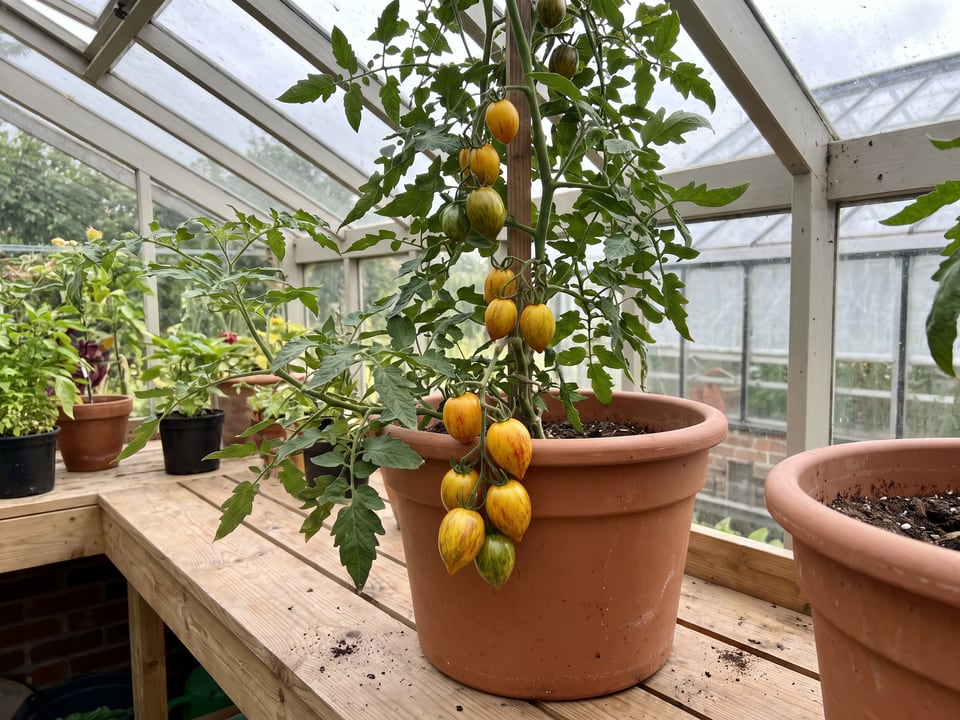
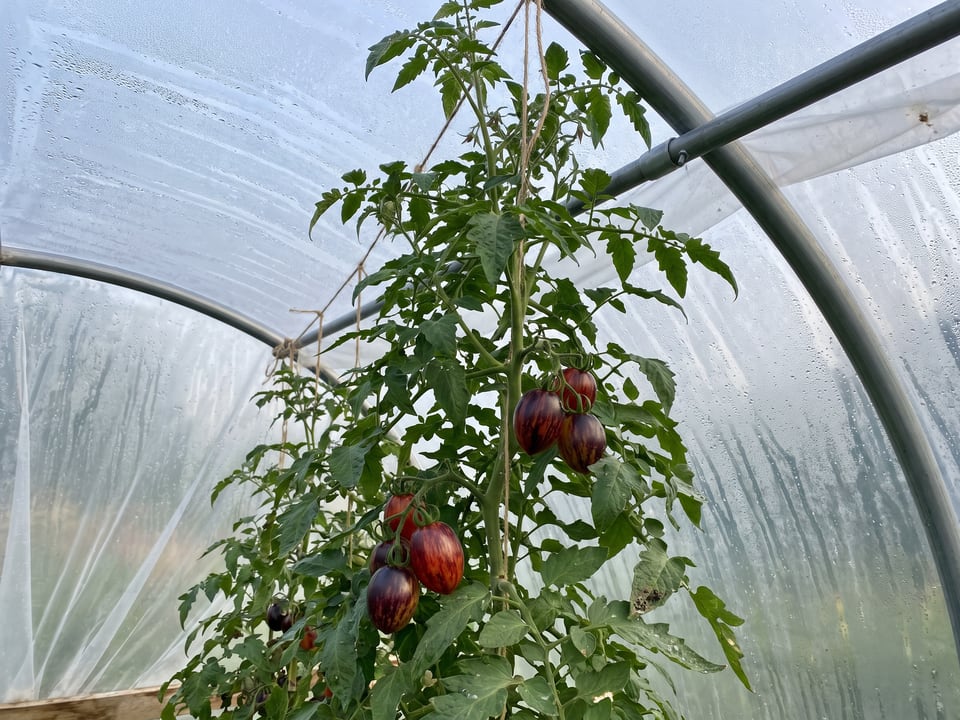
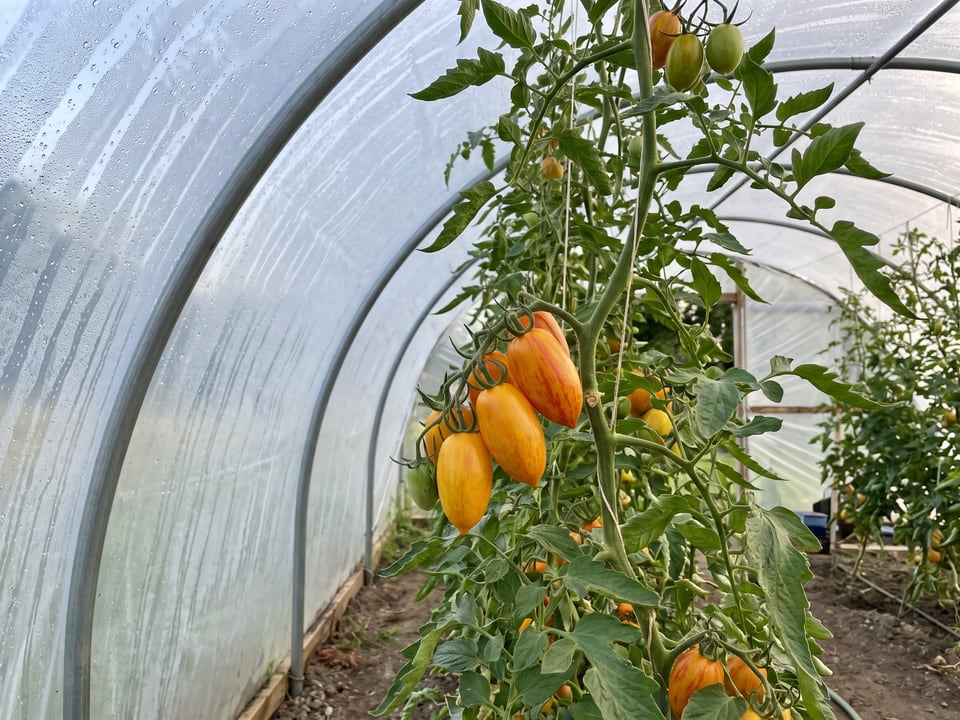
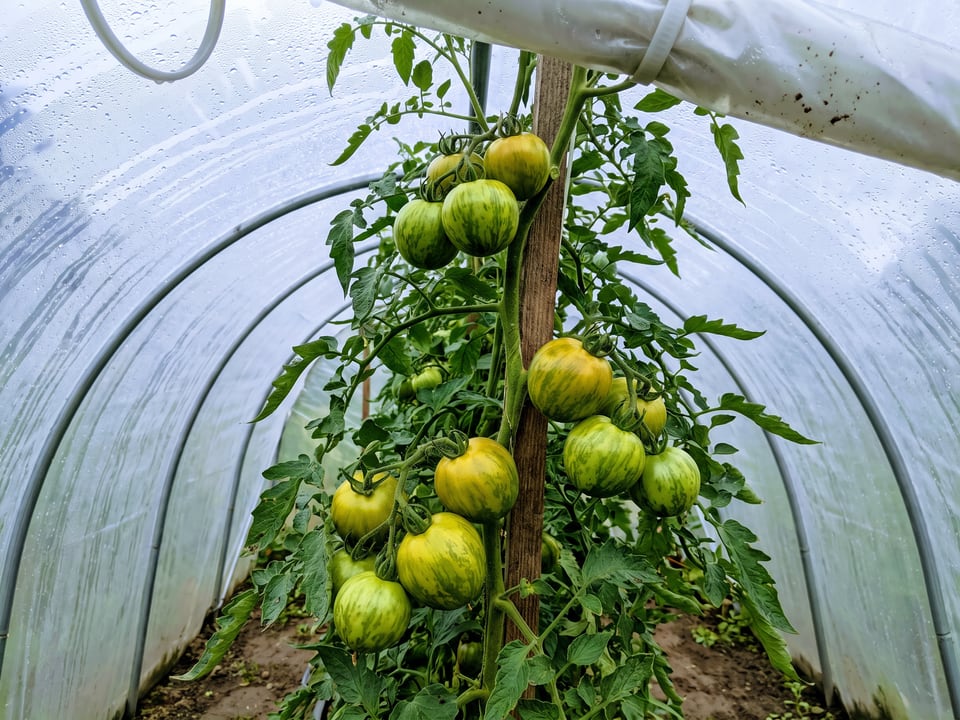
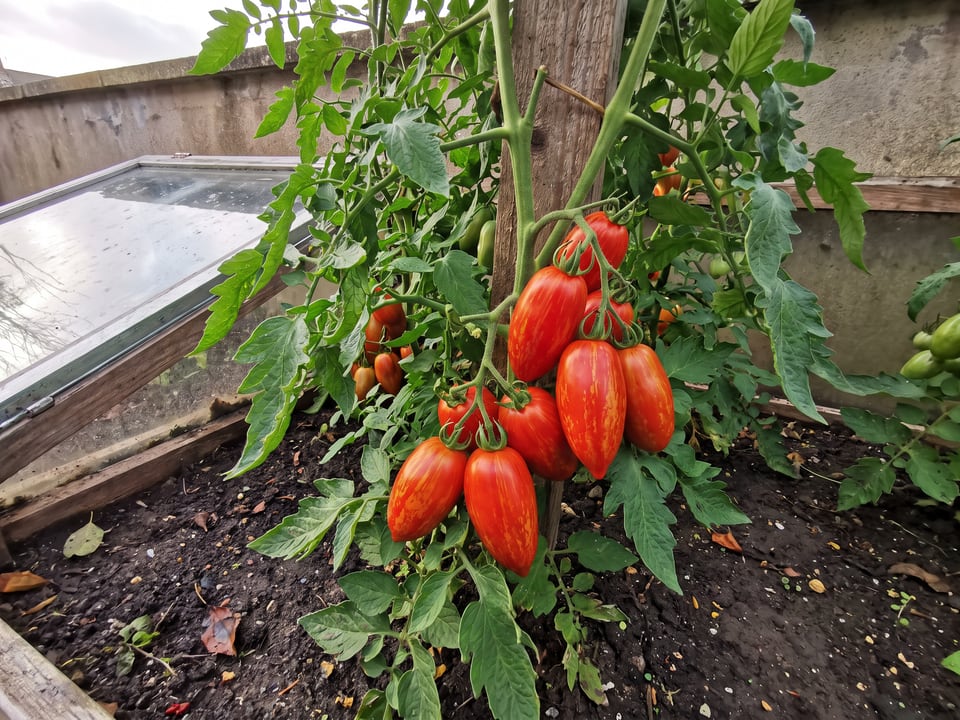
Striped tomatoes carry contrasting bands running from stem to blossom end, usually green or gold over a darker base, and in five of the seven varieties here the stripes sit on top of another colour classification: green, purple, black or bicolour. Only Atomic Grape and Lucky Tiger are striped without a second colour designation. All seven are indeterminate, ripening 75 to 85 days from transplant, and all are small to medium at 20 to 170 g. There is no large striped tomato in this catalogue, which reflects the market: striping has been bred mostly into salad and snacking types where the pattern is visible on a whole fruit.
- Varieties
- 9
- Days to harvest (from transplant)
- 70–85
- Fruit weight
- 1–6 oz (20–170 g)
- Growth habit
-
9 Indeterminate
All 9 striped tomato varieties
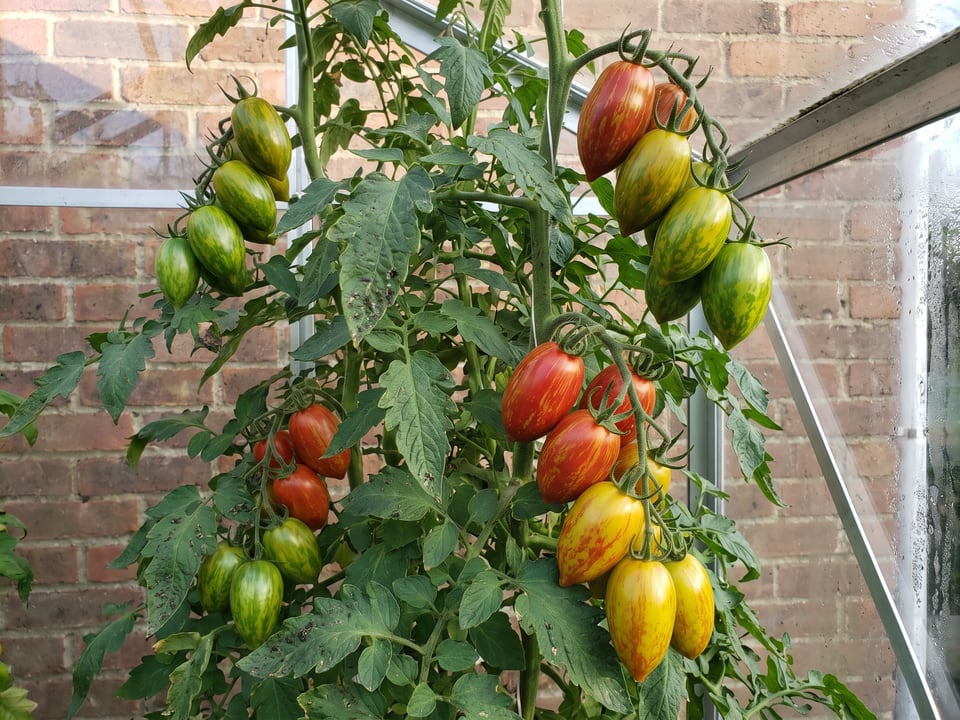
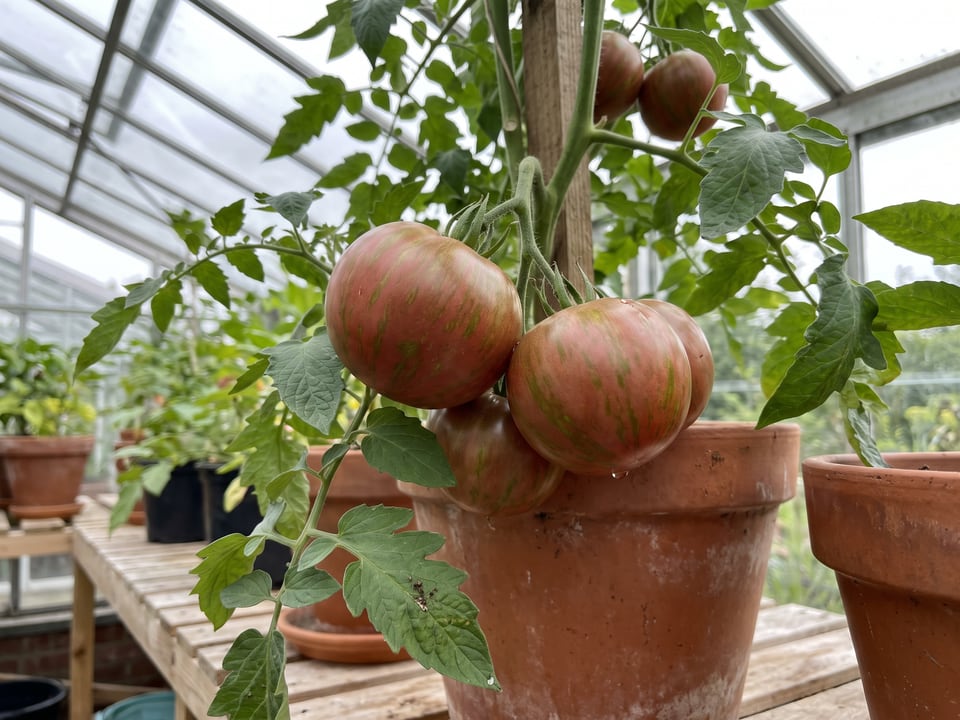
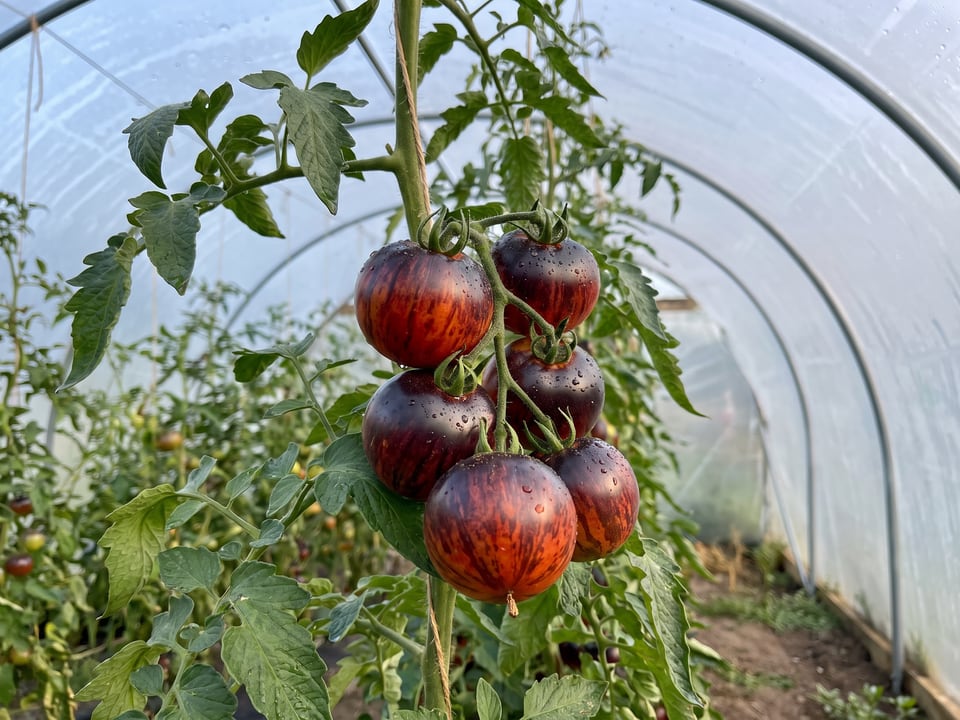
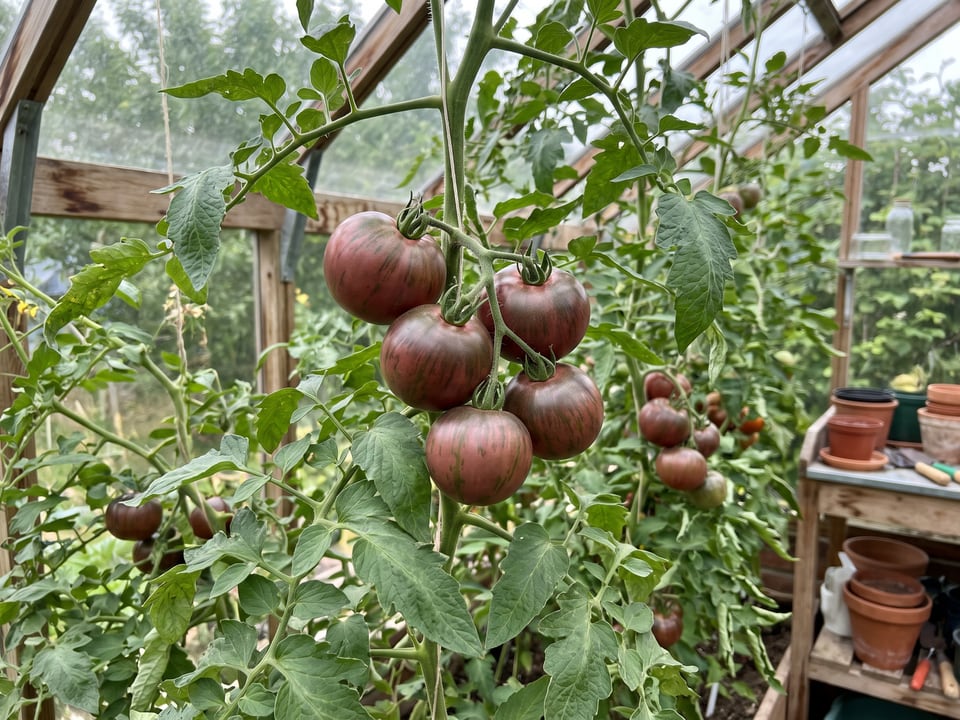
How to choose
-
The stripes make ripeness harder to read, and that is the single practical thing to know before choosing one. On Green Zebra the bands shift from dark green to amber gold at maturity, which is learnable but subtle; on Atomic Grape the whole fruit changes through several stages that all look deliberate. Expect to pick a few too early while you calibrate.
-
Decide whether you want stripes alone or stripes plus a base colour. Atomic Grape and Lucky Tiger are the pure striped varieties. Green Zebra, Purple Zebra, Queen of the Night and Black Strawberry combine stripes with a coloured base, which produces a stronger visual effect and also puts them on those colour pages.
-
Size is narrow and predictable. Everything here is between 20 and 170 g, with Speckled Roman and Purple Zebra at the upper end and Black Strawberry at the lower. If you want a striped slicing tomato at beefsteak weight, the bicolour page is the closer match.
-
All seven need full-season support. There is no determinate or dwarf striped variety here, so plan a stake or string per plant regardless of which you choose.
Compare side by side
| Color | Uses | |||||
|---|---|---|---|---|---|---|
| Atomic Grape | 75 (estimated) | 1–2 oz (30–50 g) (estimated) | Indeterminate | 4 (estimated) / 3 (estimated) / 4 (estimated) | Fresh & salads, Snacking, Roasting | |
| Black Strawberry | 75 (estimated) | ~1 oz (20–30 g) (estimated) | Indeterminate | 4 (estimated) / 3 (estimated) / 4 (estimated) | Snacking, Fresh & salads | |
| Blush | 70 (estimated) | ~1 oz (20–35 g) (estimated) | Indeterminate | 5 (estimated) / 2 (estimated) / 4 (estimated) | Fresh & salads, Snacking, Roasting | |
| Green Zebra | 78 (estimated) | 2–5 oz (60–140 g) (estimated) | Indeterminate | 2 (estimated) / 4 (estimated) / 4 (estimated) | Fresh & salads, Slicing | |
| Lucky Tiger | 75 (estimated) | 1–2 oz (40–60 g) (estimated) | Indeterminate | 4 (estimated) / 3 (estimated) / 4 (estimated) | Fresh & salads, Snacking, Roasting | |
| Pink Boar | 75 | 1–3 oz (40–80 g) | Indeterminate | 4 (estimated) / 3 (estimated) / 3 (estimated) | Fresh & salads, Snacking | |
| Purple Zebra | 80 | 4–6 oz (110–170 g) (estimated) | Indeterminate | 4 (estimated) / 3 (estimated) / 4 (estimated) | Fresh & salads, Slicing | |
| Queen of the Night | 80 | 3–4 oz (85–100 g) | Indeterminate | 4 (estimated) / 3 (estimated) / 4 (estimated) | Fresh & salads, Slicing, Snacking | |
| Speckled Roman | 85 (estimated) | 4–6 oz (110–170 g) (estimated) | Indeterminate | 3 (estimated) / 3 (estimated) / 4 (estimated) | Slicing, Sauce & paste, Canning, Drying, Roasting |
Values marked like this (estimated) are model estimates, not confirmed from a source.
Frequently asked questions
What causes stripes on a tomato?
Genetic variation in how chlorophyll and other pigments are distributed and broken down across the fruit skin. The bands are stable within a variety rather than a response to growing conditions, though intensity varies with light.
How do I know when a striped tomato is ripe?
The bands change tone rather than disappearing. On Green Zebra the dark green shifts to amber-gold; on darker varieties the contrast softens. Combine that with feel: ripe fruit gives slightly and releases easily from the stem.
Is Green Zebra an heirloom?
No, and it is a common misconception. It is a deliberate modern breeding release from 1983 by Tom Wagner, not an old cultivar. It is open-pollinated, so seed comes back true, but it does not meet the age convention for heirloom status.
Are striped tomatoes just for looks?
The pattern is the reason most people grow them, but several of these are serious kitchen tomatoes independent of appearance. Speckled Roman is a paste variety with dense flesh, and Green Zebra was adopted by restaurant kitchens for its acidity before home gardeners took to it.
Are there large striped tomatoes?
Not in this catalogue. Everything on this page is 170 g or under. For large fruit with a colour break, the bicolour page holds Striped German, Big Rainbow and Pineapple at up to 900 g.