Rainbow tomato varieties
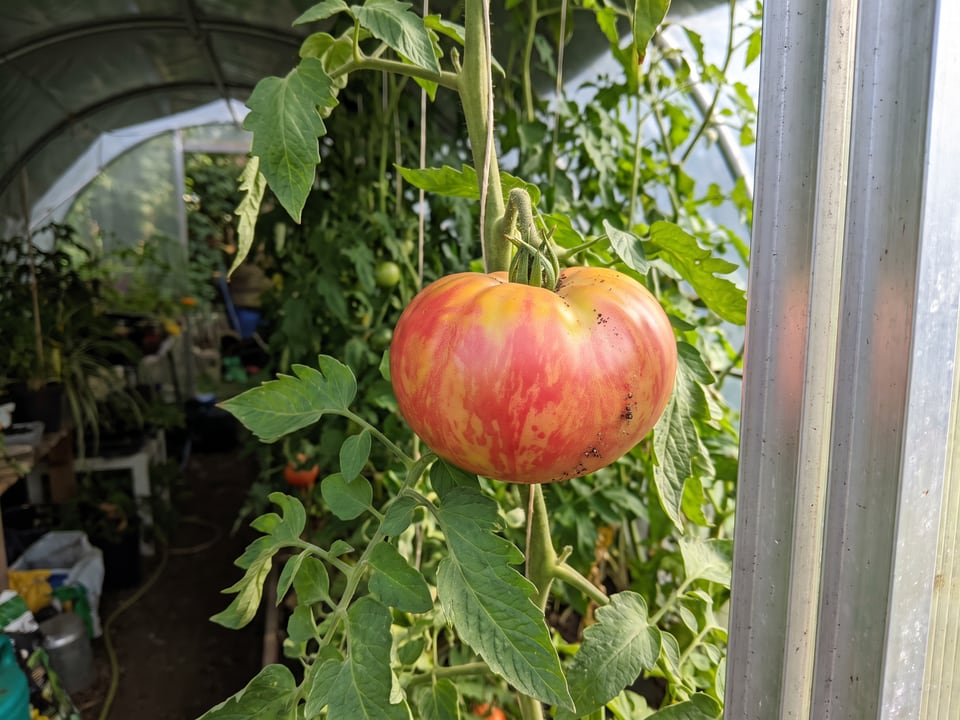
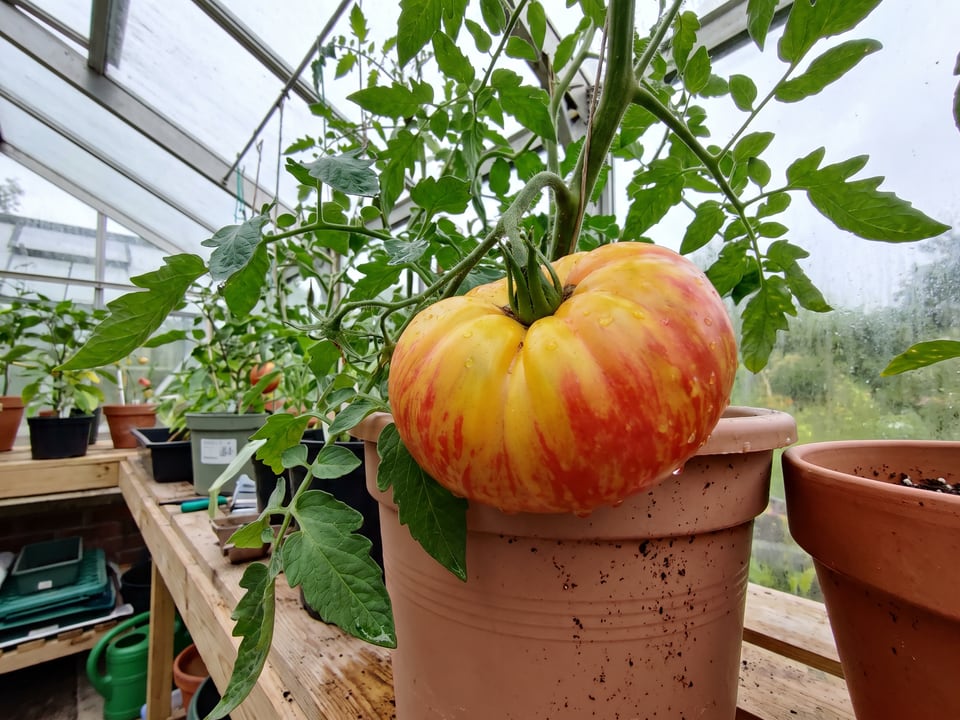
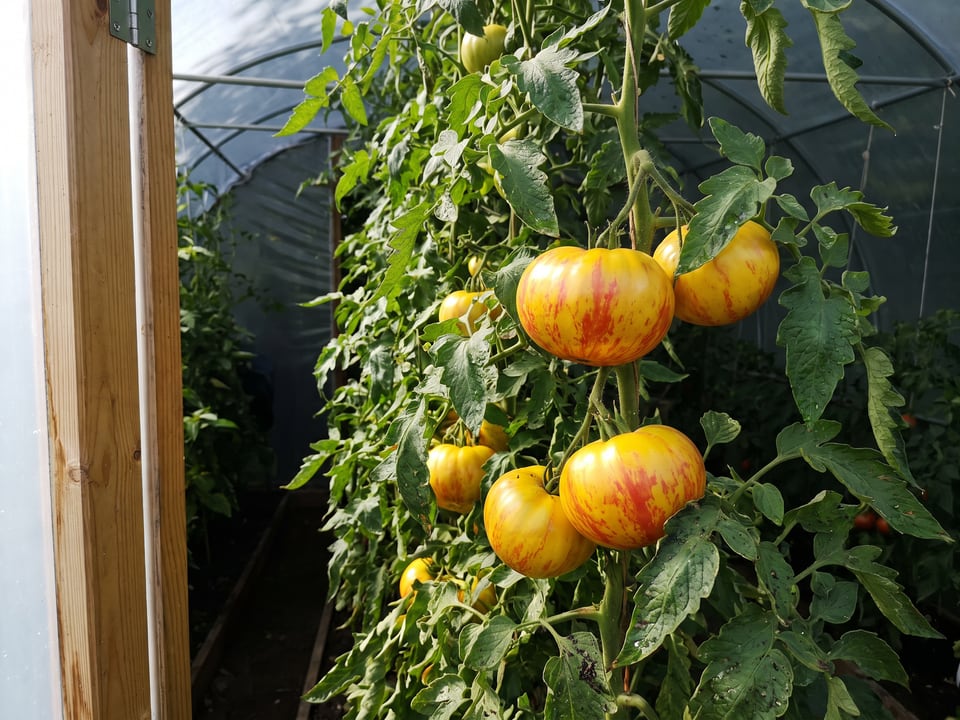
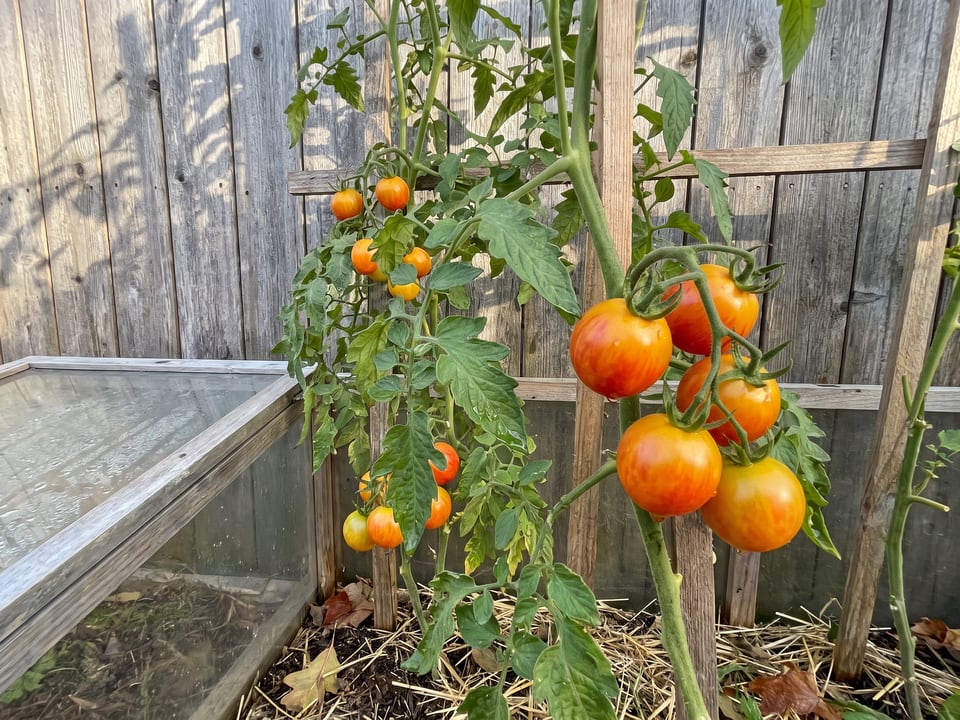
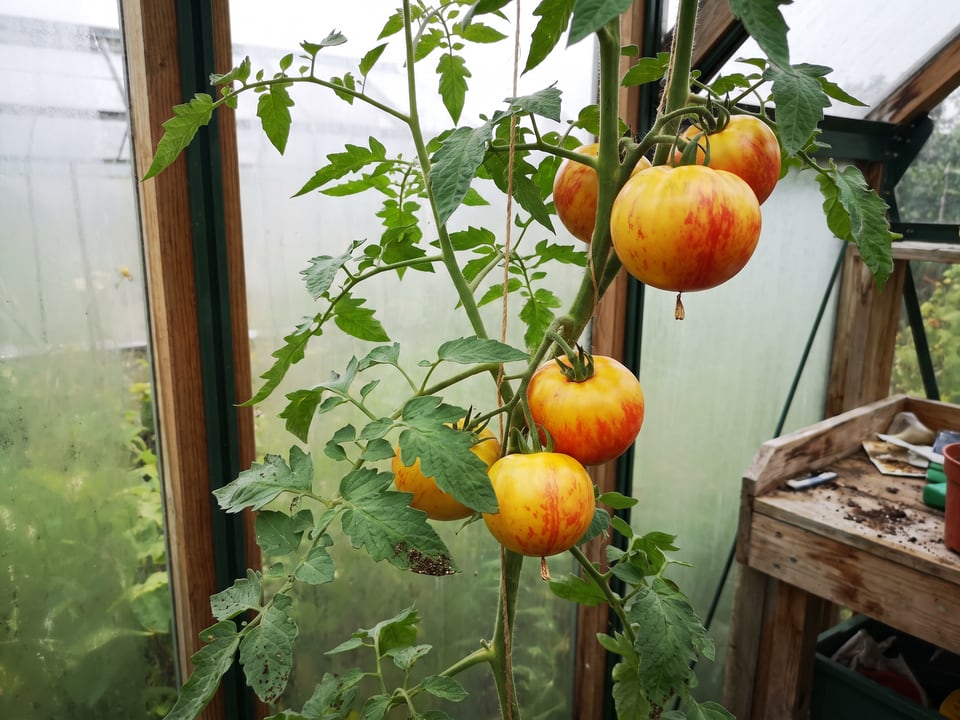
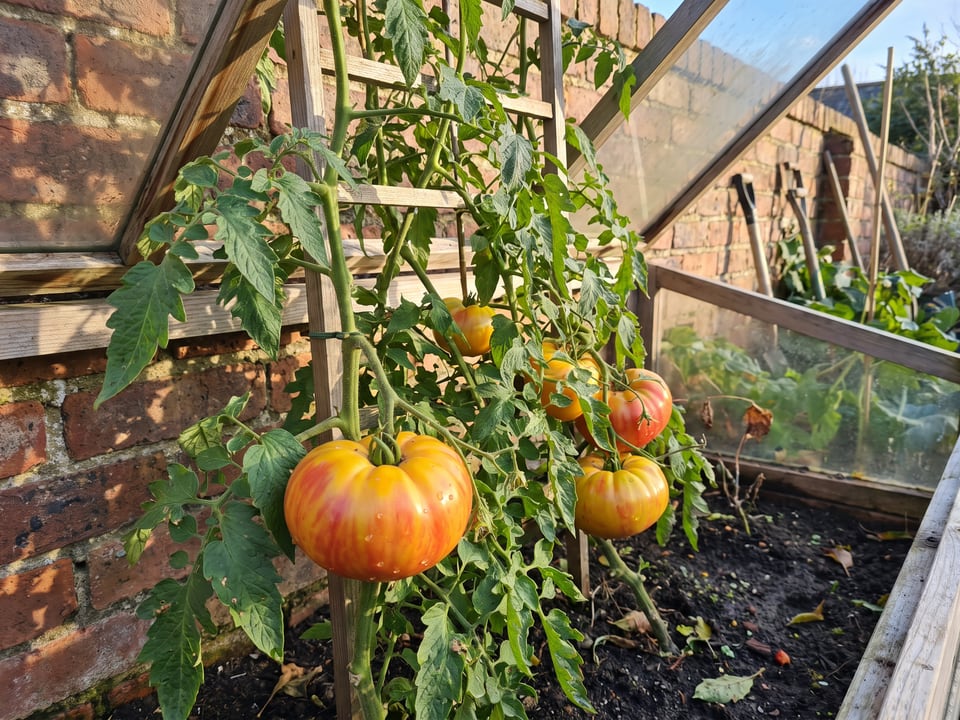
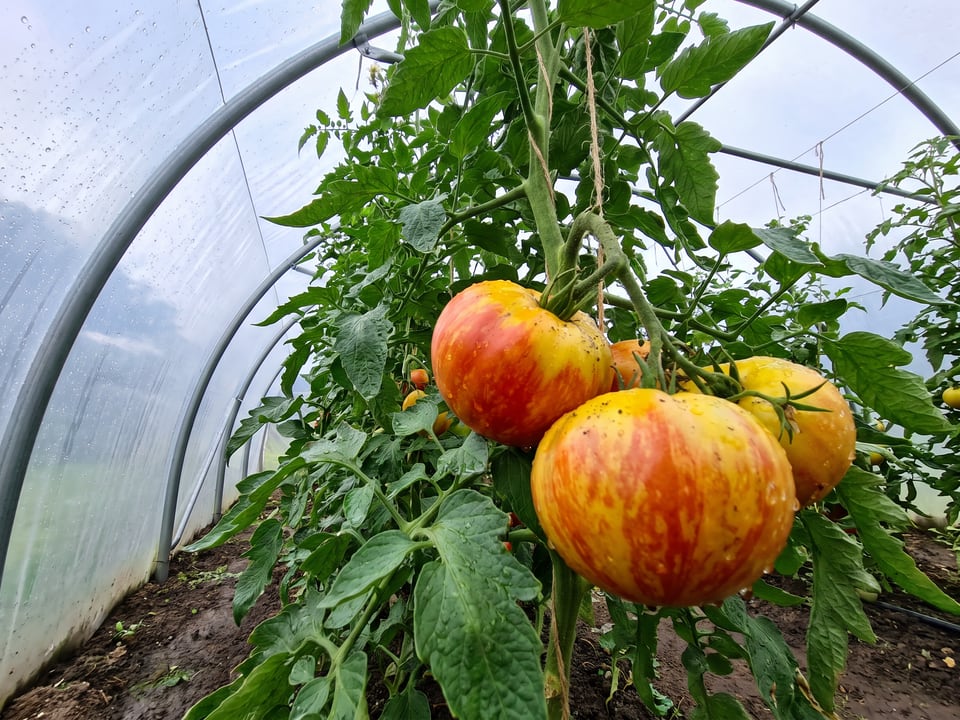
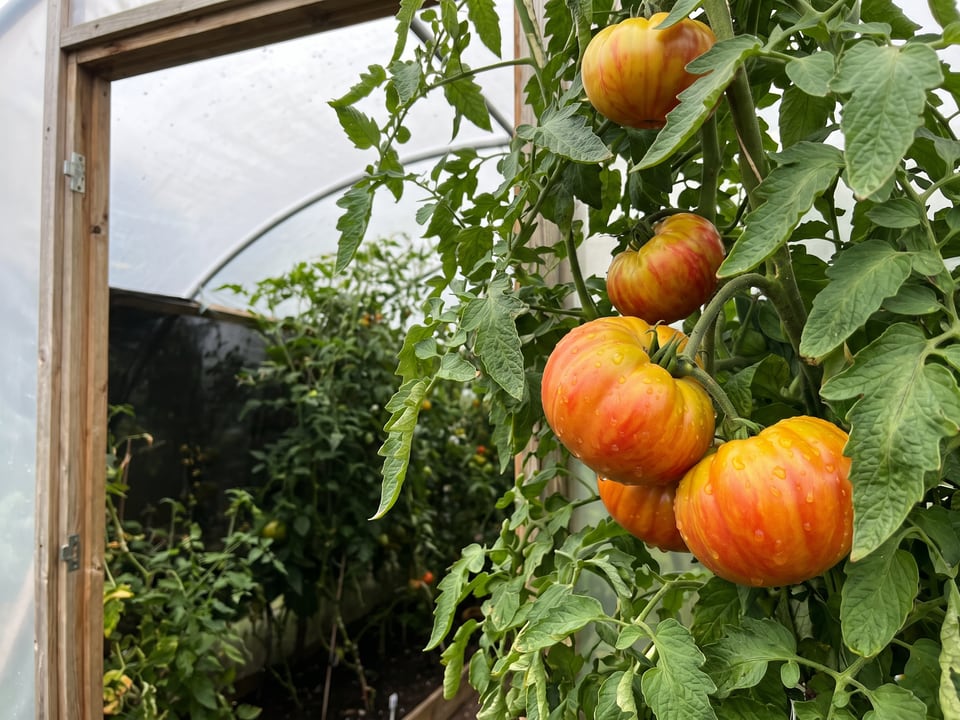
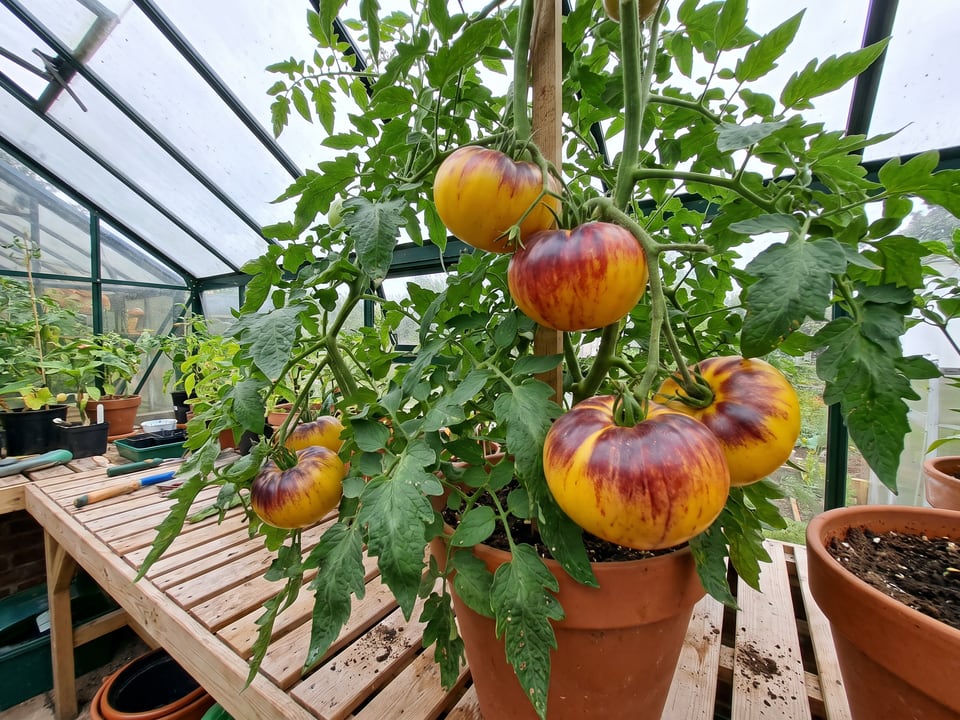
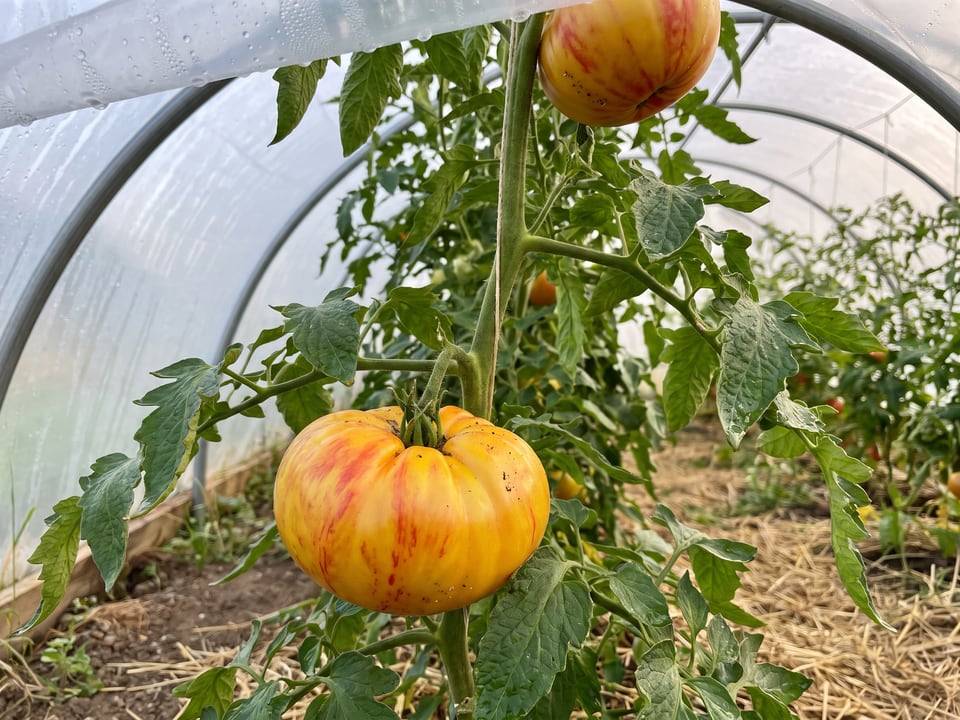
Bicolour tomatoes carry two colours in one fruit, usually a yellow or amber base with red or pink bleeding through the flesh and streaking the skin, and the pattern differs from fruit to fruit on the same plant. Four of the six here are large: Big Rainbow and Pineapple reach 16 to 32 oz (450 to 900 g), Striped German and Sart Roloise 12 to 20 oz. That is not a coincidence, since the marbling shows best across a wide cut face, and these varieties were kept by gardeners precisely for how they look on a plate. They ripen late, 75 to 88 days from transplant, and all six are indeterminate.
- Varieties
- 11
- Days to harvest (from transplant)
- 65–88
- Fruit weight
- 1–30 oz (15–850 g)
- Growth habit
-
11 Indeterminate
All 11 rainbow tomato varieties
How to choose
-
Season length is the binding constraint and this is a late group. Sart Roloise at 88 days is the latest, and only Black Strawberry at 75 sits meaningfully early. Large bicolour fruit needs a long warm finish to develop both the size and the colour break, so in a short season these are the varieties most likely to disappoint.
-
Judging ripeness takes practice because the colour break is the point rather than the signal. On a red tomato colour tells you when to pick; here the fruit is already multicoloured while still underripe. Go by give under light pressure and by the fruit releasing easily from the stem.
-
Expect cracking, especially on the largest. Big Rainbow, Pineapple and Marianna's relatives in this weight class have thin skin over a lot of flesh, and shoulder cracks are routine rather than exceptional. It affects appearance more than usability, but if you are growing these for the look, steady watering is not optional.
-
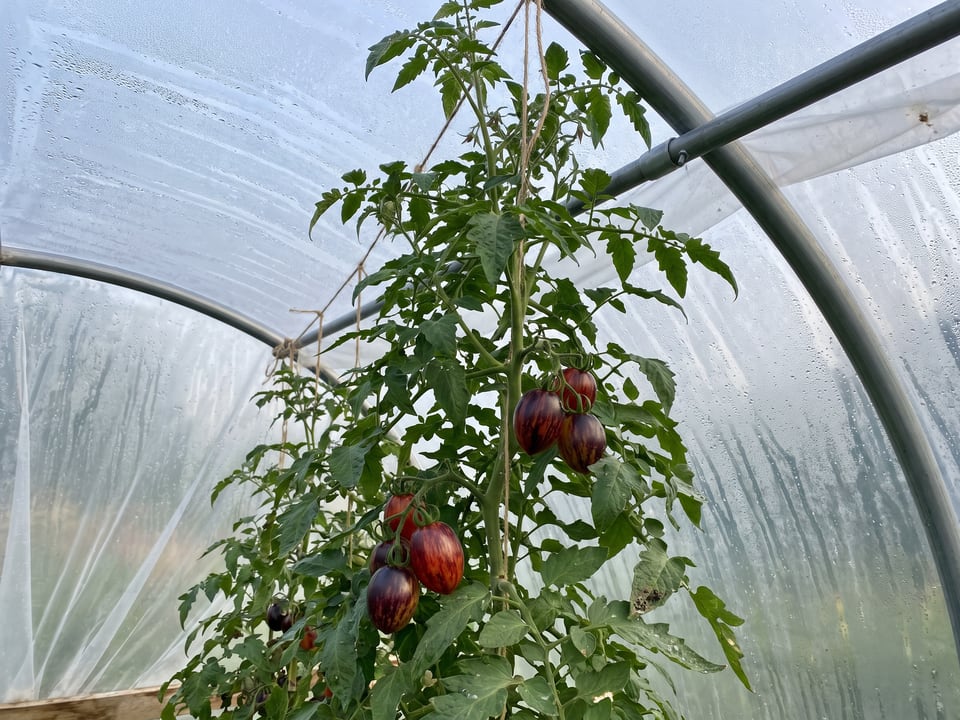
Black Strawberry is the outlier and worth naming. At 20 to 30 g it is a snacking tomato rather than a slicer, and it carries stripes as well as the bicolour break, so it also appears on the striped page. If you want the visual effect without a two-metre plant and an 88-day wait, it is the only realistic option here.
Compare side by side
| Color | Uses | |||||
|---|---|---|---|---|---|---|
| Ananas Noire | 85 | 10–16 oz (280–450 g) | Indeterminate | (estimated) | 3 (estimated) / 3 (estimated) / 3 (estimated) | Fresh & salads, Slicing |
| Big Rainbow | 85 (estimated) | 16–26 oz (450–740 g) (estimated) | Indeterminate | 4 (estimated) / 2 (estimated) / 3 (estimated) | Fresh & salads, Slicing, Juicing | |
| Black Strawberry | 75 (estimated) | ~1 oz (20–30 g) (estimated) | Indeterminate | 4 (estimated) / 3 (estimated) / 4 (estimated) | Snacking, Fresh & salads | |
| Gold Medal | 85 | 10–16 oz (280–450 g) | Indeterminate | 3 (estimated) / 3 (estimated) / 3 (estimated) | Fresh & salads, Slicing | |
| Isis Candy | 65 | ~1 oz (15–30 g) | Indeterminate | 4 (estimated) / 3 (estimated) / 3 (estimated) | Fresh & salads, Snacking | |
| Long Keeper | 78 | 5–8 oz (140–220 g) | Indeterminate | 3 (estimated) / 3 (estimated) / 3 (estimated) | Fresh & salads, Slicing | |
| Mr Stripey | 80 (estimated) | 12–30 oz (340–850 g) (estimated) | Indeterminate | 5 (estimated) / 1 (estimated) / 3 (estimated) | Fresh & salads, Slicing, Juicing | |
| Old German | 85 | 10–16 oz (280–450 g) | Indeterminate | 3 (estimated) / 3 (estimated) / 3 (estimated) | Fresh & salads, Slicing | |
| Pineapple | 85 (estimated) | 12–24 oz (340–680 g) (estimated) | Indeterminate | 5 (estimated) / 1 (estimated) / 4 (estimated) | Fresh & salads, Slicing, Juicing | |
| Sart Roloise | 88 | 10–20 oz (285–570 g) | Indeterminate | 5 (estimated) / 2 (estimated) / 4 (estimated) | Fresh & salads, Slicing, Juicing | |
| Striped German | 85 (estimated) | 12–20 oz (340–570 g) (estimated) | Indeterminate | 4 (estimated) / 2 (estimated) / 4 (estimated) | Fresh & salads, Slicing, Juicing |
Values marked like this (estimated) are model estimates, not confirmed from a source.
Frequently asked questions
What makes a tomato bicolour?
Two pigments developing in the same fruit, typically a yellow flesh with red bleeding through it, producing marbling that varies from fruit to fruit. It is genetic rather than environmental, though the intensity of the break does vary with heat and light.
Why are these called rainbow tomatoes?
Because that is what most people search for and what most shops label them. Bicolour is the technical term used in seed catalogues and in this catalogue's data; rainbow is the everyday word for the same fruit.
Do bicolour tomatoes taste different from red ones?
The colour does not predict flavour. Sweetness, acidity and intensity are recorded per variety in the table and vary as much within this group as across the catalogue as a whole. Compare the figures rather than assuming the marbling means anything about taste.
Which bicolour tomato is largest?
Big Rainbow and Pineapple, both 16 to 32 oz (450 to 900 g) and both needing 85 days from transplant. They are among the largest fruit in the entire catalogue.
Are bicolour tomatoes hard to grow?
Not harder than any large heirloom, but they concentrate the usual large-fruit problems: long season, cracking, and fewer fruit per plant. All six here are indeterminate and need full-season support.