Determinate vs indeterminate tomatoes: which one you have, and what changes
Sep 19, 2026 · 5 min read
One stops growing, the other does not. How to tell from the seed packet or the plant itself, and what the answer changes about pruning, supports, spacing and when you harvest.
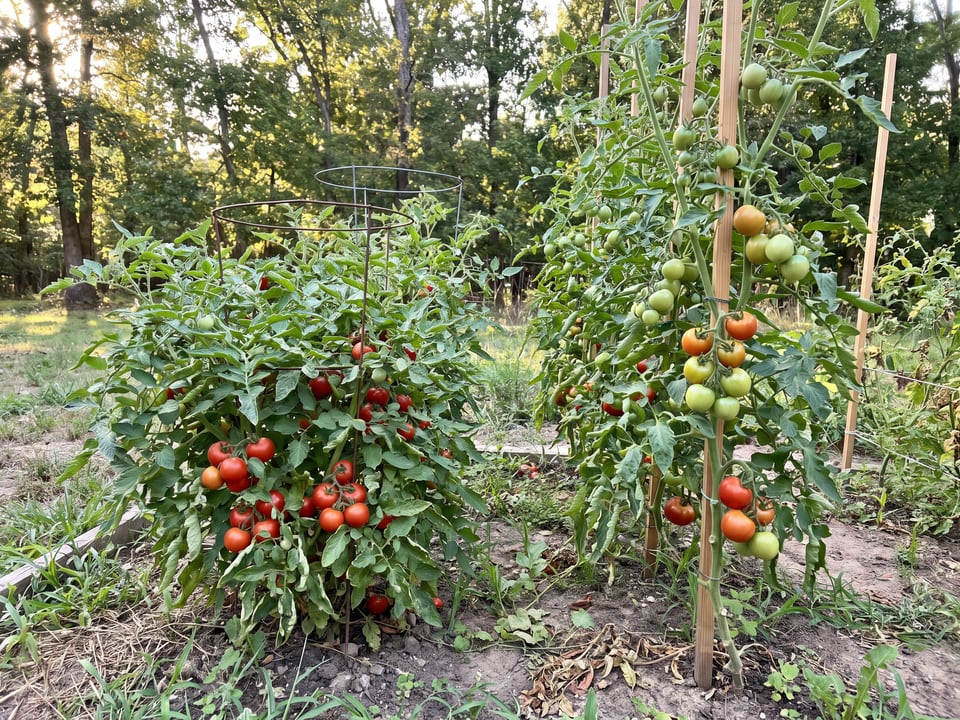
A determinate tomato grows to a fixed size, sets its fruit over a few weeks and stops. An indeterminate one keeps growing, flowering and fruiting until frost kills it. Everything else in this guide follows from that single difference.
It matters more than it sounds. Iowa State University Extension describes determinate plants as “small, compact plants” that “flower and set all their fruit within a short period of time”, against indeterminate ones that “continue to grow, flower, and set fruit until killed by the first frost in fall”. A cage that holds one will be swallowed by the other. Pruning that helps one costs you the crop on the other.
How to tell which one you have
From the packet or the listing. Most sellers say so outright, usually abbreviated to “det.” and “indet.”. Every variety page in this catalogue carries it as a field, and you can browse the catalogue by it: determinate and indeterminate.
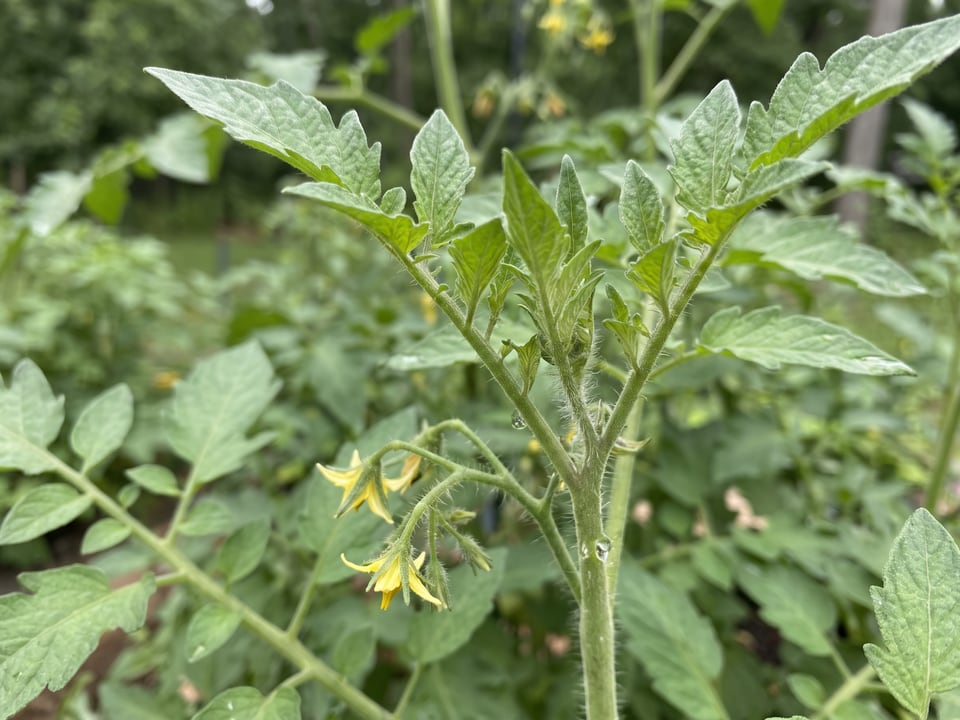
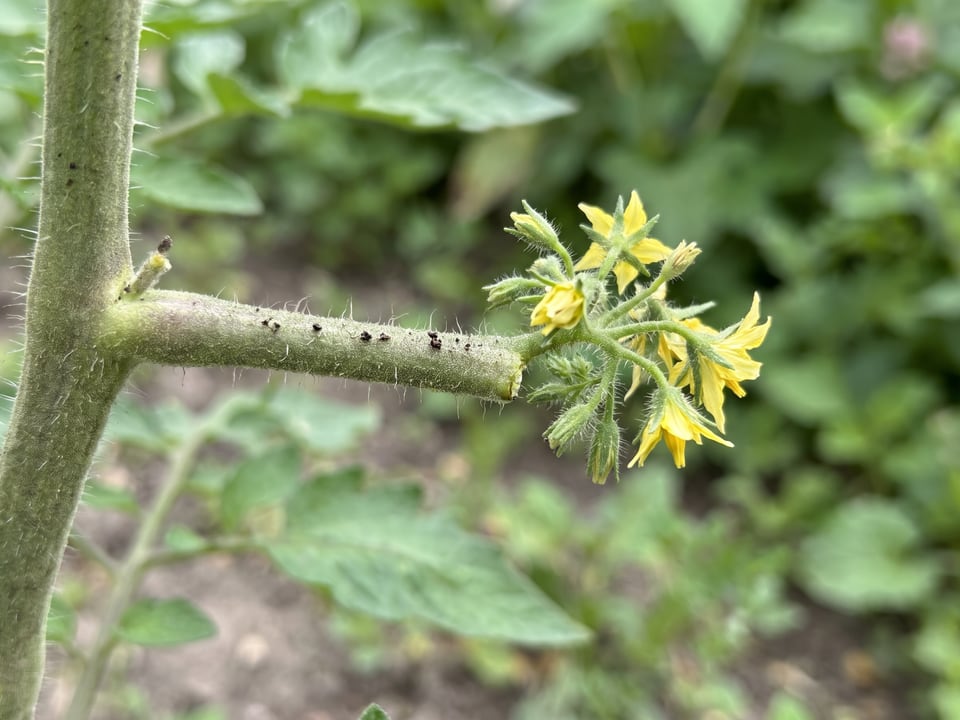
From the plant, if nobody told you. Look at where the flower trusses sit. On an indeterminate plant, the growing tip stays a leafy tip and trusses appear along the stem below it. On a determinate plant, the stem eventually ends in a flower truss, and that shoot is finished — there is no leafy tip left to carry on. Once most of the tips have ended in flowers, the plant has decided how big it will get.
From the height it is heading for. In this catalogue the determinate varieties sit around 90 to 125 cm (3 to 4 ft), while indeterminate ones are routinely twice that and keep going.
There is a middle category too. Semi-determinate plants stop, but later and taller than a true determinate, and dwarf varieties are indeterminate in behaviour on a compressed frame — they keep setting fruit all season without ever getting tall. Of the 132 tomato records here, 102 are indeterminate, 14 determinate, 9 dwarf, 5 micro-dwarf and 2 semi-determinate. Indeterminate is the norm; determinate is the special case you choose on purpose.
What changes once you know
Pruning
Remove side shoots from an indeterminate plant and you concentrate it. The sources here recommend that pruning for indeterminate plants only: UF/IFAS advises removing the first few side branches on indeterminate varieties, and Utah State says semi- and indeterminate varieties need the vine pruning. The pruning guide covers the cut itself.
Support
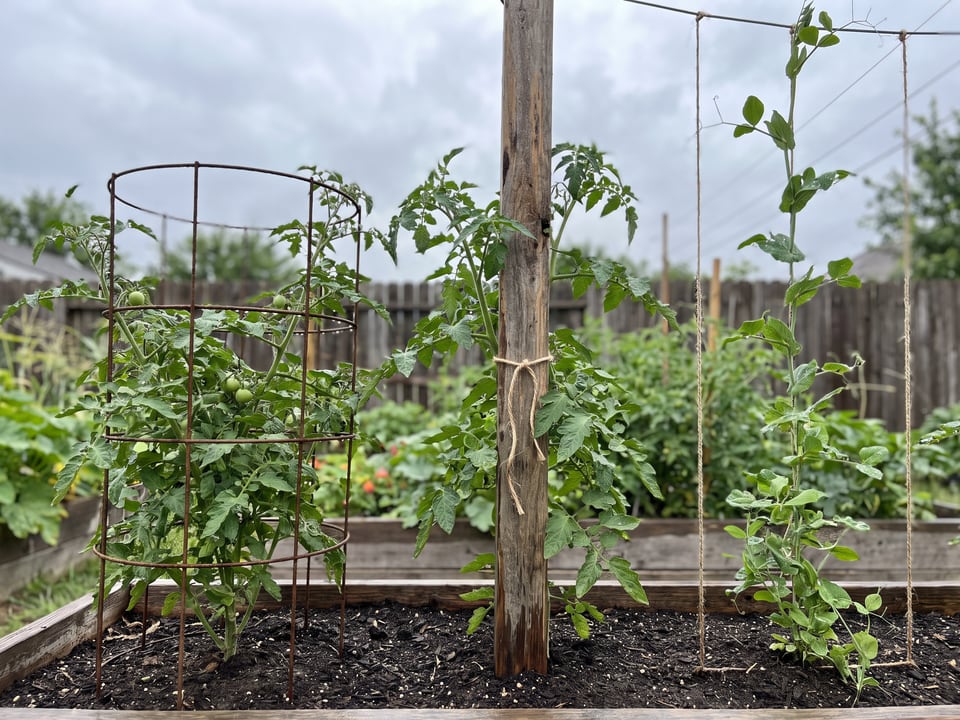
A determinate plant needs something to lean on for a couple of months: a sturdy cage or a single stake is enough, because it will not outgrow it. An indeterminate plant needs a support system you can keep adding to, because it will reach the top of whatever you gave it in July and carry on. See supports for the options.
When you harvest, and how much at once
This is the difference people feel most. A determinate variety sets all its fruit within a short period, as Iowa State puts it — which is exactly what you want if you are canning a batch of sauce, and exactly what you do not want if you wanted tomatoes on sandwiches from July to October. Iowa State puts the indeterminate harvest at “a 2 or 3 month period”, with yields “generally heavier than determinate types, but usually later to mature”.
If you want both, grow both. That is the honest answer and it is what most gardens with room for more than two plants end up doing.
Containers and small spaces
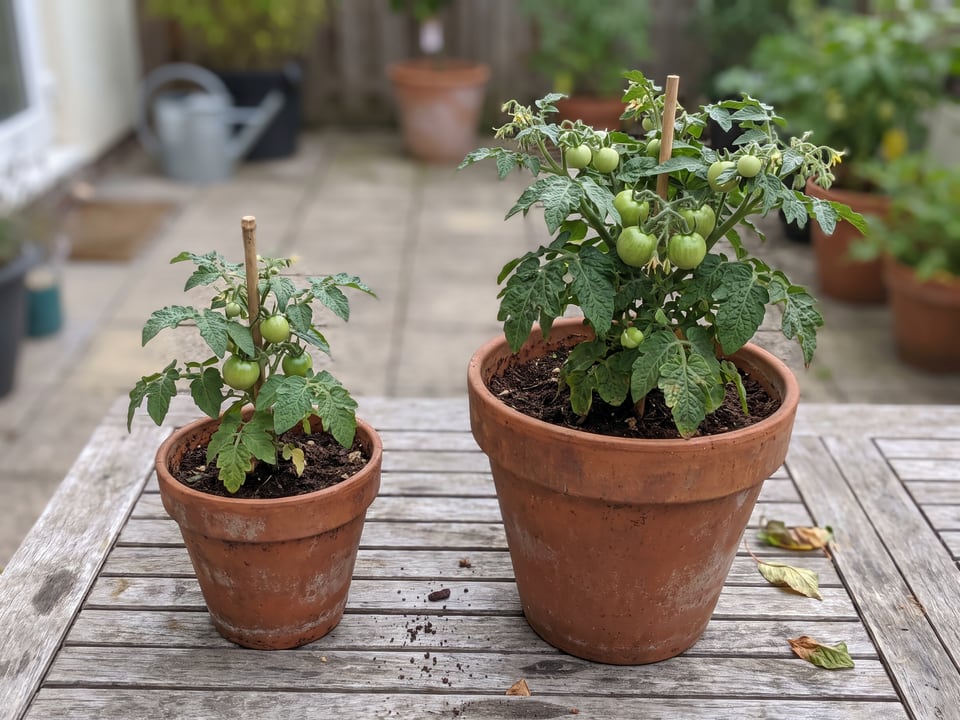
Determinate and dwarf varieties are the ones that work in pots, because the plant’s final size is known in advance. UF/IFAS Gardening Solutions puts it plainly: if you are limited on space, a determinate variety “will grow in a more compact, bush-like shape, but will produce just a single crop of tomatoes”. Indeterminate tomatoes can be grown in containers, but it means a large pot, daily watering in summer and a support taller than you expected. Growing tomatoes in pots goes into the sizes.
Short seasons
Where the season is short, a determinate variety is often the safer bet: Utah State University Extension recommends determinate or semi-determinate types for their shorter season because they have “a more concentrated fruit set and maturity”. A plant that ripens everything in a narrow window is a plant that finishes before the first frost.
Which to choose
Choose determinate if you want a concentrated harvest for preserving, you are growing in a container or a small bed, your season is short, or you would rather not manage a plant all summer.
Choose indeterminate if you want fruit over months rather than weeks, you have height to give it, and you do not mind tying in and pruning.