How to grow peppers: from seed to harvest
Sep 27, 2026 · 10 min read
Start seeds 8 to 10 weeks before planting out, set plants out into warm soil and full sun, water evenly, and cut the pods when they reach full size. Each step, from university extension guidance.
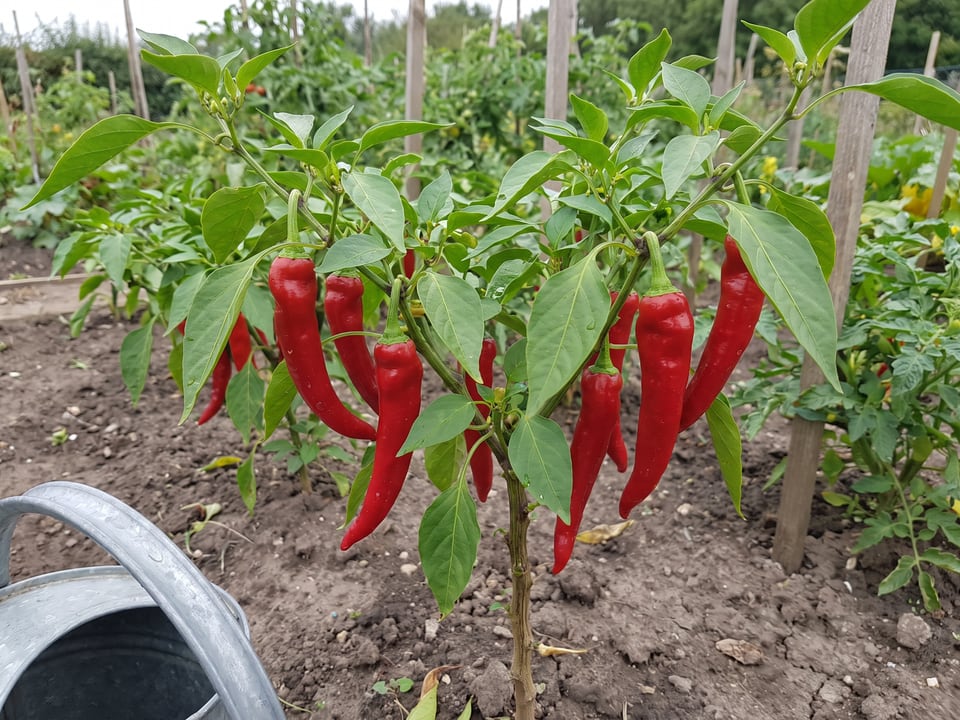
Peppers are a tender warm-season crop, and most of growing them well comes down to warmth. Start the seeds indoors 8 to 10 weeks before planting out. Set the plants out only when the soil is warm and nights stay mild, in a spot with at least 6 hours of direct sun. Keep the soil evenly moist, feed moderately, and cut the pods once they reach full size, green or ripe. Most sweet and hot peppers need 70 to 85 days from transplant to harvest; habaneros take 90 to 120.
The steps below follow the season, with the details from the University of Minnesota and University of Maryland extension services.
Choose a variety that fits your season
The University of Minnesota’s first advice on choosing a variety is to check its days to maturity, which Maryland counts from transplanting. In a short northern season, choose from the early end. The University of Minnesota adds a rule worth knowing: smaller-fruited peppers tolerate both cool and hot weather better than big bells, so a planting of smaller sweet peppers gives a more reliable harvest than bells alone.
Early varieties in our catalog include Gypsy at 61 days, Shishito at 65, Early Jalapeño at 67 and King of the North at 68. If bacterial spot or viruses have been a problem in your garden before, look for resistance codes in the description. Minnesota explains the difference: a resistant variety does not get the disease, a tolerant one gets it more slowly and less severely. Our days to maturity table sorts every variety in the catalog by speed.
Start seeds indoors
Pepper seed is slow, and the plants need a long season, so start early. The University of Maryland gives 8 to 10 weeks before the average last frost, and up to 12 weeks for some types. The University of Minnesota gives about 8 weeks, and notes that this is earlier than tomatoes. Our planting calculator turns your frost date into a sowing date for each variety, and the guide to when to plant peppers has the dates by state.
Minnesota’s method:
- Sow a quarter inch deep in sterile, soilless mix.
- Keep the flat at 80 to 90°F on a heat mat until the seedlings emerge. The mat dries the mix out faster, so check it.
- After that, 70°F soil is ideal, with bright light directly overhead. Without it, the stems stretch and lean.
- Once true leaves appear, thin or move the seedlings so they stand 2 to 3 inches apart.
- If plants flower indoors, pinch off the flower buds until just before planting out.
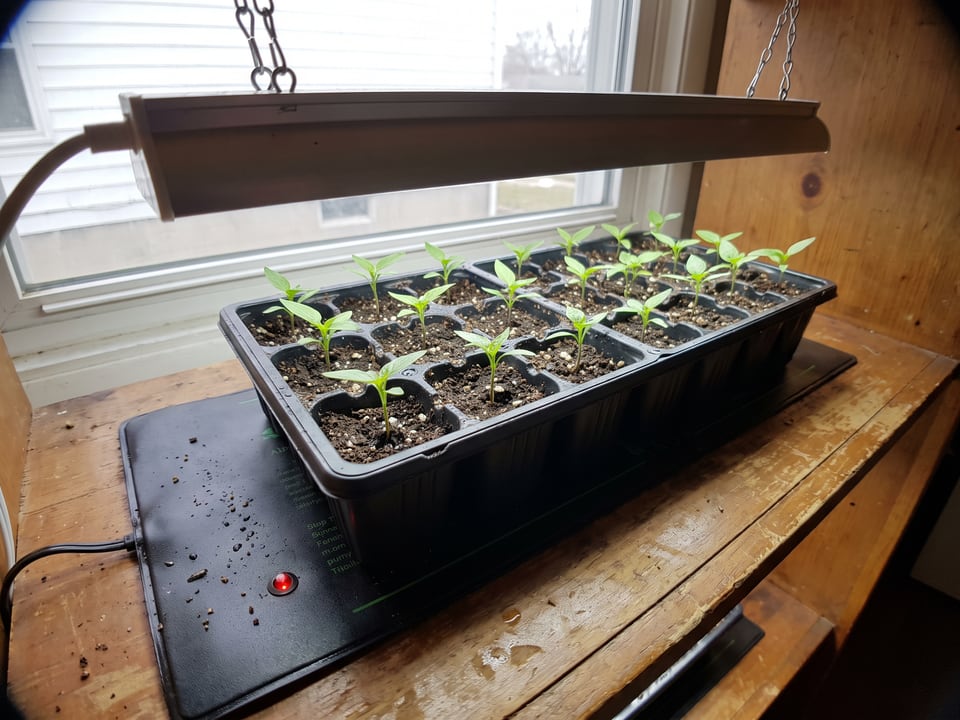
Harden the plants off before they go into the garden: put them outside with wind protection and a couple of hours of sun, then give them more sun over one to two weeks. Minnesota brings them back indoors on nights below 55°F.
If you buy transplants, choose sturdy plants up to a foot tall, with stems at least as thick as a pencil and leaves closely spaced up the stem, and none with spotted leaves. Maryland adds that slow early growth often comes from overgrown, stressed transplants.
Plant out into warm soil
The University of Minnesota sets plants out once nighttime lows stay above 50°F. The University of Maryland goes by the soil instead: planted before the soil reaches 65°F, peppers “just sit there.” Look up your date with our last frost date finder, then wait for the soil to warm.
Choose a sunny spot. Maryland asks for at least 6 hours of direct light a day and prefers 8 to 10. Pick ground where tomatoes, potatoes, peppers, eggplant and tomatillos have not grown for the past three or four years, per Minnesota.
Space plants 18 inches apart in rows 30 to 36 inches apart. The pepper plant spacing guide covers raised beds, containers and when to go closer or wider. In a pot, use at least 5 gallons per plant.
At planting, Minnesota’s details:
- Water the plants well first.
- Plant in late afternoon or on a cloudy, calm day.
- Set the plant at the same depth it grew in its pot, and do not disturb the roots.
- If it is in a peat pot, bury the rim completely. An exposed rim wicks moisture out of the root ball.
Black plastic mulch helps. Minnesota recommends it to warm the soil, hold moisture and keep weeds down. Straw or herbicide-free grass clippings, 3 to 4 inches deep, also keep weeds down.
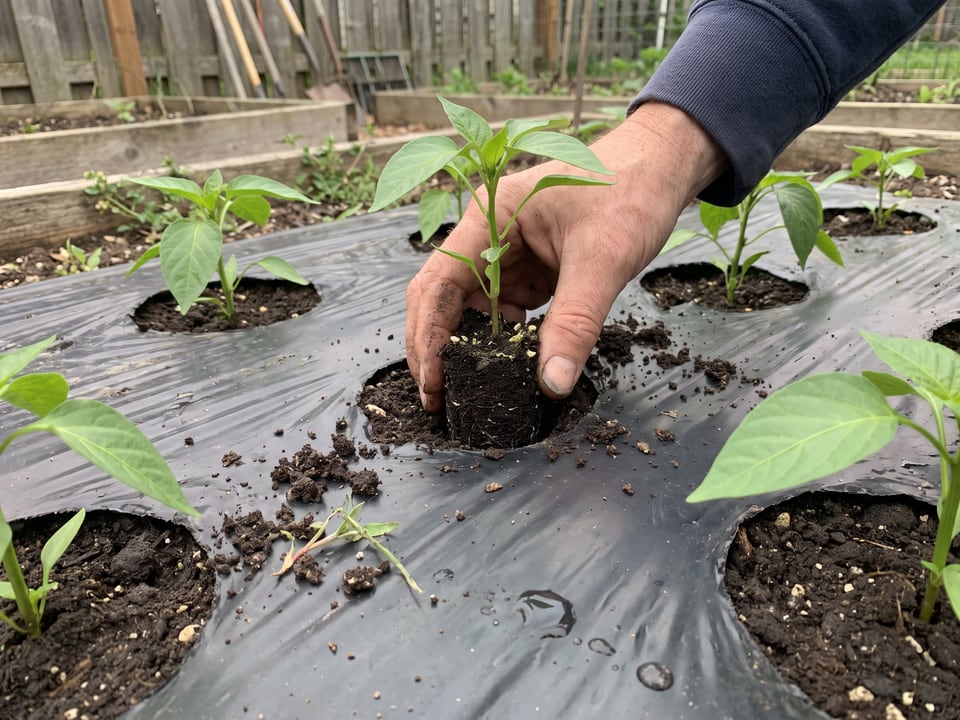
Maryland also recommends pinching off the first flowers and small fruits after transplanting, to get stronger, more productive plants.
Water evenly
Both universities put the emphasis on consistency. Uneven moisture weakens flowers and small fruit and brings on blossom end rot; dry spells cause flowers to drop and fruit to stay small. Minnesota’s rule: if a week passes without an inch of rain, soak the soil thoroughly at least once, and more often on sandy soil. Avoid overhead sprinklers. Wet leaves get more disease, and splashing soil carries spores onto them. A light sprinkle that only wets the surface is worse than none, because it keeps the roots shallow. Drip lines and soaker hoses do the job best, according to Maryland.
Feed moderately
Peppers have a medium need for nutrients. Maryland fertilizes before planting, uses a starter fertilizer at transplanting, and side-dresses once the first fruits have set. Get a soil test if you can: Minnesota puts the ideal pH at 6.5 to 7, and warns that too much nitrogen makes bushy, leafy plants that are slow to bear. Compost or well-rotted manure improves the soil; fresh manure does not belong in a vegetable bed.
Support the plants
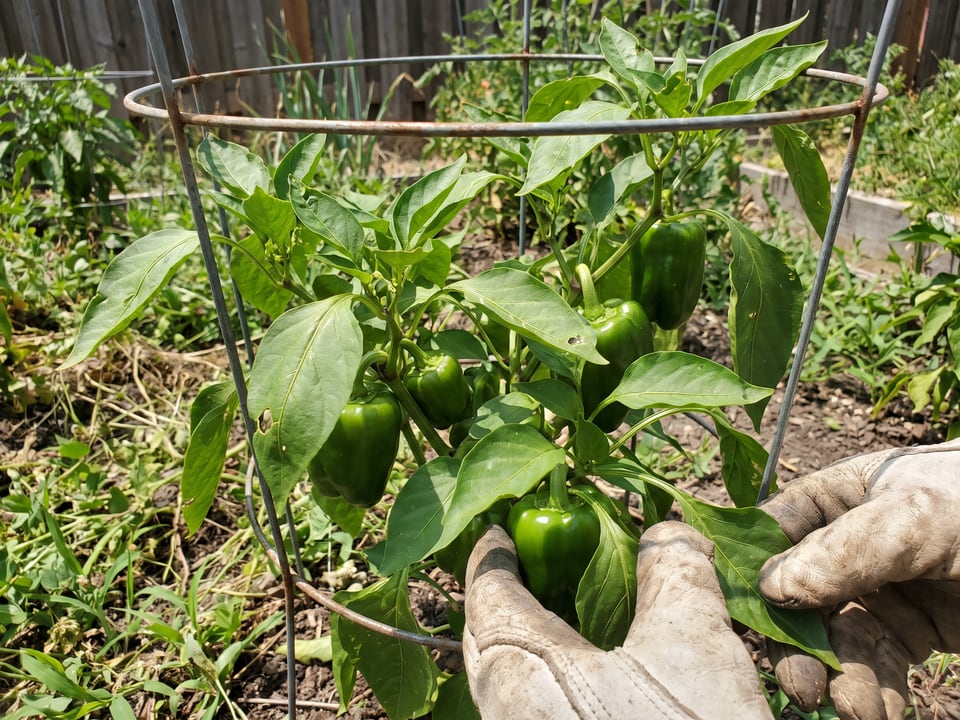
Pepper plants reach 3 to 4 feet in Maryland’s description, and their stems turn semi-woody and brittle as they mature. Maryland recommends supporting them with cages or short trellises.
Heat, cold and dropped flowers
Peppers react badly to heat as well as cold. Minnesota lists dry soil, temperatures above 90°F, and nights below 60°F or above 70°F as conditions that weaken growth, and notes that hot days followed by hot nights make the flowers drop. Maryland puts the threshold at evening temperatures above 75°F, where fruit set slows or stops, and suggests a spot with some late afternoon shade and a spray of water on hot, dry days.
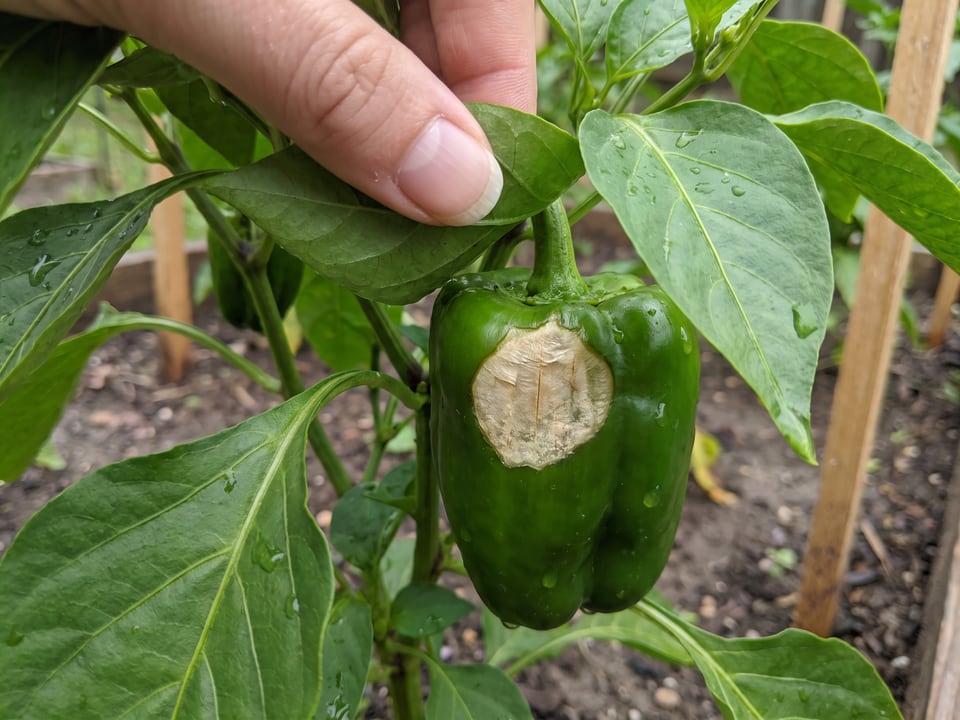
Too much sun on the fruit is the other problem. Sunscald leaves flat, tan or white patches on fruit that hangs exposed on a small plant, or in a gap in the leaves. Minnesota ties it to too little leaf surface covering the fruit in hot, dry weather.
Pests and diseases to watch for
Minnesota’s list for home gardens is short: cutworms that cut young stems at the soil line, aphids that curl and sticky the leaves (often with their natural enemies close by), tomato hornworms, bacterial spot on leaves and fruit, and viruses that twist the leaves and bump the fruit. Viruses cannot be cured, and infected plants should come out. For anything you cannot name, Minnesota points gardeners to its online diagnostic tools, its plant disease clinic and Ask a Master Gardener.
Harvest
Cut peppers when they reach full size. Minnesota and Maryland both say you do not have to wait for color: many varieties are good green as well as ripe; jalapeños can be used green and Hungarian wax peppers yellow. Left on the plant, most turn red, yellow, orange, purple or brown and, in sweet varieties, get sweeter; they do not ripen further after picking. Maryland notes that a bell reaching mature green at 70 to 80 days needs another 2 to 3 weeks to color up.
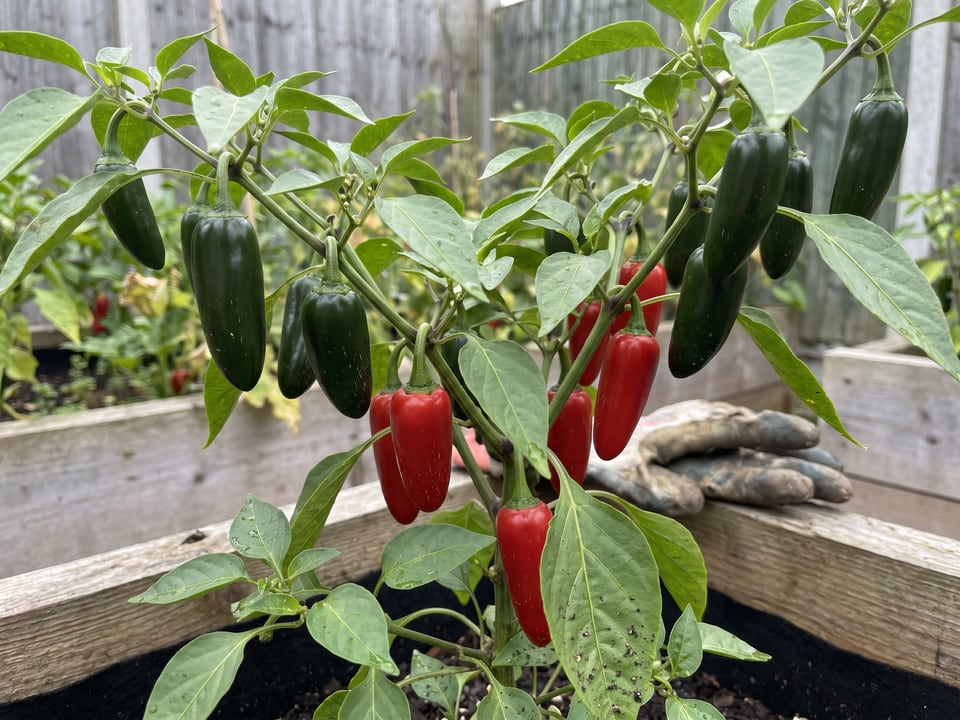
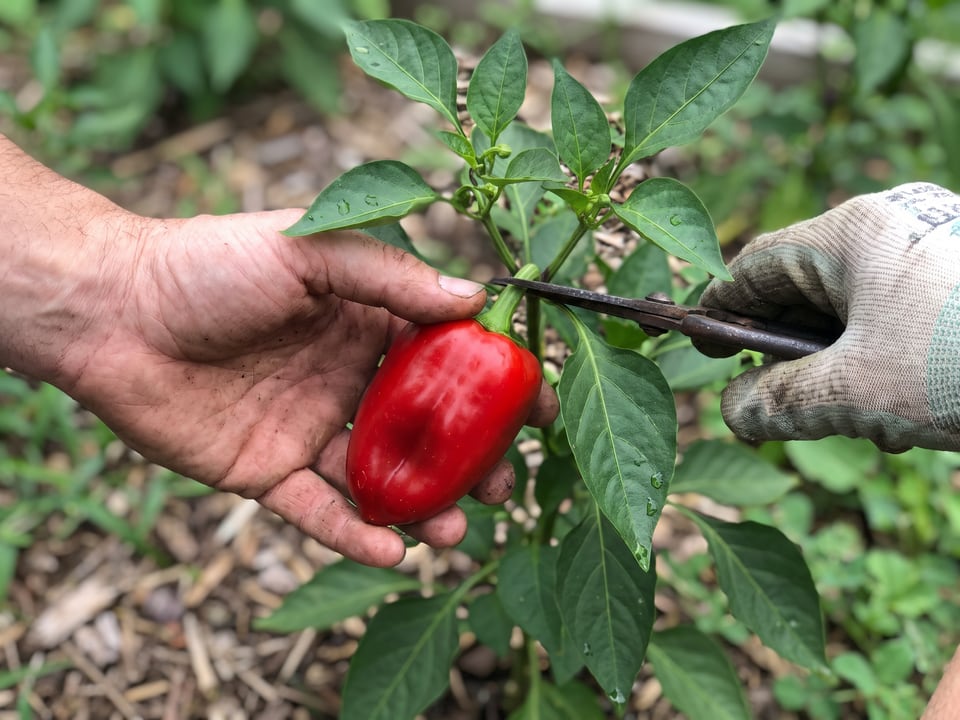
Cut the stem with shears rather than pulling, which breaks branches. Picking regularly keeps the plant flowering. Wear gloves for hot peppers. Before a killing frost, Maryland suggests pulling whole plants and hanging them upside down in a garage to finish ripening.
Fresh peppers keep 2 to 3 weeks at 45 to 50°F in humid conditions, according to Maryland, and a week or more in a home refrigerator, where the skins can pit if left too long. The harvest guide covers when each type is ready, and how to dry peppers covers keeping them longer.
Saving seed
Peppers mostly pollinate themselves, but insects cross them. Maryland warns that saved seed gives unpredictable plants unless the parent plants were screened from insects or grown 500 feet from other peppers. Planting sweet peppers next to hot ones does not make the sweet peppers hot, according to Maryland.
The short version
Choose varieties by days to maturity for your season. Sow indoors 8 to 10 weeks before your last frost, warm and bright. Plant out when nights stay above 50°F and the soil reaches 65°F, 18 inches apart in full sun, on ground that has not grown nightshades for three years. Water evenly and deeply, feed moderately, cage the plants. Cut the pods at full size, green or ripe.
The pepper catalog lists days to maturity, plant size and heat for every variety, and pepper companion plants covers what grows well beside them.
Sources
- University of Minnesota Extension, Growing peppers in home gardens: choosing varieties, smaller-fruited peppers more tolerant of cool and heat, resistant and tolerant varieties, starting seeds (8 weeks, 80 to 90°F to emerge, 70°F after, pinching early flowers), hardening off, choosing transplants, planting out above 50°F nights, three- to four-year rotation, spacing, temperature stresses, planting technique, watering, black plastic and organic mulch, harvest, refrigerator storage, pests and diseases.
- University of Maryland Extension, Growing peppers in a home garden: 8 to 10 weeks indoors (12 for some), soil at 65°F, 6 to 10 hours of sun, 70 to 85 days (habanero 90 to 120), fertilizer timing, 5-gallon containers, 3 to 4 foot plants and brittle stems, heat above 75°F at night, watering and drip irrigation, harvest and color, pulling plants before frost, storage at 45 to 50°F, cross-pollination and 500 feet for seed saving.