Rutgers
Single source · Reviewed Sep 9, 2026
Values marked like this (estimated) are model estimates, not confirmed from a source.
Heirloom slicer from USA, 1934. The 1934 New Jersey canning classic: acidic, balanced and built for preserving. Ready in about 75 days from transplant.
- Heirloom
- 75 (estimated) days to maturity (from transplant)
- Indeterminate
- Medium fruit
- Moderate (estimated)
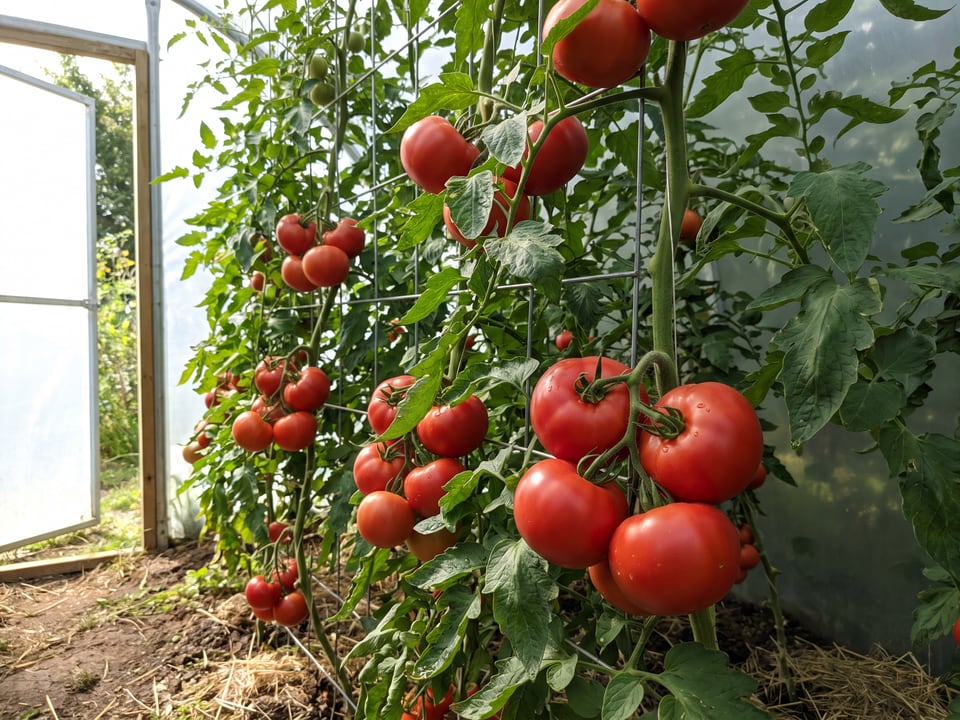
At a glance
- Fruit type
- Slicer 6–8 oz (170–230 g) · Flattened globe (estimated)
- Leaf type
- Regular leaf
- Plant height
- 6–7 ft (180–210 cm) (estimated) Tall
- Spacing
- 18 × 35 in (45 × 90 cm) (estimated)
- Sunlight
- Full sun
- Position
- Handles open positions
- Growing sites
- Greenhouse · Polytunnel · Open ground · Container
- Container growing
- Balcony friendly min. 6 gal (25 L) pot (estimated)
- Skin
-
- Red
- Interior
-
- Red
Plant size and habit
Tall · Indeterminate
6–7 ft (180–210 cm) (estimated) · Regular leaf
Rutgers is an indeterminate plant that keeps growing and setting fruit until frost; it needs a stake, cage, or trellis for the whole season. Expect a plant of 6–7 ft (180–210 cm).
Flavor
“The 1934 New Jersey canning classic: acidic, balanced and built for preserving.”
Growing calendar
- Sow indoors
- Transplant out
- Harvest
Timing shown for temperate climates; sow indoors 6–8 weeks before your last frost date.
Disease resistance
- F1 Fusarium wilt (race 1)
Uses & tags
- Canning
- Sauce & paste
- Slicing
- Heirloom classic
- Sauce workhorse
- High yield
Origin
Rutgers was released in 1934 by Lyman Schermerhorn at the New Jersey Agricultural Experiment Station, from a cross of Marglobe and J.T.D. made at the Campbell Soup Company in 1928 and bred for the state's canning industry. Schermerhorn described its juice as sitting between the sweet Marglobe and the tart J.T.D., and the fruit ripens from the centre outward so a red skin means red flesh. It defined what a tomato tasted like to a generation of Americans through canned and juiced product. The acidity that made it good for canning is exactly what modern fresh-market breeding has bred out. Many named strains followed, among them Rutgers Improved, Rutgers VF and Rutgers Select, and seed sold today is usually one of these rather than the 1934 original.
Sources
- Rutgers, Tatiana's TOMATOBase (infobox: midseason, indet., regular leaf, red, oblate, medium, canner/slicer, commercial heirloom, USA; Marglobe x J.T.D.; separate pages for Improved, VF, Select strains) ↗
- The Historic Rutgers Tomato Gets Re-invented, NJAES Newsroom, 2016 (introduced 1934 by Lyman Schermerhorn; cross made at Campbell Soup 1928; parents J.T.D. and Marglobe) ↗
- Rutgers Tomato, Burpee (74 days, indeterminate, 80 in, 6 oz, Fusarium resistance) ↗
Where to buy seeds
| Shop | Offer | Price | Packet | Stock | |
|---|---|---|---|---|---|
| Tomato Growers Supply Company | Seeds | $3.55Checked Sep 16, 2026 | Pack (30 seeds) | Check availability | Buy |
- BuyTomato Growers Supply CompanySeeds
Pack (30 seeds)
Check availability
$3.55Checked Sep 16, 2026
Links may earn us a commission at no cost to you. Prices checked Sep 16, 2026; not live.
All photos
-
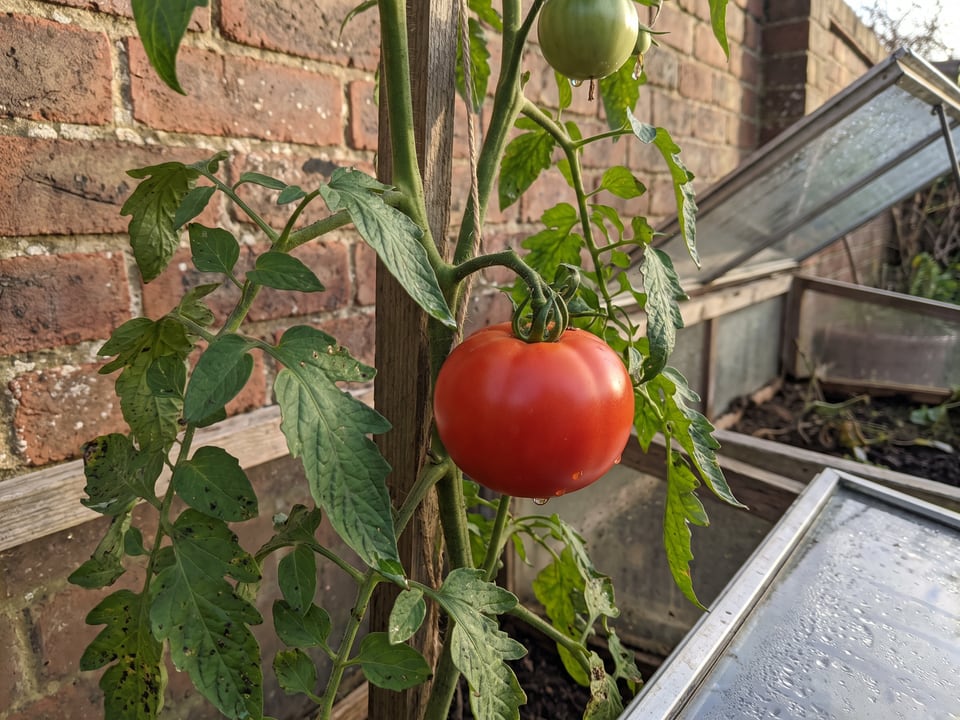
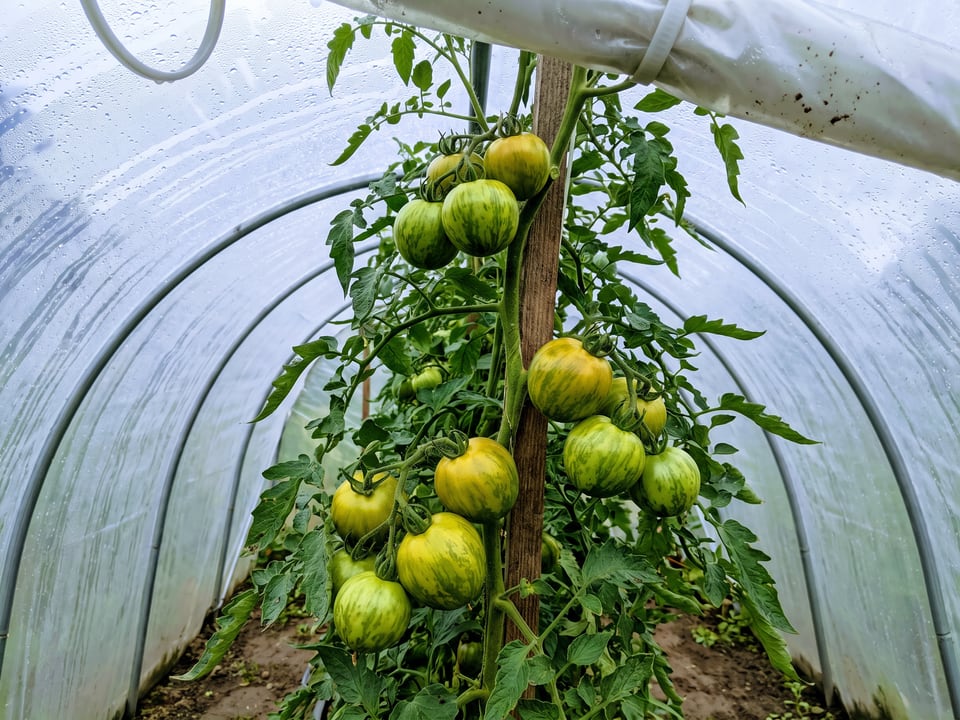
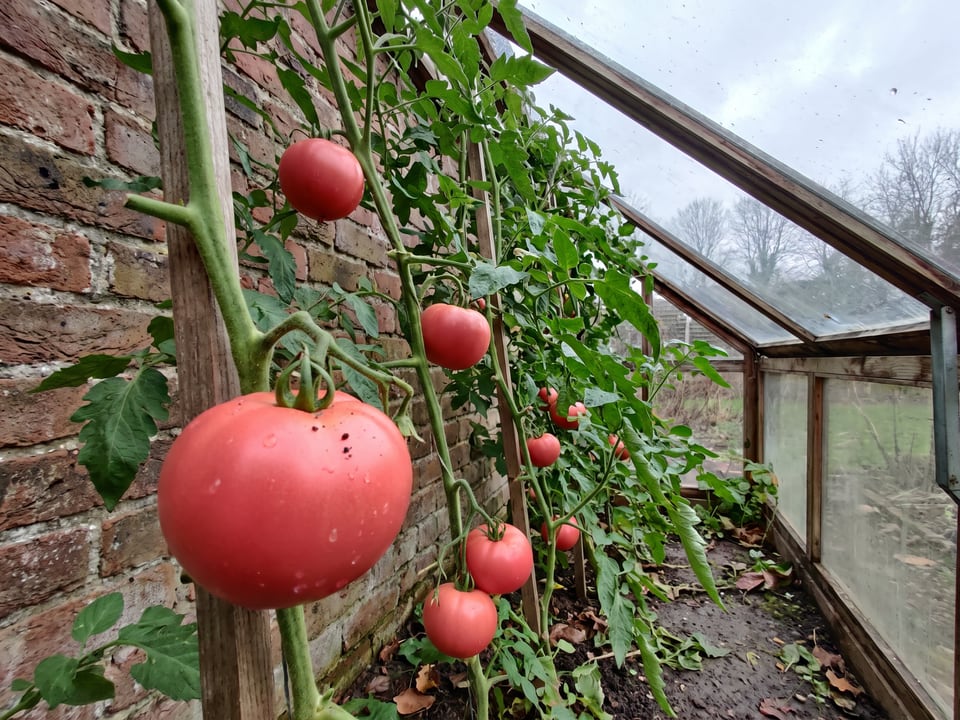
Rutgers tomatoes ripening on the vine under cover -
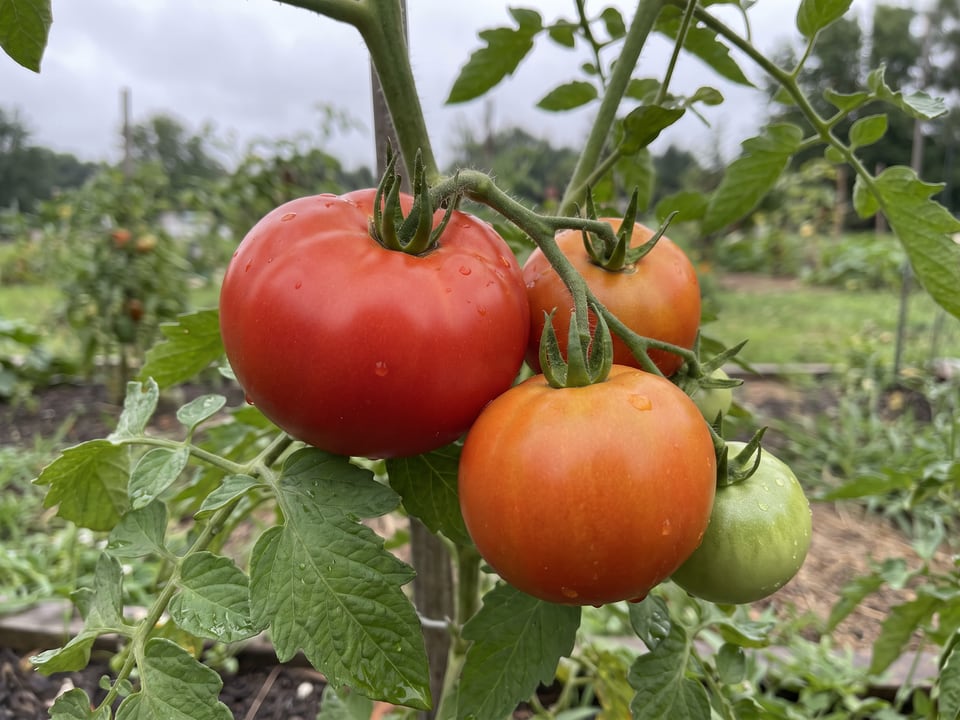
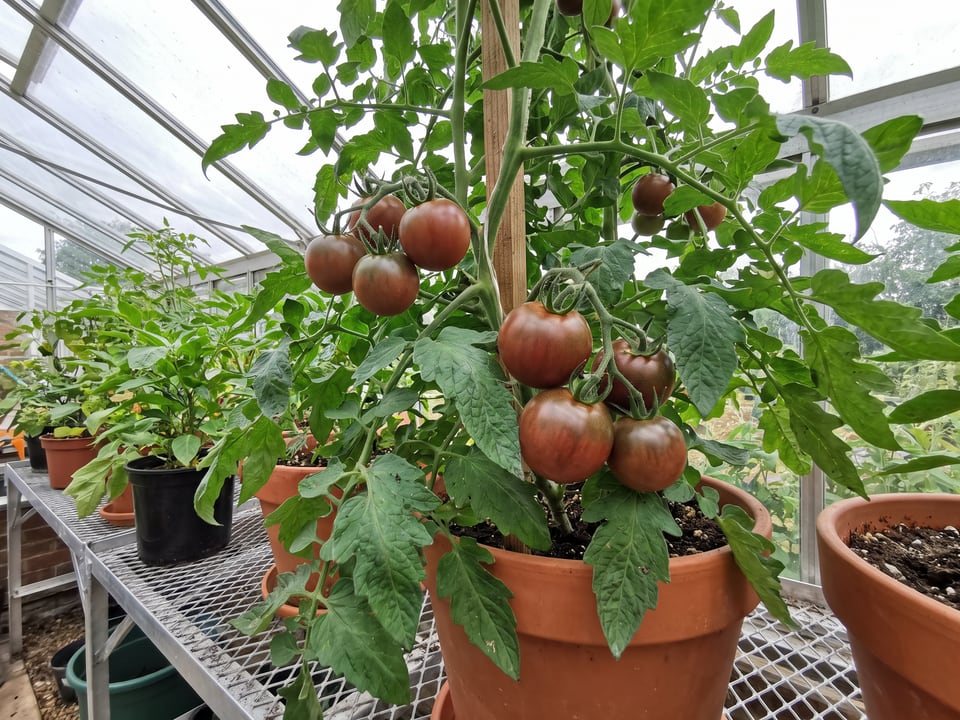
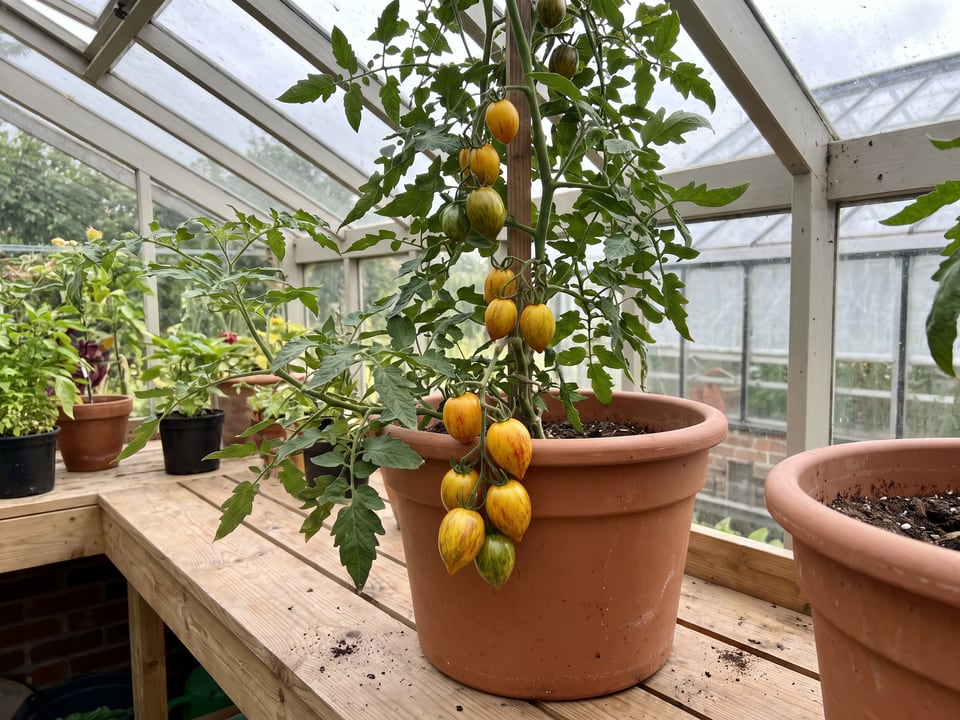
A truss of Rutgers tomatoes -
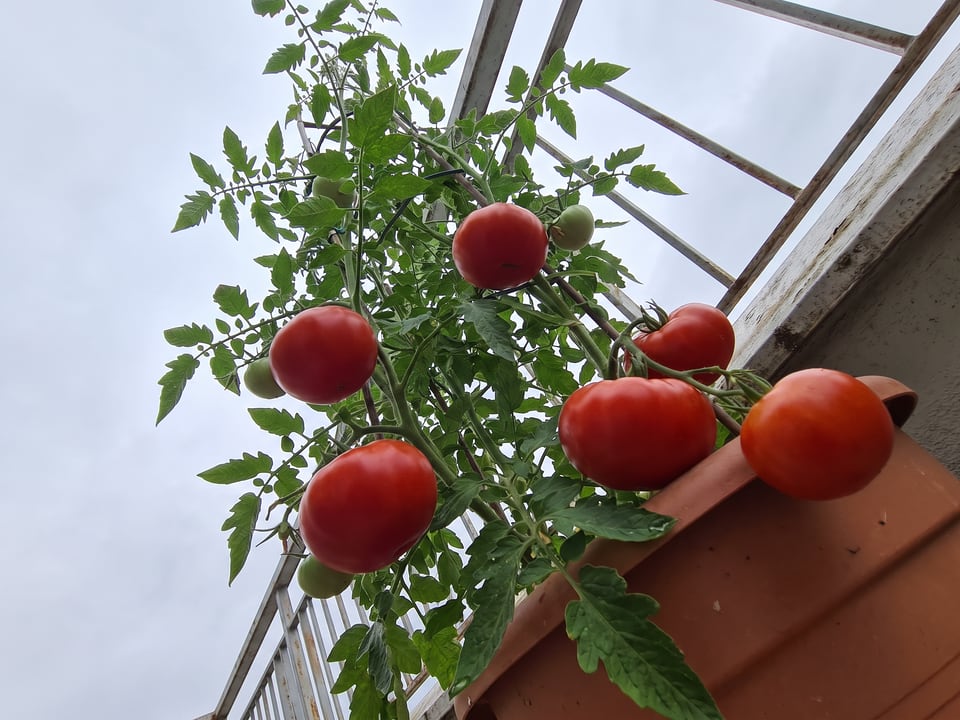
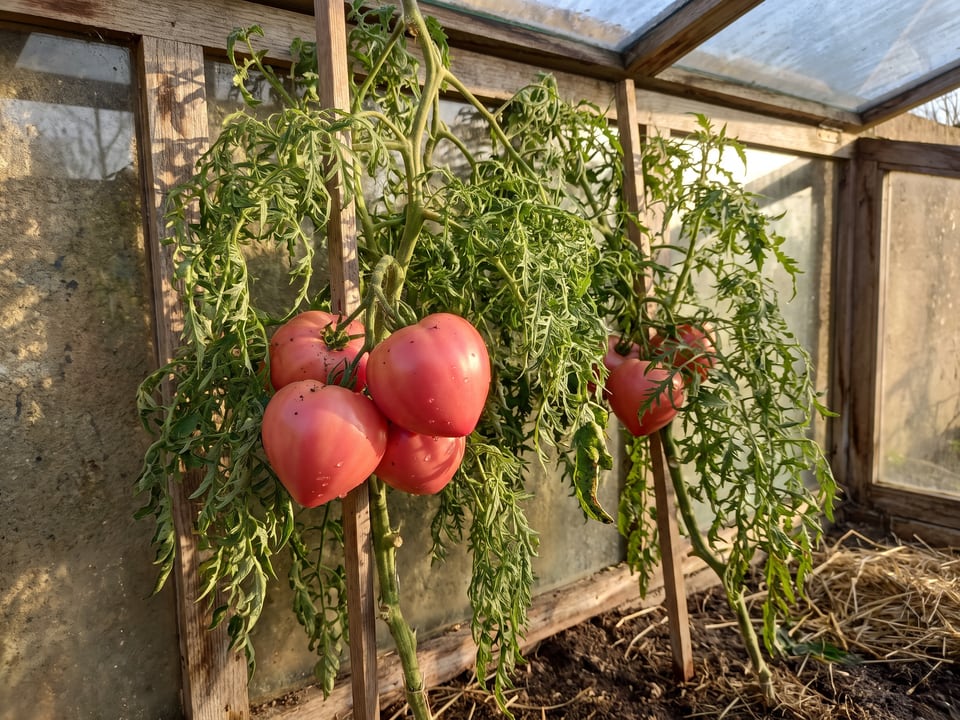
Rutgers tomato plant in a garden bed with ripe fruit on the vine -
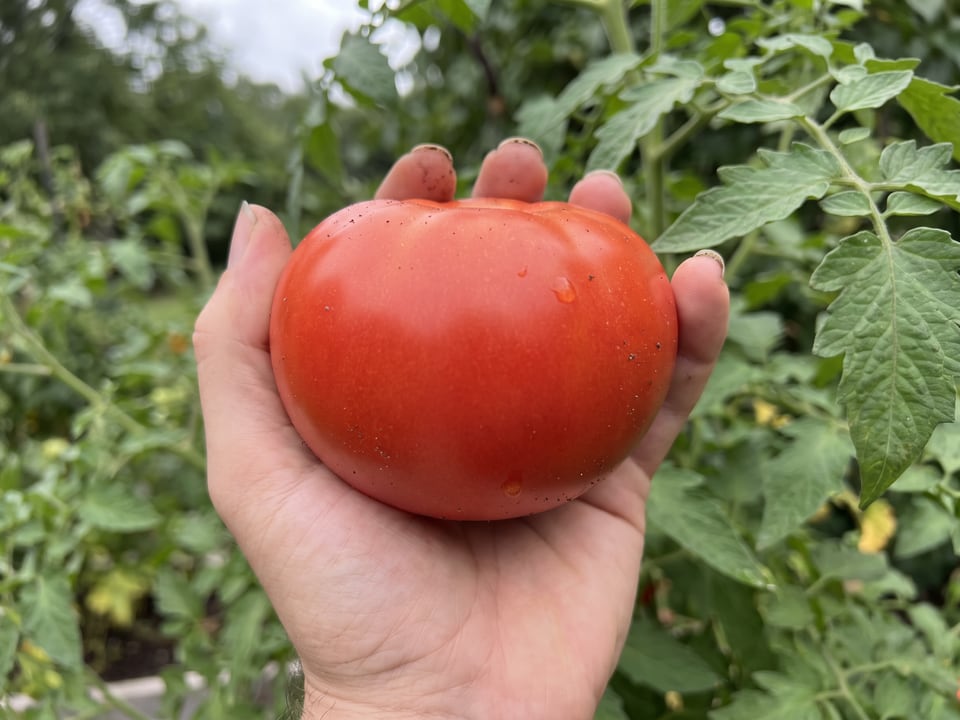
A ripe Rutgers tomato held in a gardener's hand -
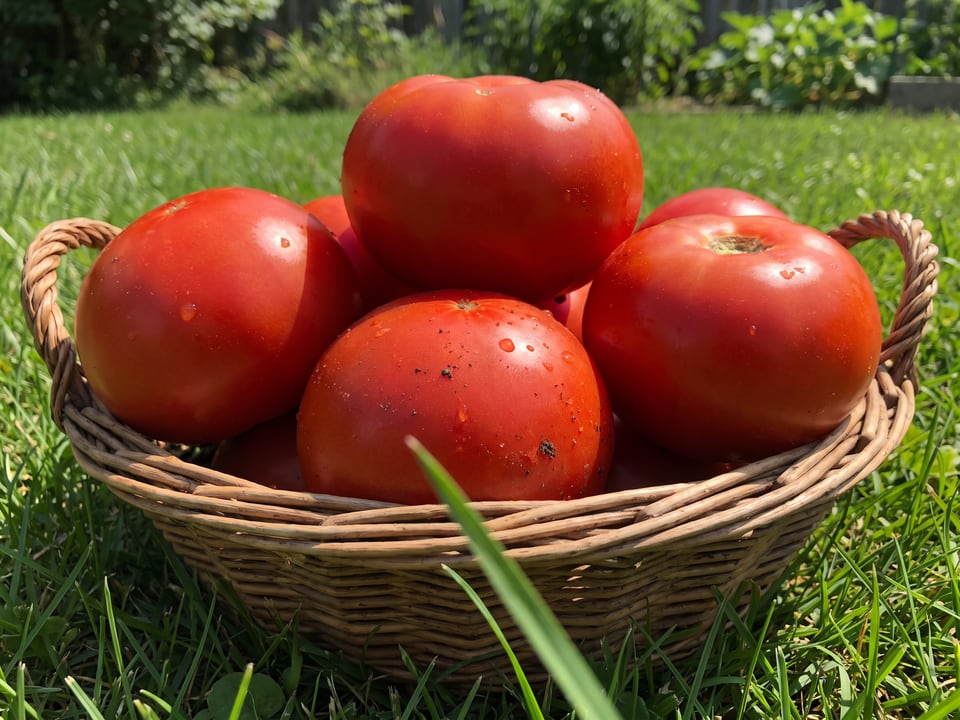
Freshly picked Rutgers tomatoes -
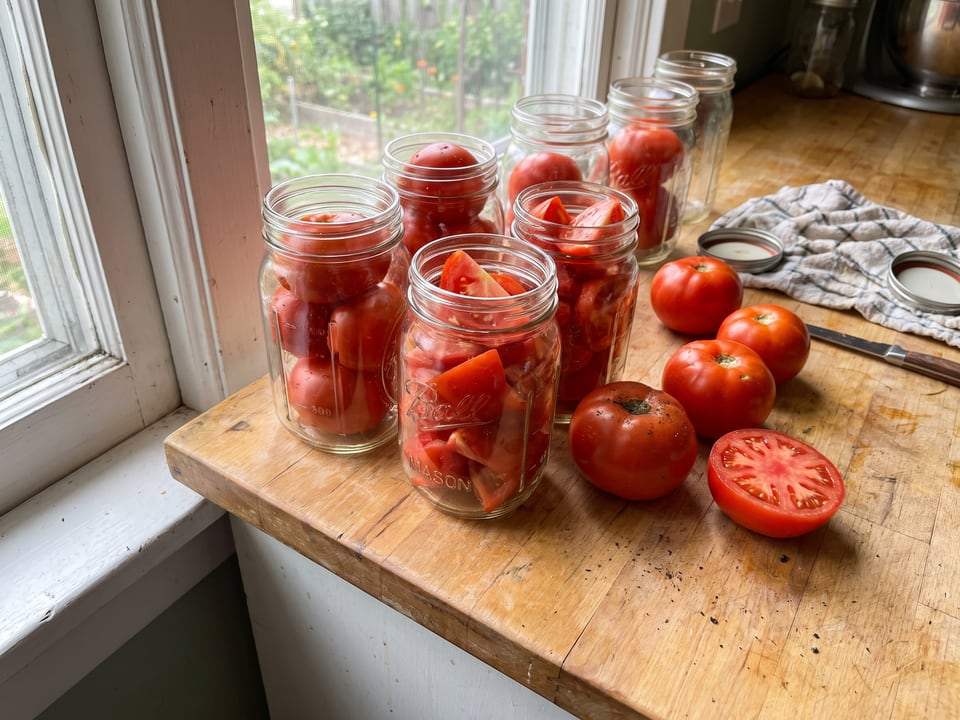
Rutgers tomato sliced in the kitchen
Questions
How long does Rutgers take to mature?
Rutgers is ready in about 75 days from transplant.
Does Rutgers need staking?
Rutgers is an indeterminate plant that keeps growing and setting fruit until frost; it needs a stake, cage, or trellis for the whole season. Expect a plant of 6–7 ft (180–210 cm).
Can Rutgers be grown in a container?
Yes — Rutgers grows well in a container of at least 25 L (6 gal).
Is Rutgers resistant to disease?
Rutgers carries documented resistance to Fusarium wilt (race 1).
See also
Other slicer varieties people put next to this one.
Grows like this one
Indeterminate, midseason, full sun. Same support, same calendar.