Blossom end rot on tomatoes: cause and the real fix
Sep 18, 2026 · 7 min read
The sunken brown patch is a calcium transport failure, not a soil shortage. Why eggshells and Epsom salt do not work, and the 3 changes that do.
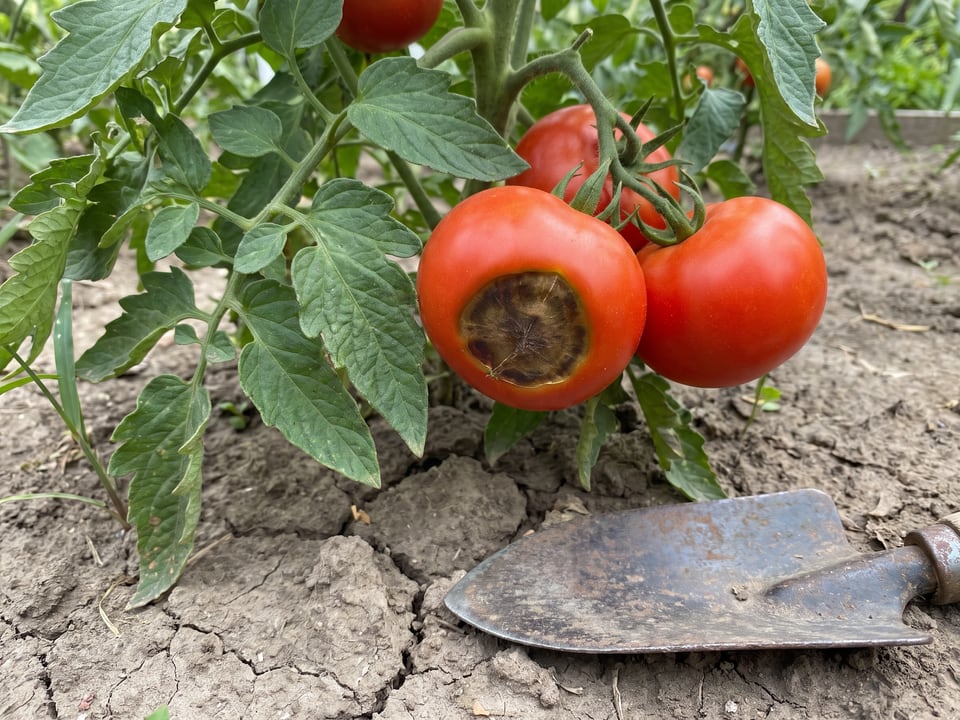
A flat, sunken, leathery brown patch on the bottom of the fruit is blossom end rot. Nothing is infecting the plant, and in most gardens the soil is not short of calcium either. What has failed is the movement of calcium into the fruit while the fruit is growing fastest, and what usually blocks that movement is uneven water.
This matters because the two most common remedies, adding calcium and spraying Epsom salt, treat a problem that is rarely there. One of them makes the real problem worse.
What it looks like, and what it is not
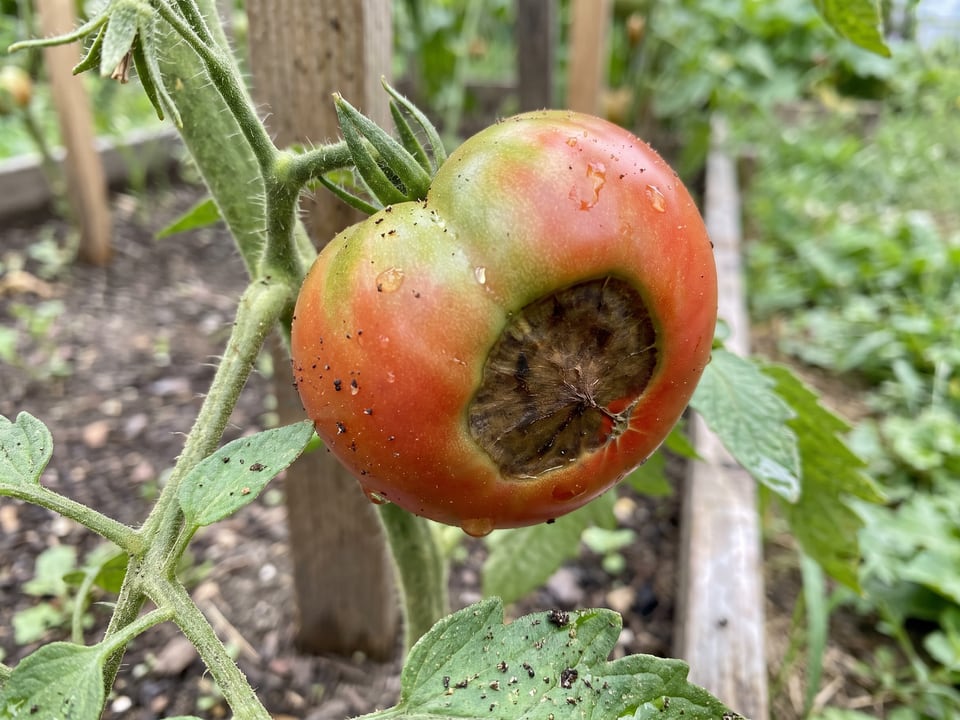
The patch starts small and water-soaked at the blossom end, the bottom of the fruit opposite the stem, then dries into a sunken tan or black area that feels like leather. It often appears while the fruit is still green. Mould sometimes colonises the dead tissue later, which is why people call it a rot, but the mould arrives second.
Sunscald looks different: a pale, papery, blistered patch on the side facing the sun, on fruit whose leaf cover has been stripped. Damage at the bottom of green fruit is blossom end rot.
Why the first fruit gets it
Blossom end rot is a calcium shortage inside the fruit, which is not the same thing as a calcium shortage in the soil, and Minnesota Extension is careful to separate the two. Calcium travels with water, in one direction, up with the transpiration stream, and mostly to the parts of the plant losing water fastest. Leaves lose water. Fruit barely does. So fruit sits at the end of the queue, and Clemson notes that it needs a consistent supply of calcium during fruit set to develop properly.
That fits the pattern everybody sees. Minnesota Extension notes that the first fruit a plant produces are often the most severely affected, and that fruit developing later in the season on the same plant can be unaffected.
It also explains why an affected fruit never recovers. Those cells failed at the start, and the fruit keeps growing around the damage. Pick it off and let the plant put its energy into the next set.
The real causes, in the order they occur
Irregular soil moisture is the dominant one. A plant that dries out and is then soaked cannot maintain a steady transpiration stream, so calcium delivery stutters exactly when the fruit needs it. Oregon State suggests wetting the whole root zone every 7 to 10 days, so the soil is never too wet or too dry. How often to water tomato plants has the numbers.
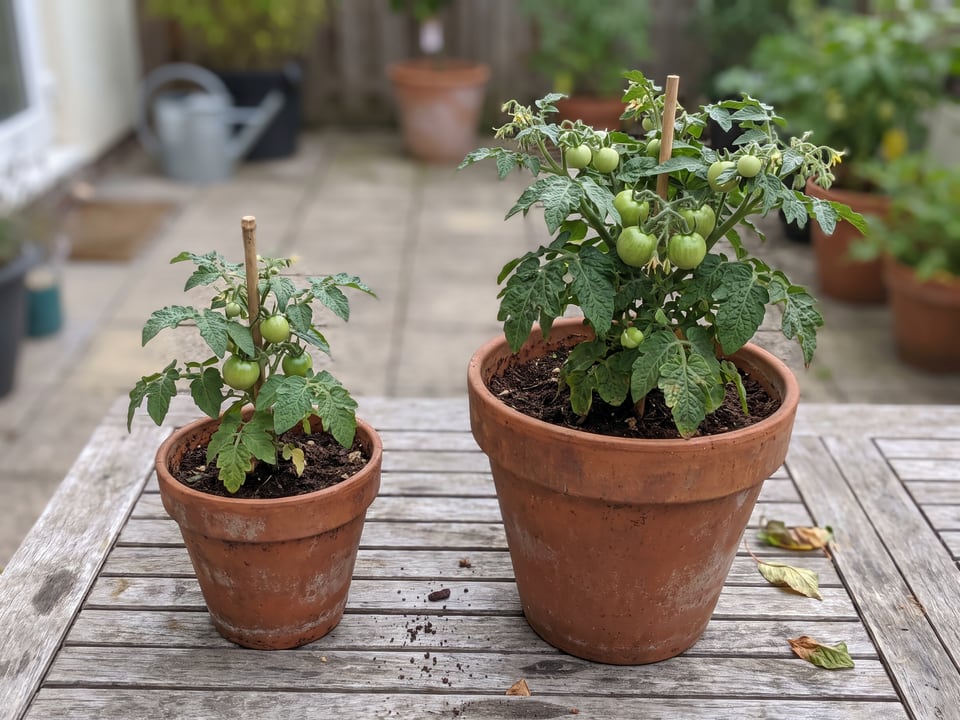
Everything above is sharper in a container, which dries faster and holds less buffer. See how to grow tomatoes in pots.
Root damage does the same thing by a different route. Minnesota Extension advises not cultivating within 1 foot (30 cm) of the base of the plant.
Too much nitrogen pushes the plant into rapid growth, and Minnesota Extension lists heavy nitrogen applications among the causes. That is one of the practical arguments for feeding nitrogen lightly, which fertilizer for tomato plants covers alongside the other feeding myths.
Minnesota Extension adds that too much potassium, magnesium, ammonium or sodium in the soil cuts the calcium available to the plant, because these salts use similar pathways into the roots.
What does not work
Crushed eggshell is calcium carbonate, and Minnesota Extension notes it decomposes too slowly to supply calcium even where calcium is needed. It cannot deliver calcium to a fruit that needs it this fortnight.
Epsom salt is worth being blunt about, because it works against you. It is magnesium sulphate, and magnesium competes with calcium for uptake at the root. Minnesota Extension puts it plainly: Epsom salt will not prevent blossom end rot, and too much magnesium in the soil can keep calcium out and make the problem worse.
Calcium foliar sprays run into the same transport problem the disorder is made of. Clemson is explicit that they are not effective, for two reasons: calcium already in the leaves cannot move through the phloem into the fruit, and the skin of the fruit cannot absorb foliar calcium directly. Oregon State disagrees and suggests a calcium chloride spray on leaves and fruit as an emergency measure, alongside fixing the watering.
If a soil test does come back low, or the soil is genuinely acidic, then liming is justified. That is a soil correction made in autumn or early spring, not a rescue in July, and most gardens with blossom end rot have adequate calcium and a water problem.
What actually works
Make the water supply boring: deep, regular, at the base, with a mulch to stop the surface swinging between soaked and baked. This one change fixes most cases.
Give the roots room. In the ground, keep the hoe away from the stem. In pots, go bigger.
Go easy on nitrogen, and feed steadily rather than in large irregular doses, which also keeps soil salts down.
Then wait for the next truss. A plant that loses its first fruits and is watered consistently afterwards usually crops normally for the rest of the season.
Which tomatoes get it most
Minnesota Extension notes that larger slicer-type tomatoes are usually more prone than cherry tomatoes, and suggests choosing a different variety next year if one is particularly affected.
Of the 132 varieties in this catalogue, seven are classed as paste: Amish Paste at 80 days, Opalka at 85, Jersey Devil at 85, Blue Beech at 85, Speckled Roman at 85, Nova at 70 and Pink Fang at 78. The plum group includes San Marzano and Roma. Full lists are on the paste tomatoes and plum tomatoes pages.
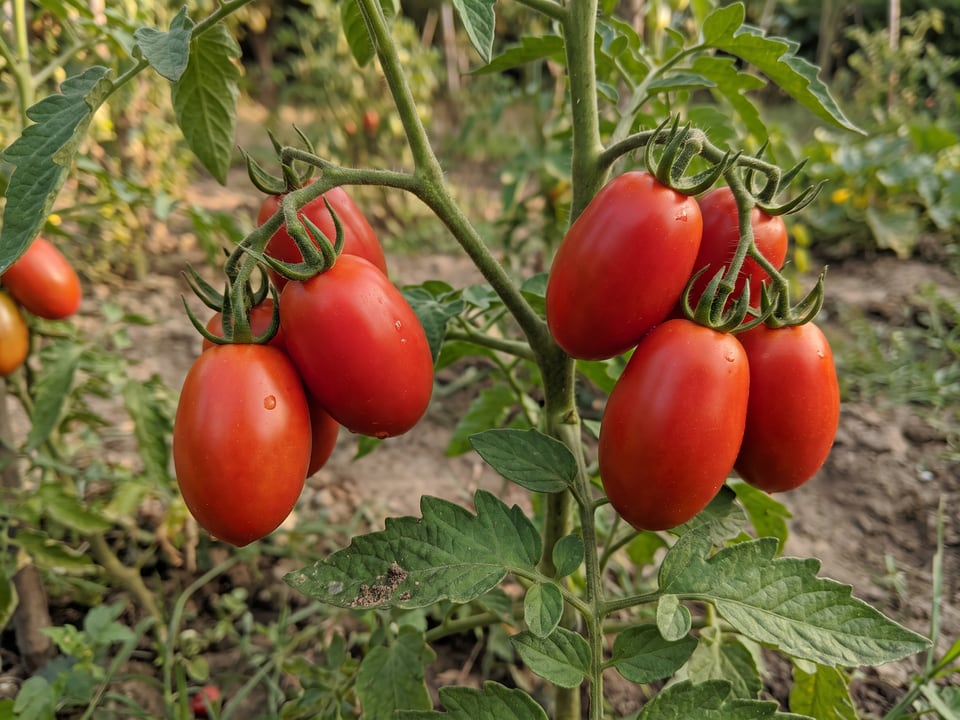
These are the varieties worth growing if you want to cook down a crop. If you are growing a row of them, or of any large slicer, the mulch and the watering routine are what protect the first fruits.
There is no disease-resistance code for blossom end rot, because it is not a pathogen, and Oregon State notes that no varieties adapted to Oregon are highly resistant to it.
Sources
- University of Minnesota Extension, Tomato disorders: the disorder is a calcium shortage in the fruit rather than in the soil; first fruit most affected; slicers more prone than cherries; heavy nitrogen and excess potassium, magnesium, ammonium or sodium; no cultivating within 1 foot of the plant.
- Clemson Cooperative Extension, Gardening myths: fix blossom end rot with calcium sprays: foliar calcium sprays are not effective, and the disorder occurs even where soil calcium is adequate.
- University of Minnesota Extension, Do common soil health home remedies work?: eggshells and Epsom salt.
- Oregon State University Extension, Blossom-end rot of tomatoes, FS 139.