How to store tomatoes: counter, freezer and drying
Sep 18, 2026 · 6 min read
Below about 55°F a tomato's flavor and texture start to deteriorate, so the fridge is a last resort. How long each method keeps a crop, and which varieties hold longest.
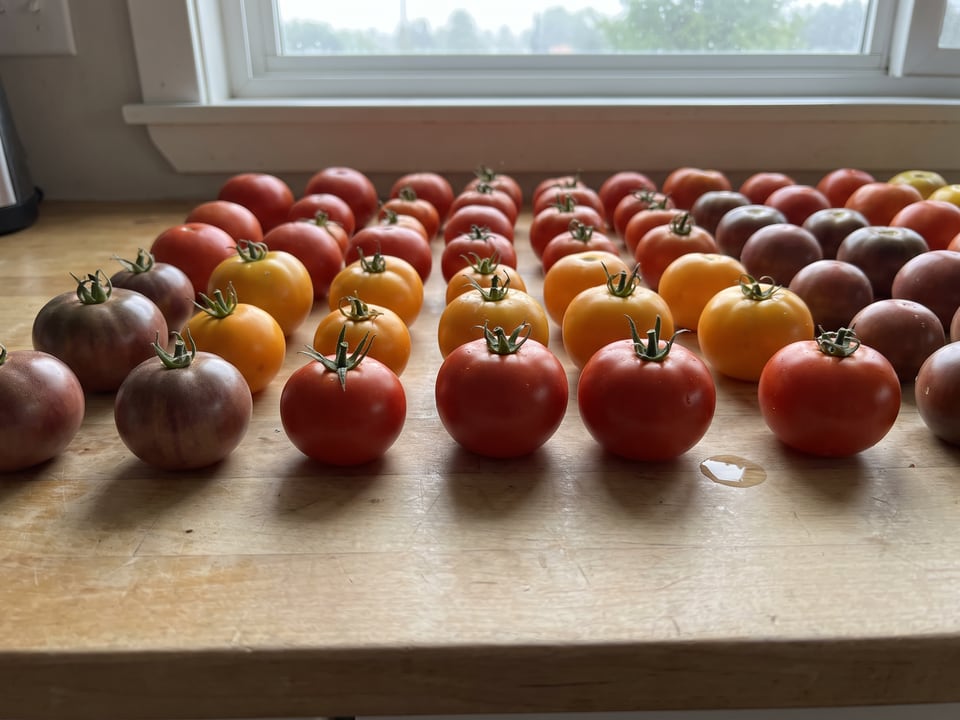
Keep ripe tomatoes on the counter, out of direct sun, in a single layer, stem side up. Illinois Extension says flavor and texture begin to deteriorate below 54°F (12°C) and that refrigeration turns the flesh mealy. Bringing chilled fruit back to room temperature reverses only some of the damage.
On the counter
Minnesota Extension puts tomatoes among the vegetables that want cool, moist storage around 55°F, and gives ripe tomatoes an expected shelf life of five days. Illinois gives 2 to 3 days at room temperature and warns that above 80°F they spoil quickly.
Lay the fruit out in a single layer rather than a bowl, because stacked fruit bruises at the contact points and the bottom layer goes first. Stem side up works for most fruit; turn very ripe ones scar side down, since the scar is where water leaves and rot enters. Keep them off the windowsill, which cooks the side facing the glass.
Check daily and remove anything soft or split.
When the refrigerator is the right answer
Three cases, all of them about avoiding worse loss.
Cut fruit goes in the fridge, covered, and gets used within a day or two. The aroma loss is real, and the food safety argument wins anyway.
Fully ripe fruit you cannot use in time is better chilled than binned. Clemson gives ripe tomatoes two to three days under refrigeration and suggests bringing them back to room temperature before serving. It will not be what it was, but it will still cook.
Anything already cooked, whether sauce, roasted fruit or passata, is refrigerated or frozen like any other cooked food.
What does not belong in the fridge is fruit that is still ripening, or fruit you plan to eat raw within the week.
Freezing, which is easier than most people expect
Freezing is the least work of any preserving method, because tomatoes do not need the blanching that most vegetables do. The National Center for Home Food Preservation gives the procedure as: wash, dip in boiling water for 30 seconds to loosen the skins, core and peel, then freeze whole or in pieces, leaving an inch of headspace in the container.
The 30-second dip is worth doing even though gardeners often skip it and simply bag the fruit whole and unpeeled, letting the skins slip off under a warm tap after freezing. The published procedure is the one to follow if you want to stay inside tested guidance.
Either way, the Center is explicit that frozen tomatoes are for cooking or seasoning only, because they will not be solid when thawed. They collapse, so they are cooking stock rather than salad, and the varieties worth freezer space are the meaty, low-juice ones. The seven paste varieties in this catalogue are Amish Paste at 80 days, Opalka at 85, Blue Beech at 85, Jersey Devil at 85, Speckled Roman at 85, Nova at 70 and Pink Fang at 78, and the plum group is led by San Marzano and Roma. The paste tomatoes page has the full list.
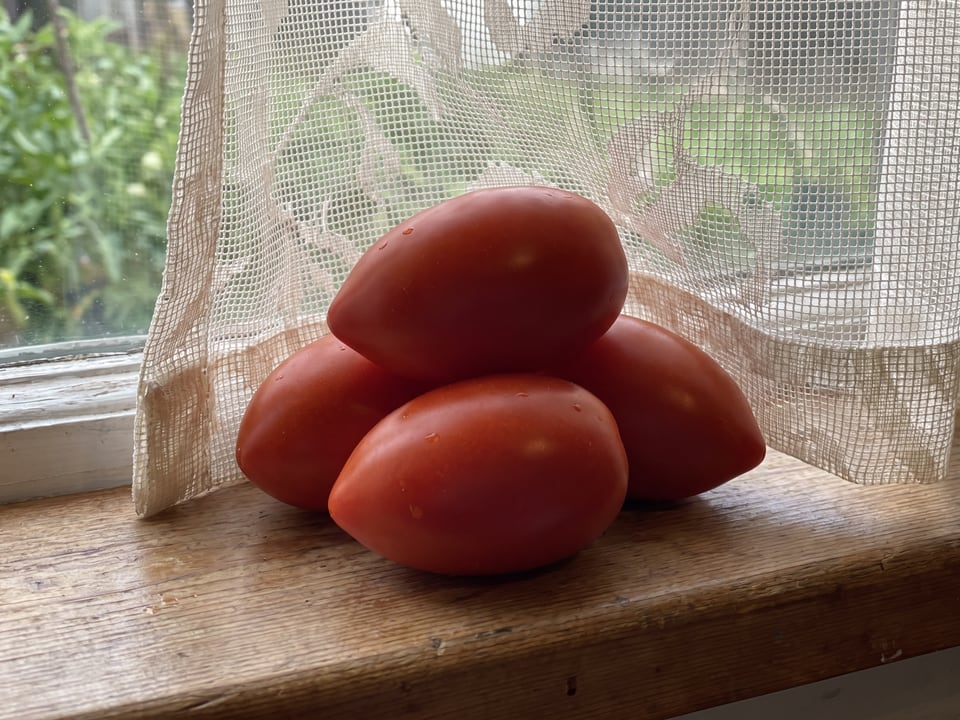
A juicy beefsteak freezes perfectly well. You simply spend longer boiling the water back off.
Drying
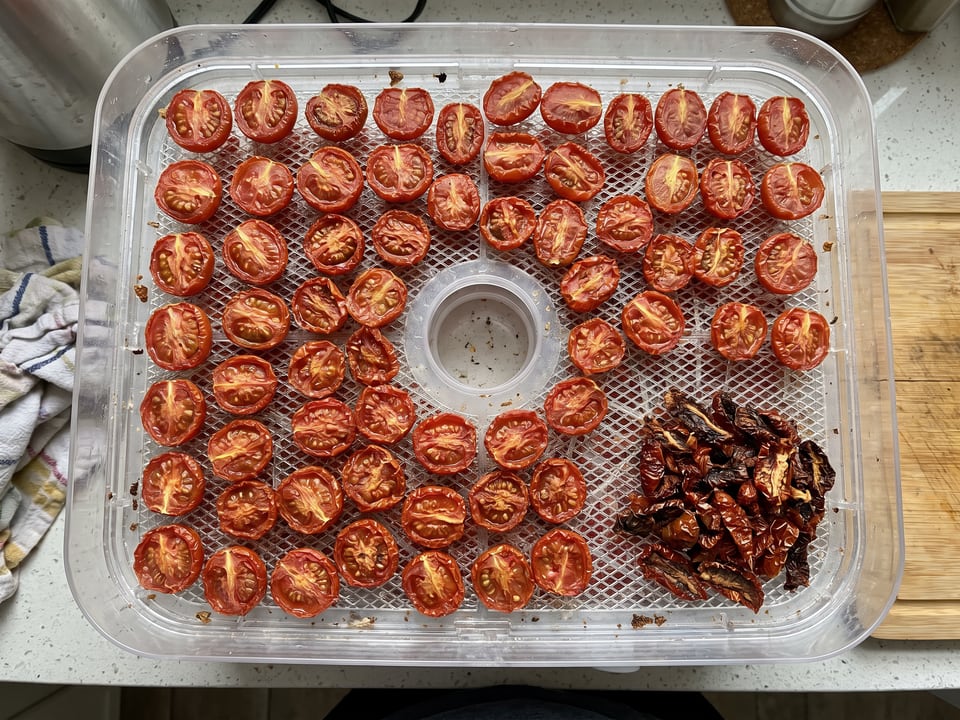
Drying suits small, dense, low-moisture fruit. Principe Borghese is the traditional choice, and the catalogue lists it at 75 days, semi-determinate, with fruit of 20 to 40 g, small enough to halve and dry without splitting the process over two days.
Halve them, lay them cut side up, and run a dehydrator at 140°F (60°C). Illinois Extension says to pack dried tomatoes in airtight containers.
Storing fresh fruit for weeks rather than days
Two approaches extend the fresh season past what the counter allows.
The first is to pick at breaker stage and ripen slowly. Clemson gives mature green fruit 25 to 28 days to ripen at 55°F (13°C), against 14 days at 65 to 70°F. A cool spare room, a cellar or an unheated porch does this. The method and the breaker-stage test are in when to pick tomatoes.
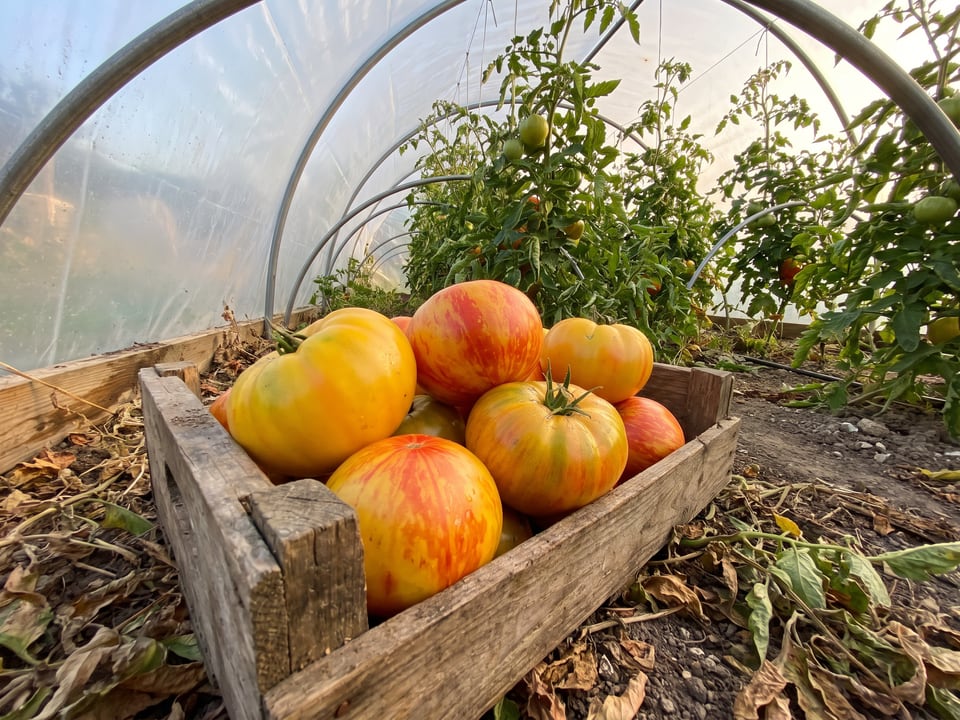
The second is to grow a storage variety. Long Keeper, 78 days, is bred for it, and the catalogue describes it as a bicolor slicer known for storing and slowly ripening after harvest. Picked mature green before frost and laid out in a single layer somewhere cool, this kind of variety carries fresh fruit for weeks after the plants are gone. It is a niche choice that pays off when your season ends abruptly rather than tapering.
What not to do with the surplus
Keep tomatoes away from apples and bananas unless you want them to ripen fast, since both produce ethylene.
If fruit going into storage is dirty, Clemson says to wash it gently and let it air dry first.
Do not can without a tested recipe. Tomatoes sit close to the pH boundary where a boiling-water bath stops being sufficient on its own, which is why every jar is acidified regardless of how acidic the variety seems. The National Center for Home Food Preservation specifies two tablespoons of bottled lemon juice or half a teaspoon of citric acid per quart, and half those amounts per pint, or four tablespoons of five percent vinegar per quart instead. This guide stops here on purpose: home canning is a food-safety topic with its own published procedures, and it deserves the actual procedure rather than a paragraph.
If the fruit is still green
Everything above assumes ripe fruit. A crop stripped ahead of frost is a different problem with a different answer, sorting mature green from immature and then ripening in the dark rather than chilling, which is covered in when to pick tomatoes.
If you are storing fruit from a variety you want again next year, take the seed out first. How to save tomato seeds explains which varieties come true and which never will.
Sources
- University of Minnesota Extension, Harvesting and storing home garden vegetables: store near 55°F, do not refrigerate.
- University of Illinois Extension, Preparing tomatoes: flavour and texture deteriorate below 54°F.
- Clemson Cooperative Extension, Using and storing tomatoes: two to three days under refrigeration, and the 50°F limit for unripe fruit.
- National Center for Home Food Preservation, Freezing tomatoes: the raw-pack procedure and the cooking-only limitation.
- National Center for Home Food Preservation, Drying fruits and vegetables and Food dehydrators: 140°F.
- National Center for Home Food Preservation, How do I can tomatoes?: acidification amounts per quart and per pint.